








CI4 Showcases Autonomous Maritime Systems at Swavlamban 2026
Bengaluru-based defence technology company CI4 is looking to expand autonomous operations in India's maritime domain with a range of underwater and unmanned systems showcased at Swavlamban 2026 in New Delhi. The company's portfolio at the Indian Navy's innovation and indigenisation event included the AquaScan diver carried underwater sensing system, the Echo underwater vehicle and its Tandav autonomous platform.
Speaking to Chakra News at the event, CI4 founder and CEO Anirudh Dube said the company had developed most of these systems after shifting its focus from space technology to defence. He said the company made the transition about 900 days ago because its engineering capabilities could have a more immediate application in defence.
The shift marks a change in direction for a company that began as TSC Technologies and later operated as Ciphor. Its earlier work was in the space sector, including the UNITYsat mission involving a constellation of three CubeSats launched aboard ISRO's PSLV C51 mission in 2021. The company is now focused heavily on autonomous defence and maritime technologies. CI4 describes itself as a developer of autonomous surface and underwater systems powered by its in-house AI and autonomy stack.
Swavlamban 2026, the Indian Navy's fifth Naval Innovation and Indigenisation Seminar, is aimed at moving indigenous technologies from prototypes towards operationally useful systems. The 2026 edition brought together startups, MSMEs, industry, academia and the armed forces, with more than 100 exhibition stalls expected.
One of the systems showcased was ‘AquaScan’, a diver carried underwater observation device. Such systems are designed to give a diver greater awareness in environments where visibility underwater can be poor. CI4's current product information describes AquaScan as a “multimodal sensing system combining sonar, 4K imaging and onboard edge processing. It is rated for operations up to 75 metres”, according to the company.
The company has also developed ‘Echo’, an underwater drone designed to operate without putting a diver in the water. An underwater drone or unmanned underwater vehicle can be used for tasks such as inspection, surveillance and reconnaissance while keeping personnel away from potentially hazardous underwater environments. CI4 describes Echo as a six degree of freedom underwater vehicle with swappable payloads and a depth rating of 300 metres.
Dube said the Echo concept evolved from the company's earlier underwater vision work. He highlighted the company's focus on modularity and ease of use for military operators. The broader underwater vision technology developed by CI4 combines imaging, sonar and AI assisted processing for underwater observation and detection. The company has developed this work under the iDEX framework for the Indian Navy.
CI4 also showcased ‘Tandav’, which Dube described during the interview as a 3 metre unmanned autonomous surface platform. He said the platform was designed around a modular payload architecture and could support roles including surveillance, observation and resupply. He also said the platform could be adapted for one way attack missions, with specialised partners providing the weapon payloads.
The company's current website, however, identifies Tandav as an Autonomous Underwater Vehicle and separately lists SURGE as its autonomous surface vessel. CI4 currently describes Tandav as a modular AUV rated to 300 metres, while SURGE is listed as a 6 to 12 metre autonomous surface vessel. The distinction is important because the systems occupy different operational environments.
Unmanned maritime systems are increasingly being developed for missions that would otherwise require ships, boats or personnel to enter difficult or hazardous areas. Autonomous underwater vehicles can operate below the surface for sensing and inspection, while unmanned surface vessels can carry sensors and other payloads without a crew onboard. Their use can extend surveillance and reduce the exposure of personnel during certain missions.
Dube said the company was also working towards longer endurance maritime systems. He described the larger platform being developed by CI4 as intended to maintain a persistent and difficult to detect presence at sea. Such systems could support intelligence, surveillance and reconnaissance, or ISR, missions. ISR broadly refers to the collection of information through sensors and other means to build awareness of activity in an area.
CI4 claims that at least 70 per cent of the content in most of its products is indigenous. Dube said the company does not view 100 per cent indigenisation as something that has to be achieved immediately, but as an evolutionary process in which the indigenous share increases with successive versions. This remains a company stated figure rather than an independently verified percentage.
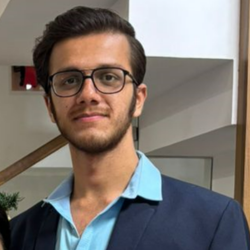
Savio Rodrigues
Savio Rodrigues is a Research Analyst at Escape Velocity MediaWorks Pvt Ltd and writes for Chakra News on Defence, Geopolitics, National Security. He holds a Master’s degree in International Relations from the University of Mumbai.


Comments