













SHESHNAAG-150: India's Answer to the Shahed and Geran Drones

This Indian drone strikes targets over 1,000 kilometres away and it challenges Russia's Geran-5 and Iran's Shahed-136.
Intrigued?
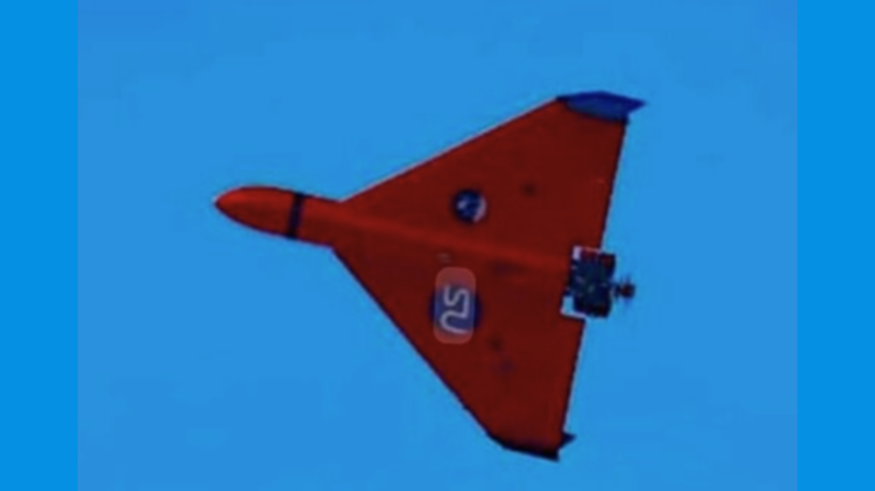
Today, Chakra examines the Sheshnaag-150, an indigenous deep-strike attack drone that aims to combine long-range precision, affordable mass production and autonomous operations.
The GryphonWorks team at Bengaluru-based NewSpace Research & Technologies has successfully tested a Rocket-Assisted Take-Off, or RATO, booster on the Sheshnaag-150. The booster provides additional thrust during launch; it does not mean the drone's main engine is rocket-powered. The company describes this as a first for India's indigenous deep-strike one-way attack drone category. Previously, the platform completed a reported 720-kilometre flight at Pokhran.
But before we go ahead, what exactly is the Sheshnaag-150, and why does India need it?
It is a one-way attack, or OWA, loitering munition designed to carry an explosive warhead deep into enemy territory. Unlike a conventional missile, a loitering munition can potentially remain airborne before striking its target. India needs such systems to expand its strike options while reducing dependence on expensive missiles and crewed aircraft.
So what can the Sheshnag 150 do?
The platform is reported to have a potential range exceeding 1,000 kilometres, more than five hours of endurance and a 25–40-kilogram warhead. Its reported capabilities include AI-assisted visual navigation in GPS-denied environments and coordinated swarm operations, in which multiple drones could distribute targets and complicate air defence. These advanced functions require further validation.
Unlike a conventional cruise missile, the Sheshnaag-150 prioritises affordability and numbers over speed and destructive payload. And it can be launched from forward locations without conventional runways.
But, how does it compare with the world’s best drones?
Iran’s Shahed-136, extensively used by Russia as the Geran-2, relies on long range and mass attacks to overwhelm air defences. Russia’s newer Geran-5 uses jet propulsion for greater speed and reportedly carries a 90-kilogram warhead. America’s LUCAS takes the low-cost attack-drone concept further, offering a platform designed for modern military operations. India’s Sheshnaag-150 aims to carve out its own niche, with a reported range exceeding 1,000 kilometres, a 25–40-kilogram warhead and more than five hours of endurance. Its claimed differentiators are AI-assisted navigation in GPS-denied environments, coordinated swarm operations and rocket-assisted take-off from locations without conventional runways. However, these capabilities remain subject to testing, and its overall superiority over foreign rivals is yet to be established.
When will it enter service?
The rocket-assisted take off trial is a development milestone, not an induction announcement. Further trials, military evaluation and procurement decisions will determine its operational timeline. No confirmed public date for induction or frontline deployment has been announced.
If its promised capabilities are validated, Sheshnaag-150 could give India another option for affordable, long-range strikes.
Chakra Desk
Chakra News is a specialised digital media platform committed to in-depth coverage of India’s defence, national security, geopolitics, and critical technologies.




Comments