









Fact check: No, Iran didn’t design the Shahed-136

I’d like to point out that these drones were an original Iranian design… we took them back to America, made them better and fired them right back at Iran,” CENTCOM Commander Admiral Brad Cooper said on March 4. He was referring to the first combat use of the LUCAS or Low-Cost Uncrewed Combat Attack System in Operation Epic Fury.
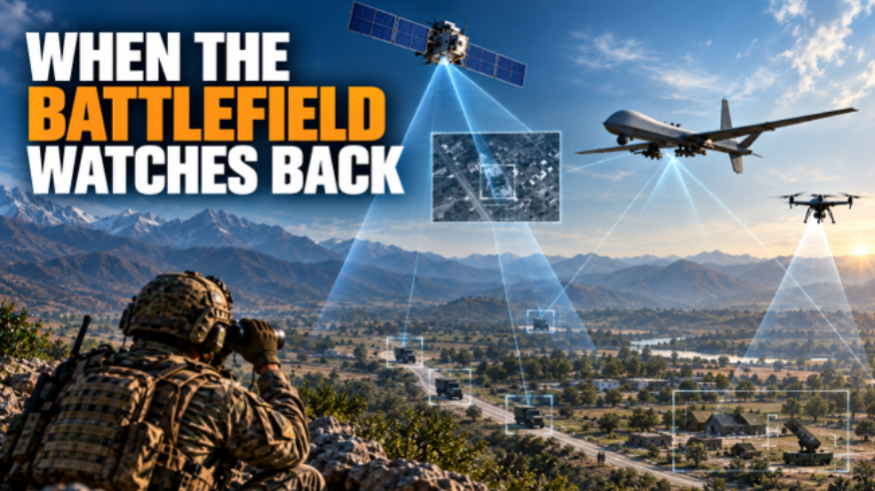
Iran used hundreds of inexpensive Shahed-136 drones to penetrate US, Israeli and missile defences of Gulf states as part of Operation True Promise-4. Now, as it turns out, the US too is using similar equipment to attack Iran.
The US has reverse-engineered ‘enemy’ weapons in the past. The US acquired German V-2 ballistic missiles and captured German scientists after World War 2 to advance their own missile and space technology. Still, it is rare for the US to make public statements about reverse engineering adversary weapons.
But Admiral Cooper needs to get his facts right. The HESA Shahed-136 is not an original Iranian design. US ally West Germany pioneered the design in 1985 at the height of the Cold War.
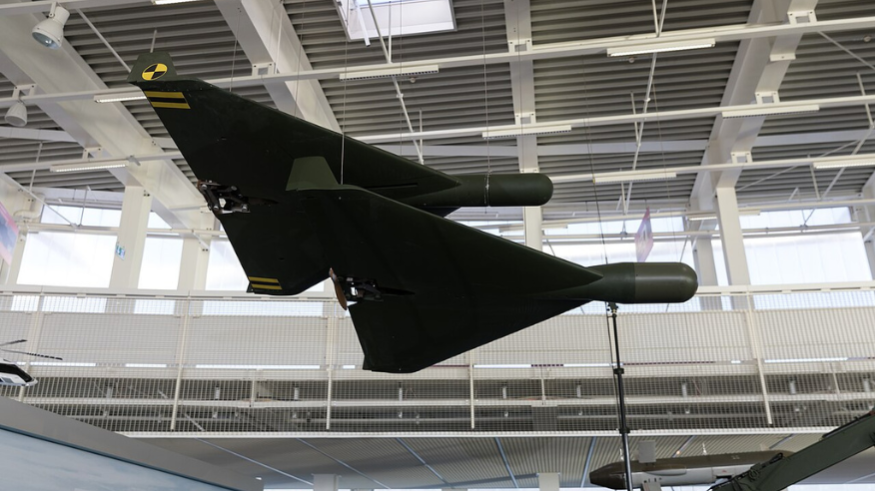
Perhaps Germany could arrange a guided tour of the Dornier museum in Friedrichshafen for Admiral Cooper and the LUCAS design team to refresh their memory.
Aircraft firm Dornier GmBH designed the Drohne Anti-Radar (DAR), as a cheap kamikaze drone to detect radars and plunge their explosive payload into them— what are called suppression of enemy air defences (SEAD) missions. The project itself was an outcome of joint US-West German efforts from the early 1980s to design and build large UAV decoys which could also be used for SEAD.
The DAR pioneered the delta-wing design with its larger control surfaces enabling more lift, control and precision, extra space for fuel that extends the operational range, and the rigidity which would withstand the high-G forces the craft would undergo in steep death dives.
The DAR had a take-off weight of 110 kg and a combat weight of 142.5 kg. It was 2.3 metres long and had a 2 metre wingspan, and a single propeller powered by a Fichtel and Sachs SF2-360 two-cylinder, two-stroke boxer engine which gave it a maximum speed of 250 kmph, a flight duration of upto 3 hours and a 600-km range. Dimensions and performance that are nearly identical to the present-day Shahed-136. The DAR had a fuel capacity of 18 kg, was equipped with a GPS-Navstar receiver and a passive broadband seeker for guidance, and carried a fragmentation warhead designed to detonate on impact.
Dornier also designed the ground component of the system—a launch vehicle, a 6x6 Iveco 260AH truck with a ground control unit carrying upto 18 DARS. The system had a transport and reloading vehicle equipped with a loading crane.
The DAR project was terminated in 1994 after the military downsizing following the end of the Cold War.
But in the early 2020s, the design was picked up by the IRGC’s Aerospace Forces. The Shahed-136 was first used by Iran during its 12-day war with Israel last year. Clones were also supplied to Iranian proxies like the Houthis and Hezbollah.
The HESA Shahed-136, which has a maximum weight of 240 kg, a length of 3.5 m, and a wingspan of 2.5 m. Even its engine, the Iranian MADO MD-550, was reverse-engineered from the German Limbach 550E. (The Geran-2 currently being used by Russia in its war with Ukraine is based on the Shahed-136). The Shahed-136 has been used as a suicide drone in the Iran-Israel conflict and the ongoing Russia-Ukraine war.
Defence analyst Austin Joseph explains that Russia and not the US or Iran operates the most advanced DAR version. “Russia’s Geran-3 has a turbojet engine variant. An air-to-air missile fired by a Geran scored two helicopter hits recently. Gerans have been acting as mother carriers for other smaller drones. The Russians have added cameras and computer-vision systems to enable their drones to undertake evasive manoeuvres (to avoid counter-drones) or identify and target air defense systems.”
The US’ Task Force Scorpion Strike (TFSS), a unit launched in December 2025, has only now begun using these DAR clones. It will be a steep learning curve for them.
Arjun Dev Singh
Arjun Dev Singh has a deep interest in defence, security, and strategic affairs. With a strong analytical lens and a passion for military and geopolitical developments, Arjun strives to bring clarity and context to complex national and international issues.


Comments