








CHANGES ANNOUNCED IN AGNIVEER SCHEME WILL BENEFIT UNIT COHESION AND OPERATIONAL READINESS
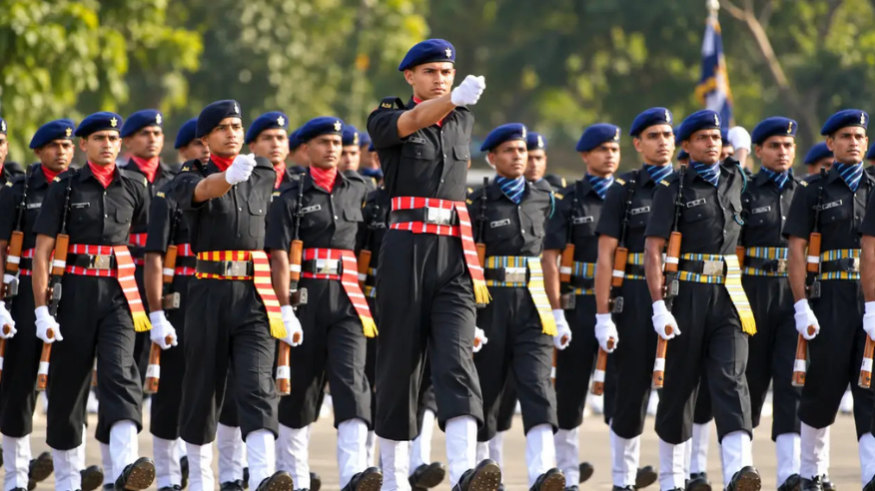
On 04 November the Chief of Defence Staff General NS Raja Subramani has announced a major update to the Agnipath scheme. The Union Cabinet approved a two-year extension, termed the ‘Second Tour of Duty’, for Agniveers recruited under the Agnipath scheme, extending the service tenure of Agniveers by two additional years.
General Subramani stated that the first batch of Agniveers was nearing the completion of its four-year term and reported positive feedback on their performance. He said, “The Cabinet has created a pathway for all Agniveers to be absorbed into the Indian Defence Forces,” adding that the scheme would continue in its existing form and the additional engagement period followed continuous reviews and recommendations from the three Services.
The changes have been announced as the initial batch of 24,400 Agniveers is nearing the end of its four-year service term, with as many as 75% of the batch, or 18,300 personnel, set to leave the three-Armed Forces. The first batch of Agniveers from the Navy was set to leave on 21 November, the first Air Force batch on 25 December and the Army on 31 December.
This decision provides outgoing personnel with an extended timeline to showcase their performance, gain specialized skills and pursue permanent enrolment in the regular cadre based on merit. This follows the Armed Forces' recommendations after they assessed how the scheme performed in its first four years.
The Scheme
The Agnipath scheme, launched on June 2022, initially recruited personnel for a four-year term with 25 per cent retention eligibility based on merit. It faced criticism for the short service duration and employment uncertainty.
Under the revised changes, 25 per cent of Agniveers will be enrolled into the regular Armed Forces on merit after their initial four-year tenure. The remaining 75 per cent will have the option of extending their service by two years on a voluntary basis. At the end of six years, all Agniveers will be offered the chance to enroll as regular soldiers, subject to their willingness and the prescribed selection criteria laid down by the Services. The criteria will probably include medical, physical fitness, professional competence and discipline.
The extension includes higher remuneration, an enhanced Seva Nidhi package and cumulative seniority benefits. There are issues that need clarity which include the seniority and pensionable service of those retained after extension and the earlier order that no Agniveer can get marred till he is permanent. These will no doubt be addressed.
The revamped model, will undergo a financial review, with higher salaries and future pension and gratuity payouts. The higher outgo is expected to be partly offset by savings in training costs.
The modifications to the scheme will no doubt address ‘career uncertainties’ at the individual level as well as ensure that the sudden shortfall of trained manpower at a unit level will not take place. This will benefit unit cohesion and operational readiness.
Changing Character of War
There is no doubt that the character of modern warfare is undergoing a fundamental transformation, driven by rapid technological advancements and the increasing convergence of operations across land, air, maritime, space, cyber and cognitive domains.
Future conflicts will demand not merely the possession of advanced military technologies but the ability to rapidly absorb, integrate and effectively employ them in a complex and contested operational environment. In this context, the Agnipath Scheme presents both opportunities and challenges for the Indian Army's technological transformation and preparedness for Multi-Domain Operations (MDO).
The induction of a younger, digitally aware and technologically adaptable generation of Agniveers provides an important human resource advantage in an era where technology is becoming central to battlefield effectiveness. Their familiarity with digital platforms, interconnected systems and emerging technologies can facilitate faster learning and adaptation. This assumes particular significance as the Indian Army progressively inducts unmanned and autonomous systems, artificial intelligence, advanced surveillance equipment, electronic warfare capabilities and network-enabled command and control systems.
The successful conduct of MDO will require soldiers at every level to understand the interdependence of different operational domains and effectively integrate sensors, communication networks, information systems and weapon platforms to achieve operational superiority.
However, the retention of only 25 percent of Agniveers after their initial engagement, with the remaining 75 percent exiting, presented a significant challenge to sustaining technological proficiency and combat effectiveness in an MDO environment. Military skills today require proficiency in emerging technologies as a result of continuous training, practical experience and progressive specialisation.
The departure of a substantial proportion of trained Agniveers risked the recurring loss of technological expertise, institutional knowledge and operational experience acquired during their service. This challenge is particularly pronounced in specialised functions such as drone operations, electronic warfare, cyber defence, battlefield surveillance and network-centric operations, where competence develops progressively through repeated employment, collective training and operational experience. Frequent turnover disrupts the continuity of technically proficient teams, weakens collective expertise and place additional training responsibilities on experienced personnel.
In an MDO environment, where operational effectiveness depends upon seamless integration, established team cohesion and the ability to make rapid decisions across interconnected domains, such discontinuity could directly affect combat readiness and the ability to exploit technological capabilities effectively. The relatively short engagement period further compresses the time available for an Agniveer to progress from basic technological familiarity to genuine operational proficiency.
The challenge, therefore, is to balance the advantages of a younger, technologically adaptable force with the requirement for sustained expertise, experienced personnel and operational continuity. This calls for early identification of technological aptitude, accelerated skill development, structured knowledge transfer and retention of personnel possessing critical technical competencies.
Ultimately, the success of Agnipath in an MDO environment must be measured not merely by the speed of technology absorption but by the Army's ability to retain, institutionalise and employ technological expertise over time. A technologically aware soldier may be trained relatively quickly, but developing an experienced multi-domain warfighter requires sustained investment, collective training and operational exposure.
Agniveers spend four years learning to handle weapons, equipment and communication systems. If three-quarters of them go, the Services lose people they've already trained, then have to start over with new recruits.
The decision to offer an additional two-year engagement to the remaining 75 percent of Agniveers, followed by an opportunity for regular enrolment subject to willingness and selection criteria, directly addresses part of this concern.
Conclusion
The Raksha Mantri Shri Rajnath Singh described the decision as part of long-term structural reforms aimed at building a younger, fitter and technologically equipped military. He said, “It is not merely a recruitment policy; it is a way forward to prepare India’s military for the changing character of warfare.”
The Agniveer scheme was apparently top down driven by fiscal considerations, though of course an advantage given was a pool pf younger profile technology savvy youth. It was a retrograde step and even though there were many voices of dissent the scheme was pushed though.
The Armed Forces have the ability to make any scheme work and had harnessed it well, but it all comes at a cost. Therefore, based on the feedback from units and a thorough evaluation the modifications to the scheme which were recommended and pursued by the senior hierarchy have now been approved.
This will ensure that the benefits of youthful induction translate into enduring combat capabilities rather than recurring cycles of training and loss of expertise. The priority must always be organizational effectiveness.
Maj Gen Jagatbir Singh, VSM (Retired)
Major General Jagatbir Singh is an Armoured Corps Officer who commanded the First Armoured Division. He served in varied terrains and tenanted important command, staff and instructional appointments including a UN Peace Keeping Mission in Iraq and Kuwait. He co-authored ‘Armour 1971’ and edited ‘Valour and Honour’.


Comments