







Kirana Hills Strike: Accidental Hit or Strategic Signal? Why Gen Anil Chauhan's Revelation Matters

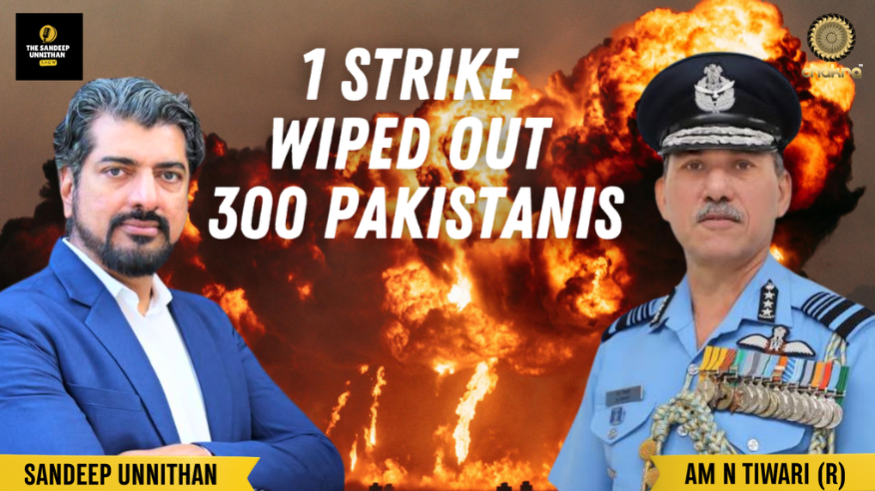
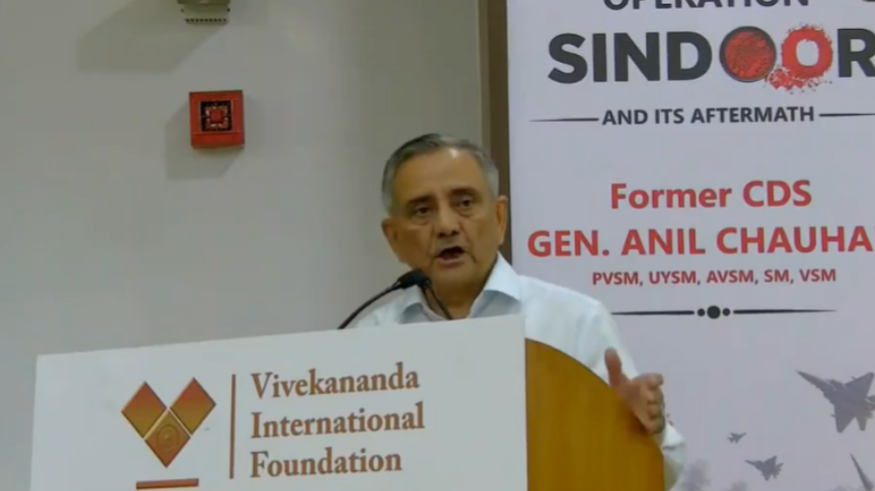
For months, one of the most intriguing unanswered questions surrounding Operation Sindoor has been what happened at the regions surrounding Kirana Hills- Pakistan’s strategic weapon’s infrastructure. India’s Chief of Defence Staff (CDS) during Op Sindoor, said at an event at VIF on Tuesday, providing a first detailed explanation of the incident from the Indian Side. General Chauhan said that that Kirana Hills was not an intended target and may have been struck accidentally by a loitering munition searching for Pakistani radar installations.
Gen Chauhan said, “At occasions, it's been asked whether Kirana Hills were hit or not, which is where their (Pakistan's) nuclear facilities are. Before those strikes, we had sent in a lot of loitering missions at Sargodha and Kirana Hills is about 10 kilometers north of Sargodha," Chauhan said.
At the time of the strikes, the Pakistani claim that Kirana Hills had been targeted was interpreted as a possible Indian message, demonstrating India's intent and capability to strike Pakistan's nuclear infrastructure. Speaking at the Vivekananda International Foundation (VIF), Gen Chauhan said India had deployed loitering munitions around Sargodha to originally locate radar targets. Such weapons have a limited endurance and according to his explanation, one of them may have failed to find its intended target before running out of loitering time and subsequently coming down over the regions surrounding the Kirana Hills area.
The question of what actually struck Kirana Hills, however, is unlikely to disappear immediately. The discussion around the available footage, which remains largely unverified, has focused heavily on whether the apparent characteristics of the strike are consistent with a loitering munition or a faster and larger missile. The sound of Loitering Munitions varies significantly from the sound of a missile fired.
Comparartive analysis of the two, alongside the unverified footage circulated by local Pakistani individuals clearly indicates, that the Kirana Hills facility was struck by a much larger, faster missile, possibly a supersonic cruise missile, although the available evidence does not independently establish the weapon used.
The revelation is significant because images and videos showing smoke rising from the Kirana Hills area had circulated during Operation Sindoor, prompting speculation that India had deliberately targeted a Pakistani strategic weapons facility. Chauhan's account now offers a very different explanation: the location was hit, but it was not deliberately targeted.
The timing of this statement is particularly interesting. Gen Chauhan's remarks came as India and China are attempting to consolidate a thaw in bilateral relations, with NSA Ajit Doval in Beijing for the latest round of Special Representatives talks on the boundary question. Chinese President Xi Jinping is also expected to visit New Delhi for the BRICS Summit next month. It reinforces the message that India did not deliberately attack Pakistan's nuclear infrastructure during Operation Sindoor and therefore did not seek to cross the nuclear threshold.
If Gen Chauhan's explanation is accepted, India struck near a sensitive Pakistani strategic location without intending to attack the nuclear infrastructure itself. Whether accidental or otherwise, the incident nevertheless demonstrated the risks inherent in conducting high intensity conventional operations in close proximity to nuclear assets. That is precisely why his clarification matters now.
For Pakistan, this has challenged a long-standing assumption that its nuclear arsenal would automatically prevent India from undertaking significant conventional military action. India's response demonstrated that nuclear deterrence does not necessarily eliminate the space for conventional retaliation. It reiterated India’s doctrine stated by Prime Minister Modi that India would not tolerate attacks at its soil, on the behest of Pakistan’s nuclear weapons.
This may help explain Islamabad's subsequent efforts to strengthen external partnerships and seek greater strategic depth through relationships with countries such as Turkey and Saudi Arabia as well as renewed engagement with the United States under President Donald Trump. For Pakistan's military leadership, these partnerships could serve both strategic and political purposes, helping restore its image of relevance and influence at home and abroad after the setbacks exposed during Operation Sindoor.
Savio Rodrigues
Savio Rodrigues is a Research Analyst at Escape Velocity MediaWorks Pvt Ltd, where he writes extensively for Chakra Newz on defence, national security, geopolitics and emerging technologies. He holds a Master's degree in International Relations and Strategic Studies from the University of Mumbai and has experience in geopolitical risk analysis, strategic research and international affairs.



Comments