





Rethink the LCA Mk-II, Focus on AMCA: Air Marshal Anil Chopra (Retd)

Air Marshal Nagesh Kapoor’s candid take on the Tejas Mk-2 on NDTV, has ignited fresh debate across defence circles. His assessment raised questions about the Mk-2’s relevance in the 2030s, India’s widening fighter squadron gap and the roadmap for AMCA and future combat aircraft.
To examine these concerns, Chakra News spoke to Air Marshal Anil Chopra (Retd), former DG, Centre for Air Power Studies, who weighs in on the Mk-2, faster Mk-1A production, AMCA, sixth-generation fighter programmes and the delays plaguing India’s defence projects.
This interview has been edited for clarity.
Q1. Do you agree that the Tejas Mk-2 risks becoming operationally irrelevant if it enters service in the 2030s? How should the IAF operate a 4.5-generation Tejas Mk-2 in a 2030s environment dominated by Chinese fifth- and sixth-generation fighters?
A. Yeah. So that statement is, in a way, true. Why? I will tell you.
Presently, the country is still at the Mk-1 stage because Mk-1A aircraft have physically not been delivered and there are issues that HAL is still sorting out, other than the engine. So we are at the Mk-1 stage. We need numbers.
For those numbers, we have already ordered close to 180 LCA Mk-1As. These deliveries will carry on till the middle of the 2030s because even if they make 24 aircraft a year, which is not happening at present, the 180 aircraft would be available to us only around 2033 or so.
Second, to build up numbers, we must acquire aircraft from outside because Mk-2 has still to fly. We have already committed, more or less, to the Rafale, so Rafale will build up numbers and provide an established capability.
The country must then put all its energies into AMCA. That means effort, technology, money, manpower and skilled labour all into AMCA, because that is our fifth-generation aircraft. AMCA, on paper, is supposed to come to the Indian Air Force in 2035, but actually, by my reckoning and understanding, it may come up in 2038 or something like that.
So I think, in the long term, to save some money, gain time and achieve our operational capability, which is the core issue, this is the route that we should follow.
We accelerate production of Mk-1As, put all the money and means of the country into AMCA, and in parallel work on our own aero-engine.
For the aero-engine, two routes have already opened up: Safran and GTRE is one group, and Reliance and Rolls-Royce is the second group. It would be a good idea because we are not competing. When we get two core engines, these core engines will not only be required for fighter aircraft, they will also be used for airliner engines. The same core can then be converted into a larger engine with a bigger fan.
We know that AMCA-I is supposed to be non-stealth and only AMCA-II will have the appropriate engine and internal bays. By that time, we would have gained some knowledge and, hopefully, be ready with our own engine.
So broadly, I agree that because of the delays, the LCA Mk-II may not be pushed. More so because if we are going to buy 114 Rafales, which will also be made in India, the LCA Mk-II will clash with that same class of aircraft.
Q2. If Mk-2 is delayed, should the IAF bypass this delayed domestic project and purchase more foreign fighters to fix critical squadron shortages, or do we have other options?
A. For building numbers, there is urgency. Pushing LCA Mk-1A production is the first step.
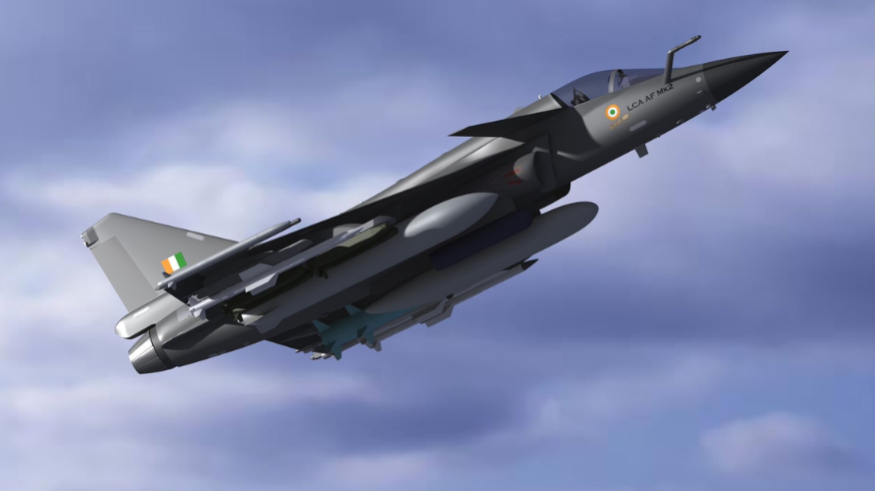
The first flight of the LCA Tejas Mk-2 is targeted to take place between March and July 2027, according to recent updates from Hindustan Aeronautics Limited (HAL). It can be inducted not earlier than 2035. To get capability, we need, for the time being, to buy some foreign aircraft.
India is already operating Rafale. It is time-tested and the IAF finds it operationally very capable. The country thus seems to have chosen Rafale, so Rafale will help build capability and numbers.
But the immediate priority should be to concentrate on the Mk-1A and accelerate its production. The target should be 24 aircraft a year. There are two production lines in HAL Bengaluru and one in Nashik. One more line should be given to the private sector, and you should be able to easily make 24 LCA Mk-1As.
Supply chains have to be secured. It is HAL's job to secure these supply chains. And there we have no choice but to stick with GE F404 for now. It is the best engine for the aircraft, but there are supply-chain issues.
It is pertinent to say that General Electric (GE) had reportedly already shut down the specific F404-IN20 variant production line years before India placed its major 2021 order. By 2016, GE Aerospace had finished delivering 65 units of the F404-IN20 engine for the initial batch of Tejas aircraft. With no further active orders scheduled or on the horizon for that specific variant, GE allowed the production line to go dormant and shut it down.
The manufacturing line remained inactive for roughly five years. When HAL signed a $716 million contract in August 2021 for 99 additional F404-IN20 engines to power the Tejas Mk-1A jets, GE faced the difficult task of reviving the cold production line and rebuilding the dispersed post-pandemic supply chain. This major restart contributed heavily to subsequent delivery delays for the fighter programme.
Notwithstanding this, we now have to secure supplies, even if we have to order double the number of engines in advance. The aircraft is built around the F404. You can't change the engine without making major structural changes and undertaking major ground and flight testing.
Presently, the plan is to power the LCA Mk-II with the GE F414 engine and manufacture it in India with technology transfer. The same engine will also power the initial two squadrons of AMCA. I hope India matures the contract early enough. The AMCA prototypes will require 15 engines urgently.
If India were to discontinue the LCA Mk-II, then a fresh look may have to be taken at the contract.
Q3. India is still struggling to get its 4.5-generation fighter off the ground. Is it realistic for India to join a global sixth-generation project like FCAS or GCAP while AMCA itself is still a long way off?
A. As I said, we must focus everything on AMCA because that is our own fifth-generation aircraft.
AMCA, on paper, is supposed to come to the Indian Air Force in 2035, but actually, by my reckoning and understanding, it may come up in 2038 or something like that. We should also, in parallel, get into one of the programmes—FCAS or GCAP.
Both were wooing us, but GCAP already has the three partners: the UK, Japan and Italy. FCAS had France, Spain and Germany, and Germany has walked off. They are left with only two partners. Therefore, the French are keen that India joins.
These programmes need numbers to reduce costs, as well as partners to invest and later buy the aircraft.
FCAS is led by the French. The radar and the engine will be French, and the rest of the system may come from Spain and India. Technology, work-share and costs will have to be discussed. Between the two programmes, FCAS would perhaps be better.
Second, why we need to go to a sixth-generation aircraft is because there are only two countries in the world, the USA and China, which can afford to make more than 500 of a particular type on their own.
The Chinese are already having somewhere between 400 and 500 J-20 fifth-generation fighters, and they have given themselves a target of 1,500 fifth-generation aircraft by 2035. The American military, of course, have already committed to more than 2,400 F-35 aircraft.
China and the Americans have already flown their sixth-generation aeroplanes. So we cannot afford to go for a sixth-generation aircraft on our own with the kind of numbers the Indian Air Force needs, as aeroplanes are becoming very, very expensive.
It is better for us to pursue the sixth-generation aircraft route with somebody. While doing that, we will imbibe some technology that can also be brought into AMCA.
AMCA is important for India because that will be our own programme. We would have built it and would be learning along the way with the AMCA programme.
Now, FCAS has already been on for some time, so some maturity of design has already taken place. If we join, the discussion will be: what will we be contributing, and what will we get? They will require money from us.
The best thing that India can do is make all the aero-structures here because we can't do the engine and the radar, which the French will do on their own. In the process, we will learn from FCAS and then use some of those technologies for AMCA.
I think this is a broad plan from now to 2040.
Q4. The undisputed fact is that our programmes have been perennially delayed. How should we avoid these delays? What role should the IAF play when the programme is with the private sector or even HAL?
A. See, first, it is a good decision by the government to give AMCA to the private sector or whosoever has finally been selected. The decision to let Tata Group build the C-295 was a good one and it has been a good programme running on track.
On the 28th of August, three days from now, you will have the RFP responses for AMCA. And I hope that by early 2027, we have already given the contract.
The infrastructure—650 acres—has already been acquired and is being built up in Puttaparthi, where the ADA is setting up the full complex for prototype making. Another 400 acres are earmarked for full production and a bigger complex later. So, the groundwork on AMCA is on.
As for delays, HAL, like all public-sector undertakings, is bureaucratically controlled. They are less efficient than the private sector. Can you imagine if you watch the economic channels, HAL reported an EBITDA margin of around 27.7% for its recent Q1 FY27 results, with management guiding a stable annual EBITDA margin target of 30% to 31% for FY27. Very few private companies can show such returns.
How? There is a single customer and a monopoly.
The way the sale price is calculated for PSU production is that the total expenditure on raw material, labour, infrastructure, electricity, water and building materials is calculated, a percentage is added to that, and then the cost of the product is evolved. This means they will always make a decent, assured profit.
So, if that be the case, HAL's share will carry on going up because it has confirmed orders for the next 12 years.
And yet the productivity in HAL, in any DPSU, a public-sector undertaking, man-hour-wise is poor because in the corporate world, they will make the LCA with one-third the number of people and with better salaries, better output and better assurances.
Some often blame the IAF, saying that the Air Force keeps changing ASRs. You know, I'm telling you, if at all, it is the Air Force that has been forced to give concessions.
As per some open sources, the Indian Air Force has granted nearly 37 concessions and relaxations to HAL to fast-track the delayed induction and delivery of the LCA Tejas Mk-1A fighter.
If the aircraft gets delayed by a decade or two, the Air Force must expect contemporary capability, and if at all, revise ASQRs. The adversaries are moving ahead.
Its time to take early calls on LCA Mk-II. If India must push ahead with it, then we must have the whole nation backing it.
In any case, AMCA is the major national programme and should be monitored by the PMO directly.
Deepak Bhadana
Over the past decade, Deepak Bhadana has built expertise in multimedia storytelling, with a focus on military conflicts, insurgencies, international relations, the defence industry, and occasionally, wildlife and environmental issues.


Comments