








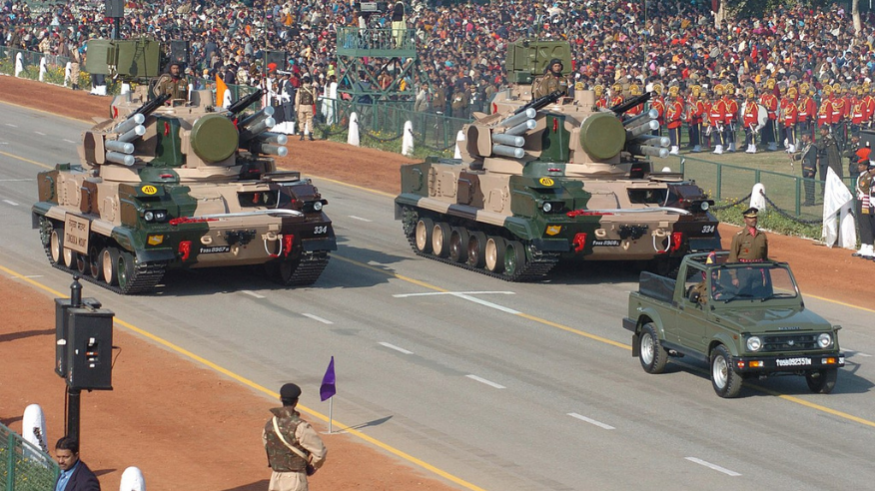
More Tunguska for India

The Ministry of Defence signed a ₹445 crore deal with Russia’s Rosoboronexport on 27 March to procure the Tunguska-M1 air defence system for the Indian Army. The 2K22 Tunguska-M1, designated SA-19 “Grison” by NATO, is a short-range mobile air defence system designed to protect troops and mechanised columns from low-flying aerial threats. It combines 30 mm anti-aircraft guns with surface-to-air missiles.
Tunguska units are designed to move alongside tanks and mechanised infantry, while also protecting strategic assets such as airbases, ammunition depots, and command centres. Most deployments are expected along the western and northern borders.
India already operates between 66 and 80 Tunguska systems, acquired between 1995 and 2012, including 2S6M and 2S6M1 variants. The current deal focuses on replenishment and upgrades.
The system features a sophisticated radar suite, including the 1RL144 pulse-Doppler 3D radar, capable of detecting targets up to 18 km away and tracking them at 16 km, even at low altitudes of around 15 metres. It is resistant to interference and effective in complex terrain.
Tunguska can fire its 30 mm cannons on the move, although missile launches require the system to halt. It can engage targets moving at speeds of up to 500 metres per second.
Standard features include a computerised fire control system, NBC protection, automatic fire suppression, navigation systems, night vision, and secure communications. A battery of six systems can operate in coordination via encrypted links, receiving targeting data from command posts, AWACS, or early warning radars.



Comments