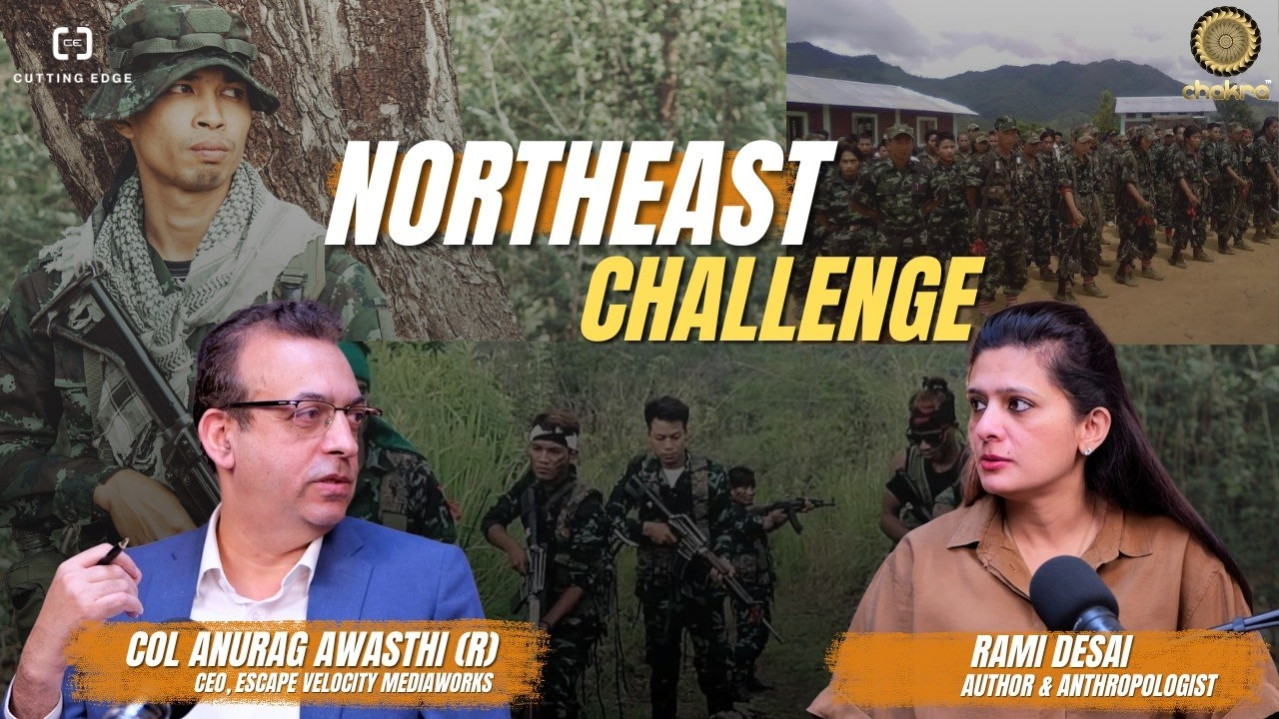




The Battle for India’s Eastern Frontier

The Cutting Edge with Colonel Anurag Awasthi (Retd)
With Rami Desai, Distinguished Fellow, India Foundation
Colonel Anurag Awasthi (Retd): Hello and welcome to Cutting Edge, your show on geopolitics, defence and aerospace. We have again Rami Desai, author, theologian, anthropologist, North East specialist and a very dear friend, back to speak on Bangladesh, Myanmar and all things Northeast. Welcome. Welcome to the show.
Rami Desai: Thank you.
Colonel Anurag Awasthi (Retd): All right. So, we've seen, you know, a great, you know, changeover with Bangladesh elections, which happened in February. And then we had the best Bengali elections, which just culminated just now. So, both literal entities have just had elections. And enter Tariq Rahman as we discussed earlier. So, how does this change the trajectory of India-Bangladesh relations?
Rami Desai: So, you know, we've been watching Bangladesh very closely as Bangladesh has been watching us. Yeah, the elections have been a major point of interest for at least observers like me, because, you know, it was all about who's going to come into power. Is the interim government going to leave? Is he going to leave his seat of power? And if elections are held in a fair way, which I don't know is a difficult thing to say, because the Awami League was not a part of the elections. So how fair can that be? But in operational terms, the elections were run in a fair way. Who would come into power? Would it be the BNP? Would it be the Jamaat? Would it be the young students? What we realised is that Tariq still has some level of support, which was probably a little bit suppressed during Awami League time. At least the supporters didn't come out, you know, in public. And that he's come back with a thumping majority. Now, what does that mean for India? For India, it means that the relationship is, in my opinion, likely to be a tricky one. It's not going to be an easy one. Tricky. Yeah, it's going to be a tricky one because Bangladesh is important for us. It is our neighbourhood. We cannot change that as India is important for Bangladesh. You know, I don't think Bangladesh should ever think that, you know, they can get the better of us, or India wants to get the better of them, because by virtue of the geography that we have, both countries are important to each other. You know very well that we have some agreements coming up.
Colonel Anurag Awasthi (Retd): Yes.
Rami Desai: You know, we are negotiating some treaties. Water is going to be a major influencer, of course, China is going to be a major influencer, and the US. What is the role of Pakistan?
Colonel Anurag Awasthi (Retd): Of course.
Rami Desai: How much influence does the U.S. have? These are all questions we'll have to wait and see. However, I think at this point, what we can say is it's not going to be a smooth road ahead. It's going to be a tricky one. It's going to be back and forth, but it's going to be an important area to watch.
Colonel Anurag Awasthi (Retd): Right. Great. So, a tricky road head. But you know, with this political transition which has happened, we also must look at a couple of things very acutely. The first thing is, can you look at, you know, the Bangladesh-Pakistan relationship, which was suddenly on a very, very big upswing before the elections. Is it still on, or is it likely to subside, or is it going to be status quo?
Rami Desai: I think that relationship is, again, an important relationship for Bangladesh, right? And during the interim government time, there has been some amount of influence, okay, that we've seen.
Colonel Anurag Awasthi (Retd): Yes, of course
Rami Desai: We've seen it in terms of military-to-military engagements at the highest level. But more importantly, there has been news that has come out of a lot of training of the Rohingya groups. And I think there was a certain amount of news and coverage on what was called the Four Brotherhood Alliance. That was bringing together the Rohingya groups, which were interwar, in conflict with each other, but it was what brought them under one umbrella. And that itself, I think, was a formidable achievement. And that sort of influence, that sort of training, though it might not be overboard. I don't think that can be taken back. Yes, that influence will remain, and that is something for us to again be very, very wary of from a security point of view. But I think when you ask me about Bangladesh and Pakistan. I think that's a relationship that isn't going anywhere. Okay.
Colonel Anurag Awasthi (Retd): So, it's here to stay.
Rami Desai: For a bit. I think the inroads have already been made. The same roads are not going to be reversed. And if I were you, know, if I were in that position, you know, I would maybe be playing one country.
Colonel Anurag Awasthi (Retd): Of course. That, of course, I think that's exactly what they're going to be doing in some way or another. But then, you know, when you look at the West Bengal elections now, which have been held, and as you see the last 10 or 12 days, there's a huge amount of land now which is being released by the current government for fencing. We are looking at highways close to the, you know, silicon corridor, which are going to be looking at a huge amount of infrastructure. We are looking at rail connectivity through the corridor. We are looking at a huge amount of land which could be looking at bolstering the defences, etc., etc. Is it a good thing, a bad thing? How much time do you think all this is going to take?
Rami Desai: I think it’s a fantastic development. I think this is something that we should have done a long time ago.
Colonel Anurag Awasthi (Retd): Absolutely.
Rami Desai: Of course, now that it's happened, you know, let's forget the past and look forward. I'm glad that this is happening because it's a very critical area. You know that its narrowest point is only 22 km. And it's the only connectivity that we have to the northeast, land connectivity to the northeast region, therefore making it critical for us. We also have heard about certain developments on the other side of the border, whether it's the Lal Munirat air base or whether it's commercial drones that they are making, but who knows? You know, if there is an international presence in that area, can it be a dual use? Certainly, these are things that any country will look at and try to find solutions to. And I think the solution is just this. You know that the state has transferred land to the centre, which includes all these major highways. Yes, national highways. And I think that is a very, very important strategic move that India has made. And we'll have to see now further how, you know, we make the most of it.
Colonel Anurag Awasthi (Retd): Yes. Yes, absolutely. I think they should have been done a little while back. But then, you know, der aaye durust aaye as they say. So, while we just spoke about water, Rami, you know, you look at the Ganga Water Sharing Treaty 1996 that expires this year in 2026. Now, is this likely to be another flashpoint of water in the Indian subcontinent? You really think that it has the wherewithal to make water a flashpoint in the eastern part?
Rami Desai: Absolutely. I think it's going to be one of the major flashpoints. Water is something that the Bangladesh government has never been quite satisfied with. Yeah, they feel that they have not had a great deal in this agreement. India. Of course, it has its own limitations as well as its own priorities. And therefore, the negotiations are going to be very important. China's influence, of course, is also something that we'll have to wait and watch. But at the end of the day, I think the way we have to look at it and the way Bangladesh has to look at it is that you're not going to get what you get from India from anywhere else. Of course, you know, so this relationship is a relationship that cannot be completely alienated. The revenge of the geography.
Colonel Anurag Awasthi (Retd): The revenge of the geography.
Rami Desai: Absolutely. So, the best-case scenario for both countries here is to come to some level of mutual understanding that benefits, you know, people of both countries.
Colonel Anurag Awasthi (Retd): I agree. You know, you know, in the same breath, you know, if you realise you have the Padma Barrage and sometime back, Bangladesh made a statement that it's a, you know, sovereign matter. You know, it's Bangladesh's sovereign matter. Now, does this small statement, you know, I've been reading this for a very long time. Does this indicate a different mindset or a different mind space of a couple of people in Bangladesh, thinking that, look, that's the way it's going to be?
Rami Desai: Absolutely. You know, I think that there are people from Bangladesh. Politicians are playing to the galleries.
Colonel Anurag Awasthi (Retd): Yeah. Of course,
Rami Desai: you know, and it is reflective of a mindset which is a mindset that is not a name to us. It's not something that we aren't aware of. We are very aware of this mindset. And this is a mindset that comes from thinking that India is a country that we need to somehow put in its place. You know,
Colonel Anurag Awasthi (Retd): But then that's a strange mindset, right?
Rami Desai: See, it's a political statement. I think the political statement reflects an emotion towards India. Let's not make any bones about it. This is not the Bangladesh of Sheikh Hasina, where statements were made in a friendly manner. This is a different Bangladesh. India would like to have good relations and would not like to be antagonized as any good neighbour, you know, would be surprised at. But, you know, these activist statements feel like they want to balance out all the, you know, all the big countries around in the neighbourhood and somehow be able to use that for the negotiation.
Colonel Anurag Awasthi (Retd): Of course, basically playing one against the other,
Rami Desai: essentially, you know, if you, if you, if you look at the situation that Bangladesh is in, there are many international interests in Bangladesh. We saw that before the elections, of course. And I think it's fairly clear that it's becoming a very pale pink all by itself is becoming a very strategically important area. And therefore, blankly saying that, oh, the Americans are coming in or the Chinese are coming in. You know, it doesn't work like that because for Bangladesh's interests also, it's going to try to balance out all the countries. It's not going to want to have any influence or overwhelming influence of one country over the other. You know, so I think these statements should be seen a little bit as political statements; whether they translate into what happens in negotiations is something you'll have to wait and watch, because I don't think that will benefit them either.
Colonel Anurag Awasthi (Retd): Of course, they really won't benefit them. You know, in the same breath. Now you look at the long-standing Teesta. Now, as for the latest reports that one saw in the media, you know, we are looking at Bangladesh inviting a couple of Chinese companies for checking out, you know, these issues of Teesta are ever now, Teesta goes all the way from Sikkim. If I'm not wrong geographically goes into West Bengal and then goes into Bangladesh. Just look at the trajectory of this river. Now this is also very, very close to the Siliguri corridor. So, does that create a little trouble for everybody?
Rami Desai: See, that's antagonising us
Colonel Anurag Awasthi (Retd): Of course.
Rami Desai: And I think that's at the outset when you asked me What do you think of our relationship? Because of our relationship, with me I said it's going to be tricky.
Colonel Anurag Awasthi (Retd): Tricky.
Rami Desai: And this is exactly what I meant by that. We have concerns. We have legitimate concerns. Why would you invite the Chinese? So, these are political players. These are political noise. It's done before the revision of agreements. Renegotiation.
Colonel Anurag Awasthi (Retd): Does it not affect the US interests?
Rami Desai: Of course, it does. That's what I'm saying, that they'll have to continuously balance. This is a very dangerous game where you know that there are international interests. Of course, the US at this point is, you know, the tension is diverted. The Americans are right now, you know, dealing with situations, you know, that they will have to deal with for a while. So that keeps the interest in Bangladesh to be open ball. Right now, the minimum. But at the end of the day, which sovereign nation wants an overwhelming influence in any way, whether it's political or whether it's diplomatic, whether it's strategic, whether it's technical, whether it's military, or any other country?
Colonel Anurag Awasthi (Retd): Yes, yes. Okay.
Rami Desai: And everybody feels that you can balance these things. But in the long run, it's a dangerous game that it is.
Colonel Anurag Awasthi (Retd): It's a very dangerous game, you know.
Rami Desai: And we know what happened even before the elections on the humanitarian card or humanitarian corridor situation. Why would you want to give anybody else her right away?
Colonel Anurag Awasthi (Retd): Yeah, I agree with you completely. I get you.
Rami Desai: Exactly. So, I just feel that, you know, it's a new government that wants to make really solid moves, wants to play, you know, to the people, to the people's emotions. Wants to show that it's a strong government. Wants to play one against the other, maybe a balance of power. And that's what they're doing. You know, and I reiterate that in the long run, this is a dangerous game. But also, they will have to come to some sort of realisation that India has been a good neighbour. India is a friend. And India, geographically, you cannot change. You can't ignore, you can't ignore it.
Colonel Anurag Awasthi (Retd): But, you know, moving from, you know, Padma to Teesta, while it may not be directly concerned with Bangladesh, when you look at the overall, you know, statistics or impetus, anything about the Great Nicobar Project, how is this fitting into the Calculus?
Rami Desai: We've heard a lot of hullabaloo about it.
Colonel Anurag Awasthi (Retd): Yes.
Rami Desai: You know, there's been opposition activism related to any development based on. If you look at the Great Nicobar Project, again, incredible. You know, sometimes I find India moves in the most interesting strategic ways.
Colonel Anurag Awasthi (Retd): Absolutely.
Rami Desai: We feel that, you know, not much is happening, but a lot happens. So, we saw that the Chicken’s Neck, the transfer of land, happened. Great Nicobar project. We are going ahead with it. The NGT has cleared it. There's going to be a Galathea Bay. There's going to be a transhipment for the major. So major pivot for us in terms of trade, trade routes, supply routes. It's also a strategic move. It's not just a developmental move. It's not just about shade. It's not about my time routes. You know, it's a strategic move because islands are placed in such a way that they become strategically very important in the Bay of Bengal. Unfortunately, the previous governments didn't think that, you know, developing them, as many of their initiatives have been across the country that they feel they felt that if you left them the way it was, that that's a way that's a strategic move in itself. But the world has changed. 55 km away from the Andaman Nicobar Islands, you have the Coco Islands. Coco Islands don't belong to Myanmar, but we know that there's a landing strip that has been increased. There is a talk about how there is surveillance. Yes. And this is Chinese surveillance. So, all of this makes it very important for this to be developed and with the growing interests of the Chinese in a process in the Pacific, of course, but in the Bay of Bengal, under Myanmar, there are obviously legitimate concerns that India has. We also recently heard about a report that came out from an organisation called Unseen Labs, which monitored how many radars of how many Chinese ships were being turned off. And there are over 400.
Colonel Anurag Awasthi (Retd): Oh, yeah.
Rami Desai: 400 noting like this radar has been switched off. So that means that they are going invisible in the Bay of Bengal, which also means what are they doing? Are they surveilling? Is this information collection? Are they tapping into, remember that, you know, 75% of information travels to undersea cables, you know? So, are they tapping into that? What are they doing? So, and I've always said this, you know, I've always said this, that we have to look at all these areas as a whole. We cannot start looking at them any longer as a country because it won't make sense to you. Yes. You know, but when you look at it as a whole, you realise, you know, the growing interest, the strategic moves that other countries are making. Now you get the Chongqing port. It brings China into the Bay of Bengal.
Colonel Anurag Awasthi (Retd): It does. It completely does.
Rami Desai: You have the Coco Islands. You have Bangladesh, you know. So why should we not develop the Andaman and Nicobar Islands?
Colonel Anurag Awasthi (Retd): We must.
Rami Desai: Of course, the NGT has said that it must be hand in hand with the ecological concerns that had been put forth. But look, throughout history and throughout the world, there have been examples of how strategic initiatives have been. Priorities for countries are irrespective of environmental concerns. Now, this is not a defence. For math, strategic movements and development, you know, irrespective of ecological concerns. I'm not giving the defence. I'm saying that both of them have to be looked upon with a balanced view. You can't just say because of environmental concerns, we will not make a strategic move.
Colonel Anurag Awasthi (Retd): Yes, absolutely.
Rami Desai: When the Panama Canal was built, which you all had a huge amount of opposition to, look at it. It's one of your most important
Colonel Anurag Awasthi (Retd): Waterways in the world.
Rami Desai: Waterways in the world. Yes. And you cannot be so reserved when you have China building artificial islands.
Colonel Anurag Awasthi (Retd): Well, so you look at the nine dashed lines and all of that, you know, you suddenly have the Antelope Island coming up.
Rami Desai: So, you have to have that larger view and therefore the development. And while it will be economically great for us, it will also be strategically good for us. Ecological environmental concerns are legitimate, and they can be worked upon. But strategic assets, once lost, can rarely be recovered.
Colonel Anurag Awasthi (Retd): Absolutely well said. Well said. You know that, that is, I think, one of the most important lines that activism cannot trump strategy beyond a point.
Rami Desai: You can see, you know, your country's security concerns have to be, they have to be taken care of.
Colonel Anurag Awasthi (Retd): They have to be taken care of
Rami Desai: Especially at this age.
Colonel Anurag Awasthi (Retd): I think they are, of course, it's as it is. It's a very transactional age now. So, you can't do much about that. So, you know, like we move now from, you know, the Bay of Bengal and Bangladesh. Now we segue to Myanmar, which is your area of speciality, Rami, and I think nobody knows Myanmar more than you. And in fact, I keep telling people nobody knows Myanmar better than Rami. You can ask her whatever, whatever you want to ask her about Myanmar. So, coming to Myanmar, how much do you think that civil war is affecting Indian internal security in Myanmar? It's a very pointed thing, which, you know, I'm asking you,
Rami Desai: Look, the post-elections, and I was at the elections as an independent, but an official observer. I was invited by then. I don't think, the elections are going to irrespective of the result, the results have come out. I don't think that is going to solve the conflict because I said before also that indexation, no election is going to get them legitimacy. Right, but it's not going to solve the conflict. Now, unfortunately for us, about 75% of the constituency is that they couldn't go into elections, which means that there was conflict going on in those areas across India's borders, which means that the resistance is stronger across India's borders, which will obviously have repercussions on India. Myanmar is a complex country. It's not easy to understand because there are many actors now. It's not just about one resistance group against the junta. No, it's multiple, multiple groups. Now, you know that the critical earth mineral politics, where the Chinese by 90% of the minerals from the EAOs (Ethnic Armed Organisations) and other agencies, and they export across the world.
Colonel Anurag Awasthi (Retd): So, there's no sustainability issue there, there's no ecological balance and all of that.
Rami Desai: The funny thing is that, you know, why people are talking about sustainability, talking about ecology, 90% of what China gets from Myanmar is distributed across the West, sold to Western countries.
Colonel Anurag Awasthi (Retd): There you go.
Rami Desai: Now Western countries use it for EVs, of course, for, you know, everything. And to reach the green transition goals. So, it's like hypocrisy, you know, hypocrisy at its best. So, while Western countries reached their green transition goals, there is a country that's being pillaged without anybody really talking about ecological concerns there. So of course, you know, activism is very piecemeal, many times sees what it likes to see.
Colonel Anurag Awasthi (Retd): Yeah. But then you see, my concern is that we've just seen, you know, in the last two days or so, I think 48 hours or so. You see that cache of arms and weapons there in Manipur. And the worst part is, we've seen those drone jammers, you know, those mobile drone jammers, which are not seen anywhere in this part of the world. Where is this coming from?
Rami Desai: So, as I said, they have the money. I've said this to you before on your show as well. They have the money, and they have systems and weapons. And as you said, antitrust systems, even drones now that are equivalent to many militaries across the world, or better, they are better at work. They have better training. You may remember some people being caught across the border, and look at where they were coming from. They were coming from Ukraine. What does Ukraine have the best of?
Colonel Anurag Awasthi (Retd): Drones.
Rami Desai: Drones. What were they doing? They were training them. Some trainers come from there. And so, they don't have a dearth of any sort of equipment, any sort of training, any sort of interaction. They can, they can get all of that. They have enough people helping them out as well. And that's the problem that we are going to have because it's across our border. And they are armed to the teeth.
Colonel Anurag Awasthi (Retd): Of course, I saw that
Rami Desai: They'll sell to whoever. And these kinds of weapons are coming from many places to the extent that a lot of it is coming through the sea routes as well. Okay. Through the archer rebels.
Colonel Anurag Awasthi (Retd): Oh, really?
Rami Desai: So, it is coming from that far as well. A lot of it is Chinese-made weapons.
Colonel Anurag Awasthi (Retd): Not a surprise.
Rami Desai: Not a surprise. So it's coming from many places. And I don't think this is news to us. What is really going to be ahead of us is how we manage it. because you don't want to close the borders. You cannot close the borders, even partially. Also, you close the borders. There is a big Hua that happens from locals themselves. The weapons, the drugs that are coming in. They know these routes better than anybody else does. Of course, while fencing has been announced and it's going to be a multi-level sort of fencing which will have such a dense which will have physical fencing, all sorts. But the fact of the matter is that it's still very difficult to plug it. They have a lot of money because there are a lot of groups on the ground that are now the largest stakeholders in the narcotics business. So, there's a lot of money that's being made from synthetic drugs, a lot of money that's being made from poppy cultivation. A lot of money is being made from the trade.
Colonel Anurag Awasthi (Retd): Oh, the Golden Crescent.
Rami Desai: The Golden Crescent, I've given you these stats before, but an approximate estimate of what the trade is valued at is usually only about 10%. And that you are OTC takes because 10% is, you know, that's the estimate because it's dependent on what is caught. That is estimated at 50 billion. Now imagine that's only 10%.
Colonel Anurag Awasthi (Retd): Oops
Rami Desai: And you know that in the Andamans, the Indian coast. And of course, coast guards had in 2024 the largest haul that they ever had of synthetic drugs, which was estimated at 4.5 billion. So, see, money is not a problem. And if money is not a problem, that means you can sustain the conflict. If you can sustain the conflict means you are paying people salaries after salaries, you are awaiting your weapons. But so, this is going to be problematic for us. And I think now layer that with the kind of mining that is happening with Chinese mining companies that are doing right across India, the Chindwin River, we know that there are Chinese mining companies. When they have their presence there. We know that General Hlaing, as soon as he won the elections, in his inaugural speech, thanked China.
Colonel Anurag Awasthi (Retd): I was going to ask you that.
Rami Desai thanked China. Look, we give a lot of importance, and I always have this little bit of a tussle with people because I feel that people give a lot of importance to soft power. That look, you know, there are friends and, you know, good guys and all of that. You know, there's a Buddhist connection. That is all a value. I don't get that. But is that going to translate into something more tangible? I don't think so. I think where actual tangible support comes from is where people tend to lean. And that's what happened. That's what's happened in Myanmar as well. I'm not saying that we don't have good relations with diplomatic agencies, but they have done a Fantastic job of walking the tightrope. It's not an easy job to do. But look, we were the first responders post the mass of the earthquake. We had, you know, we were on the ground, yet China was said, you know, and if there's been engagement, they promise further engagement. That is also going to be something that we'll have to watch out for. I've already mentioned that they're already right up to a chop folk.
Colonel Anurag Awasthi (Retd): So, while we have now the so-called sus we've suspended the free movement regime, and we are now looking at fencing that border. You find there's going to be some problem, or it's going to be okay.
Rami Desai: The fencing is physical. Fencing is never going to stop anything from coming in, because there are areas that you may just not be able to fence. And, you are only as strong as your weakest link, you know, so a lot of people who are going through these routes know these routes best also, you know, they have their people on the ground and, you know, there've been people who've been caught in Delhi up till Delhi. It was only a couple of days ago that some people from the Chin State were caught with all of the drugs, so the penetration is huge. Fencing alone. Yes. I think it's a good suggestion in terms of it's going to be a multi-layered type of fencing where you're going to have some amount of surveillance, some amount of physical fencing, some amount of, you know, patrolling. That kind of method is good. I think it needs to be made very clear to people on the ground what exactly it is, because people fear that it will completely disconnect them from their own communities. Yes, of course, that live across I think that kind of engagement is very important to keep up. You know, these are historical lineage sort of engagements. These are transnational ethnic groups, not to be severed. But that kind of information needs to go down to the last common man that look, this is not to cut you off. This is just for surveillance of any sort of, you know, illegal movement that is happening. But we will also have to engage at different levels of usually want to solve this problem. We will have to have some amount of engagement with local groups to say, look, this cannot come to me. And let me tell you, this is not just a problem that India is dealing with. This is a problem that Bangladesh also has. Yeah, whether it is, the Rohingyas are unable to send back. Whether it is their radicalisation, which they will have to deal with, or whether it is the main problem, they are a huge problem. You know, so it's something that they will have to deal with also. And therefore, I come back to that point that Bangladesh, you know, can keep talking about the negotiations on the water treaty. They can talk about, you know, China playing the role in the infrastructure and so on and so forth. But it will have to be India that they will have to work with to solve some of the bigger problems that are coming their way.
Colonel Anurag Awasthi (Retd): I agree, I think the, you know, the understanding that Bangladesh as a, as a, as a, as a state or, you know, politics must have been that you're not they are not going to be, you know, working for India. They have to be working with it for some strange reason.
Rami Desai: So, BNP also must realise that that is a signal to them also that some of the most important areas are in their control. And that, in that, results in radicalisation. That radicalisation will in turn affect Bangladeshi society, which has historically been a fairly liberal, open-minded society, and that should not change anyhow, because again, it's going to be a tough situation for them.
Colonel Anurag Awasthi (Retd): So, these drugs and you know, you have the cybercrime which originates all the way from Myanmar, this must be a problem even for Bangladesh.
Rami Desai: Absolutely. So, all of these areas look at Bangladesh. You know, if your economy is not stable, if your political system is not stable, where are your kids going to go in India? Also, a lot of kids who are trained at least in basic language skills are the kids who are being taken from real and free by these cyber scam syndicates. Of course, I had the opportunity to interview a couple of them. And the three young boys had basic English skills. They had overstated their skills to this interviewer who had interviewed them by telegram.
Colonel Anurag Awasthi (Retd): In Myanmar?
Rami Desai: They were in India, but God knows where the interviewer was, of course. Yeah, but these messages came to them by telegram. And they were contacted by a telegram with the hope of big money. Two boys from Hyderabad, one boy from Punjab. They were not more than 20, 21 years of age. They said that they were asked to be social media people, and they said you get some simple tasks. However, the guy in Punjab told me that he was told clearly that he'd had to do love scams. He had to scam women, make them fall in love with them, and then, you know, have financial transactions with them. The other two boys refused knowledge of any sort of activity like this, but said we were asked to be social media operators, you know, whatever it's called. And when they reached there, they said it was hell because their passports were taken away. These were huge compounds. These were armed-guard-guarded compounds, so they couldn't get out. Everybody working there was Chinese; in terms of officially, they had an HR team. It was a very organised system. But most of the kids there were from either the subcontinent or from Africa.
Colonel Anurag Awasthi (Retd): Oh, so nobody from Southeast Asia.
Rami Desai: Very, very little.
Colonel Anurag Awasthi (Retd): Okay.
Rami Desai: But yes, of course, there were, but largely India, Bangladesh, Pakistan, because these countries speak some amount of English. Makes it very useful for them. Close by a lot of our kids means a lot, which is an understatement. Everybody uses social media, so they are easily reachable. Kids from Pakistan and Bangladesh want jobs. You know, India had a very, very strong relationship with Thailand and therefore made a bid to rescue these, rehabilitate, you know, these children and managed to get a lot of these kids out, but other countries can't
Colonel Anurag Awasthi (Retd): They’re stuck.
Rami Desai: They stuck. So, this is going to become a problem for all of these countries. And therefore, for example, we were responsible for taking some kids out who are from some neighbourhood countries as well, you know, because we just had that kind of access, it would be in Bangladesh's best interest to have and think more of collaborations like this with India than to be completely isolated, because this is going to be your next world problem. Yeah, next generation problem.
Colonel Anurag Awasthi (Retd): Next-generation problem. Actually, it's a next-generation problem. Correct.
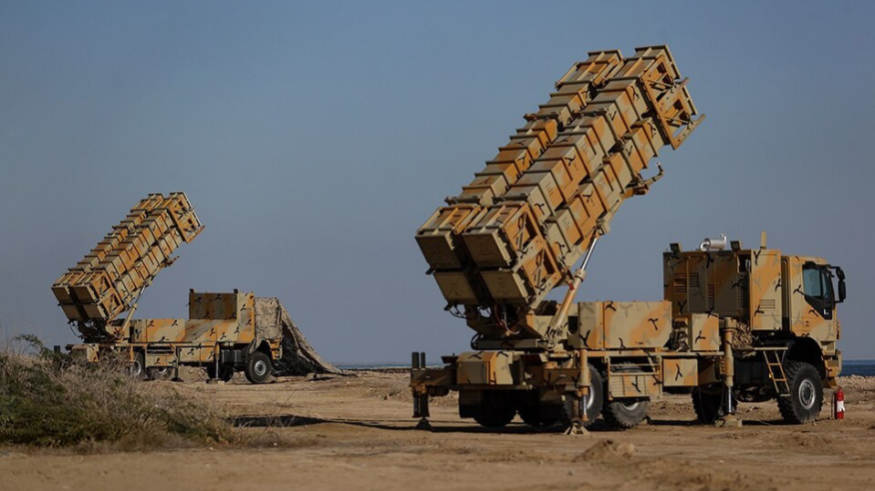
Rami Desai: Sheikh Hasina had, during her tenure, actually enacted the death penalty for meta therapy in traffickers, synthetic yabapill traffickers, because it had become such a big problem. It was not just the wayward, the unemployed that were using it, but it was also educated kids who were IT professionals who were working in different timelines, who were using it because it helped them to keep awake for three, three days straight up. And it became a social problem. And now, as we also know, that this is in Bangladesh is not just about China. It's not just about, you know, any sort of US influence. We also know there are countries like Turkey that are making a living from it. You know, there is a severe air defence system agreement that they may sign soon. It's been in the talks for a while.
Colonel Anurag Awasthi (Retd): Yeah, it's been there in the media all over.
Rami Desai: You know that Turkey is very interested in the Rohingyas. There have been high levels of delegations, including President Erdogan’s wife, who has visited these camps. So, Bangladesh has a lot to think about them. I can assure you, they're not going back to Myanmar because they will have to go back into Rakhine territory. The Arkanis are not interested in taking and getting them back. And the reason they're not is that. And look there anyway. Not going to be Official citizens because Rohingyas are not a part of the group of ethnicities that they recognise.
Colonel Anurag Awasthi (Retd): It's a muddle. I think it's a very big muddle.
Rami Desai: Therefore, Bangladesh has a lot more to think about than any other country in this region, you know, it. It was a country that had fared well, and had created a reputation as a fast-developing country. Very unfortunately, this whole regime change sort of threw it off. But now they need to start rethinking. What are they going to do with the Rohingyas? What is going to be the level of radicalisation? Is Jamal going to get the better of the BNP because there was also news about this, and it was often said in the circles that fleeing the longing in a lot of the institutions, educational institutions, military. It was the Jamaat supporting people who were getting promotions and being pushed up. Right. If that is the case. How does BNP ensure that it stays in place, or that it creates a society that is now sort of settled in karma, as compared to joining the interim government time and how it keeps its immediate neighbours, you know, on its good side, on its good side.
Colonel Anurag Awasthi (Retd): Yeah, I think that sums it all, you know, Rami. And I think it's in a fabulous conversation, as we've always had. And this part of the region, I think, is going to be under a microscope for a very long time now, at least for the next decade, as it should be. As it should be.
Rami Desai: Yes, as it should be. Remember, we've said this before, that northwestern frontier. Yeah, we have experts on it. We have linguists on it. We have analysts on it. But the north-eastern frontier has always been ignored. And now it's not just about the north-eastern region. It's about China. It's about Myanmar. It's about the Bay of Bengal. It's about Turkey. It's about us. It's about Bangladesh. Suddenly, you have all this to study now.
Colonel Anurag Awasthi (Retd): There you go. And you're going to be an expert in that. And we'll always come back to you again and again whenever we get stuck, especially with the northeast region. And thank you so much for coming in and all of you being there. Keep watching and keep following. Rami, insofar as the northeastern region of this country is concerned. Thank you very much.
Watch the full podcast: https://www.youtube.com/watch?v=TlH-OY59tqQ
Chakra Desk
Chakra News is a specialised digital media platform committed to in-depth coverage of India’s defence, national security, geopolitics, and critical technologies.



Comments