



Understanding Iran’s Mosaic Defence Strategy
On 01 March, Abbas Araghchi, the Iranian Foreign Minister described Iran's defence strategy in a post on X: “We've had two decades to study defeats of the US military to our immediate east and west. We've incorporated lessons accordingly. Bombings in our capital have no impact on our ability to conduct war. Decentralised Mosaic Defence enables us to decide when—and how—war will end.”
Two key pillars of Iran’s strategy put forth by the statement were: first, observing and adapting to US military weaknesses, and second, complete decentralisation of its command and control to ensure resilience and continuity in the event of decapitation strikes. In fact, Iran’s observation of "decapitation strikes on highly-centralised regimes" shaped Iran's counter-architectural response.
Mosaic warfare is a multi-domain approach that appears disjointed and runs counter to the belief that only a coordinated, uniformly-trained, smoothly-functioning fighting force would be the more powerful opponent to face. Like tiles in a mosaic, the individual platforms of each domain air, land, maritime, cyber, space and cognitive together create a larger picture of broad and overpowering strength, while simultaneously making it hard for the enemy to pin down one way to fight against such a confusing opponent.
Conceived and put forth by the US Defense Advanced Research Projects Agency (DARPA), Mosaic Warfare places a premium on seeing battle as an emergent, complex system, and using low-cost unmanned swarming formations alongside other electronic and cyber effects to overwhelm adversaries. The central idea is to be cheap, small, agile, lethal, flexible, and scalable. Connect small unmanned systems with existing capabilities in creative and continually evolving combinations that take advantage of changing battlefield conditions and emergent vulnerabilities instead of always depending on building the ultimate fighter jet, biggest submarine or most accurate missiles.
It can be just as powerful to take simpler, smaller platforms, network them together, then have them interpret the battle in their own ways that make the most of their advantages. In this theory, adversaries can be caught off guard by innovations like unmanned aerial vehicles (UAVs) or ground robots.
As witnessed in the ongoing war, the Iranian armed forces prioritised the development of specific capabilities that leveraged their inherent strengths, such as manpower, strategic depth, and willingness to absorb significant casualties. Simultaneously, they exploited perceived adversary vulnerabilities, including sensitivity to casualties, risk aversion, and dependence on advanced technologies and critical military infrastructure. Priority being preserving decision-making, keeping combat units operational and preventing the war from ending with a single devastating strike.
The core assumption being that even though Iran may lose senior commanders, key facilities, communications networks and even centralised control, they must still be able to keep fighting.
This, along with attrition aligned with Tehran’s broader strategy of asymmetric escalation both vertically and horizontally, has been witnessed since the start of Tehran’s retaliatory strikes, which focused on exhausting US and Israeli strikes and aimed to bleed them economically, in an effort to bring the war home to their respective populations and ensure that the war remains unpopular domestically.
Iranian strategic thinking believes mosaic defence is a challenge to a Clausewitzian reading of the Iranian centre of gravity; Iran survives not by defending the “main centre of power” but by dispersing said power across multiple operational nodes.
1980-88 Iran–Iraq War, as well as the Israeli invasion and occupation of Lebanon during the Civil War, shaped how Iran views the current fight. According to Matthew McInnis, former US Deputy Special Representative for Iran, these two experiences entrenched a strategy based on proxy and asymmetric warfare, as well as ballistic missiles, to confront adversaries with superior technological capabilities and manpower.
The Iran-Iraq war, which featured substantive missile use by Iraq on Iranian cities, anchored ballistic missiles as a key component of Iranian warfare. Its reliance on proxies, meanwhile, was a direct result of the developments of the 1980s, in which Iran sought to project power and safeguard the Revolution by exporting it across the region in the form of proxy groups like Hezbollah.
This three-pronged defence doctrine evolved in 2005, when the Islamic Revolutionary Guard Corps (IRGC), under the command of General Mohammad Jafari, announced its model of ‘mosaic defence’; essentially a decentralised command-and-control system.
As per Dr Michael Connall, an expert on Iranian military culture, this strategy led directly to the restructuring of the IRGC command and control architecture into a system of 31 separate commands, which could launch an insurgency in the case of an invasion and which would make any attempt at degrading Iran’s defence exceedingly difficult. This doctrine was derived from careful observations of the limits of US military operations in Iraq, Afghanistan, and the Balkans. In these conflicts, decapitation strikes on highly centralised regimes often happened rapidly and tilted the battlefield in Washington’s favour within weeks.
Iran’s military was not built for a short war. It was built for a long time. All four pillars of Iran’s defence doctrine – asymmetry, proxies, missiles, and ‘mosaic’ decentralisation - have featured prominently in Iran’s strategy to survive the US-Israeli campaign.
The regular army, or Artesh, is expected to absorb the first blow. The armoured, mechanised and infantry formations serve as the initial line of defence, tasked with slowing enemy advances and stabilising the front. Simultaneously, Air defence units, using concealment, deception and dispersal, try to blunt enemy air superiority as much as possible.
The Iranian Revolutionary Guards Corps (IRGC) and the Basij, a paramilitary militia within the IRGC, then take on the next stage of conflict. Their task is to turn the war into one of attrition through decentralised operations, ambushes, local resistance, disruption of supply lines and flexible operations across varied terrain, including urban centres, mountains and remote regions.
Beyond the land battle, naval forces play their part through anti-access tactics in the Gulf and around the Strait of Hormuz. Their mission is to make free movement dangerous and costly through fast attack craft, mines, antiship missiles and the threat of disruption in one of the world’s most sensitive energy corridors.
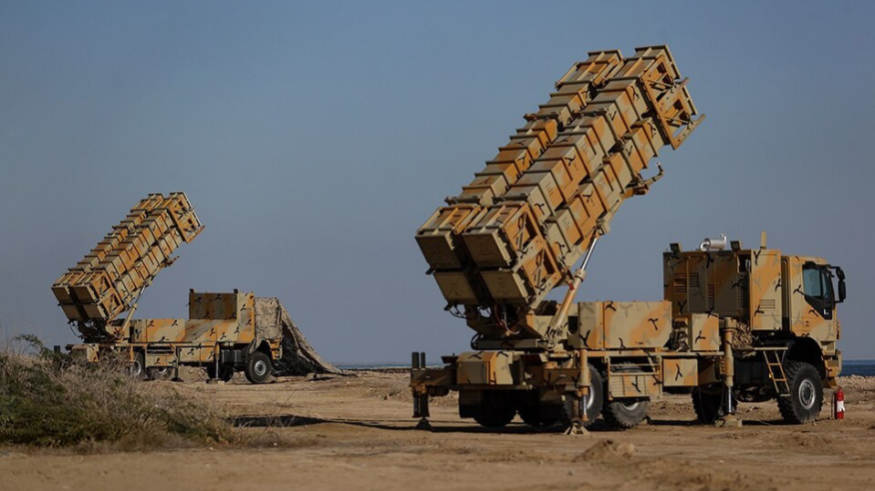
Missile forces serve as both deterrent and deep-strike capability, aimed at imposing costs on enemy infrastructure and military targets.
Then comes Iran’s wider regional network: allied armed groups and partner forces across the Middle East, whose role is to widen the battlefield and ensure that any war with Iran does not remain confined to Iranian territory.
Instead of allowing the enemy to isolate one front and destroy one command structure, Iran seeks to spread the war across time, geography and multiple layers of conflict.
The ‘mosaic defence’ approach was apparent from the first retaliatory attacks by Tehran in the aftermath of Operation Epic Fury. In fact, Araghchi stated, “Our military units are now, in fact, independent and somewhat isolated, and they are acting based on general instructions given to them in advance.”
So far, decentralisation seems to have worked: strikes, while not at the same tempo as the beginning of the war, continue. This complicates any ground invasion or ground combat options the US may seek to conduct in the future.
In an asymmetric conflict where a weaker actor is pitted against a superior adversary, the weaker actor must tilt the “balance of vulnerability” in its favour to avoid defeat. To do this, it must ensure the survivability of its critical military capabilities and exploit the vulnerabilities of its adversaries. What is important is not the pursuit of victory but the elimination of defeat.
Maj Gen Jagatbir Singh, VSM (Retired)
Major General Jagatbir Singh is an Armoured Corps Officer who commanded the First Armoured Division. He served in varied terrains and tenanted important command, staff and instructional appointments including a UN Peace Keeping Mission in Iraq and Kuwait. He co-authored ‘Armour 1971’ and edited ‘Valour and Honour’.



Comments