








Indian Navy analyst moots Arsenal Barge

A leading Indian naval thinker has mooted the concept of the Arsenal Ship. In an article published in the influential US publication, the US Naval Institute Proceedings, Rear Admiral Monty Khanna speaks of the need to field large capacity warships like the Arsenal Ship in present-day naval combat.
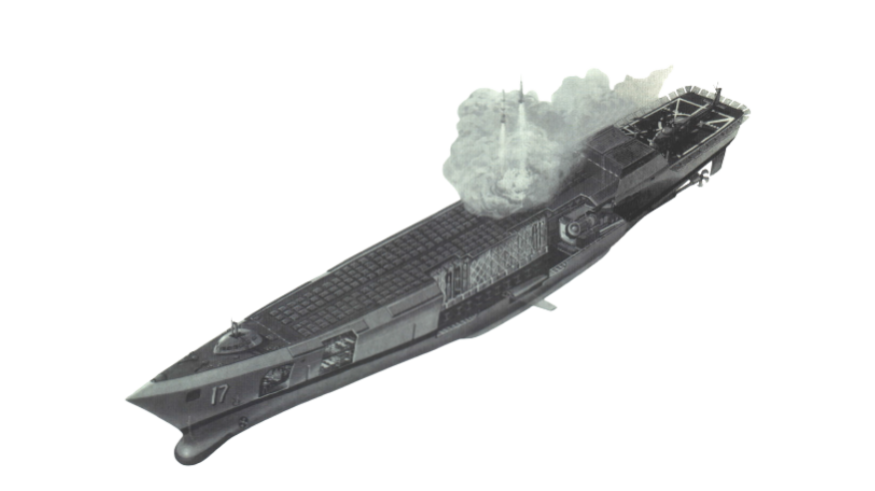
In the 1990s, the US Navy mooted the Arsenal Ship, a warship carrying a 512-cell vertical launch system (VLS) primarily for land-attack. The program was killed by the US Congress due to the high unit cost, then estimated at around $ 500 million per vessel.
It becomes the topic of discussion as on 23 December 2025, when US President Donald Trump unveiled the future Trump Class Battleship with USS Defiant being the first ship of the class. The Trump Class Battleship is a Battle Cruiser with a displacement of 35,000 tons and armed with laser weapons and hypersonic weapons. So, whether Battle Cruisers should be designed or Arsenal ships should be preferred to be designed.
Admiral Khanna argues that the use of conventionally armed ballistic missiles and long-range drones against shore targets and ships at sea has necessitated the revival of the Arsenal Ship.
During their deployment to the eastern Mediterranean Sea, the USS Carney (DDG-64) and Arleigh Burke (DDG-51) shot down at least six Iranian ballistic missiles and several drones during Iran’s aerial attack on Israel on 13 and 14 April. Countering these weapons with surface-to-air missiles requires substantial amounts of ordnance. It becomes difficult for these ships to reload at sea, and they have to travel back to their base so that they can be rearmed.
While Admiral Khanna did not speak about lessons for India, the Indian Navy is going down the path of large-capacity VLS destroyers. The present generation of P-15B Visakhapatnam class destroyers has just 32 VLS cells but the future Project 18 Next Generation Stealth Destroyers (NGD) have 144 VLS cells. The 13,000-ton NGDs will start building by the end of the year.
The Indian Navy should also explore this kind of system and should work with Indian shipbuilding companies to design these kinds of Arsenal ships so that it can provide adequate firepower support to its other warships.
Rear Admiral has talked about three options to reduce this kind of outcome first is a universal vertical launch system (VLS) that provides flexibility in deciding the weapons loadout, rather than locking in a predefined load of single-purpose weapons. Such systems have been in use by several navies for decades, with the Mk 41 having entered service in the U.S. Navy in 1986.
The second is a universal missile that can perform multiple roles, thereby avoiding the dilemma when one type of weapon is depleted. The Standard SM-6 missile, with its anti-air, anti-ship and limited ballistic-missile defence capabilities, attempts to do this, albeit at some cost.
The third is to develop the capability to reload VLSs at sea. Given the dimensions and weight of weapons today and the fine clearances most VLSs have, reloading at sea is fraught with challenges. While the U.S. Navy has successfully demonstrated the Transferable Reload at Sea Method, which uses a traverse mechanism to reload missiles at sea, it has its limitations and is unlikely to see widespread use, particularly in heavy sea states.
One more option talked about by Rear Admiral Monty Khanna is to increase the number of VLS cells fitted on a ship. This is more applicable to ships still on the drawing board. Most current destroyers typically are fitted with between 64 and 128 cells. Given the current preference for a distributed firepower architecture, it seems unlikely this number will increase significantly.
The U.S. Navy’s Arsenal Ship concept began as a 21st-century surface combatant force architecture study that recommended a six-ship Large Capacity Missile Ship class, each featuring a 512-cell VLS, primarily for land attack. The program was terminated in 1997, just a few years after its initiation.
Given the new threats today and the incessant demand for missiles in large numbers, it is time to revisit the Arsenal Ship, possibly in the form of a much more mundane arsenal barge.
The arsenal barge would be a large powered barge housing between 12 and 48 VLS cells. It could be designed to be minimally manned with the capability for unmanned operations. To keep costs in check, maximum sustained speed would be limited to about 20 knots, which means it would not be able to keep up with a strike group proceeding at high speed. However, it could carry a basic outfit of point-defence weapons for protection against low-end threats such as unmanned surface vessels, loitering munitions, suicide drones, and small cruise missiles when operating without the protective cover of a larger surface combatant. In combat, the arsenal barge would operate as an offboard extension of a destroyer or frigate (a mother ship) fitted with a Cooperative Engagement Capability–enabled combat system. The mothership would use the barge as a floating magazine from which weapons would be fired remotely, either against aerial targets or for land attack. Weapon control would be exercised by the mother ship.
Once its magazine was depleted, the barge would be detached to return to base and be replaced by another. The mothership would conserve its own magazine, to be used only in situations in which a barge was not available. A single mothership could control several barges simultaneously. These could be stationed at tactically suitable distances to increase the firepower umbrella of the mother ship. Apart from serving as an offboard magazine, the barge would enhance the survivability of the mother ship.
Arjun Dev Singh
Arjun Dev Singh has a deep interest in defence, security, and strategic affairs. With a strong analytical lens and a passion for military and geopolitical developments, Arjun strives to bring clarity and context to complex national and international issues.



Comments