




How Iran outmanoeuvred the US and Israel

Introduction
The Memorandum of Understanding is in place and the kinetic attacks have stopped but below the surface as the region remains on edge. The war demonstrated that the US and Israel could strike Iranian targets at will and with precision. But Iran showed that it could impose costs in return. The important aspect is the manner in which the battlefield has shifted and the degree to which warfare accelerated by technology, algorithms and AI can remain controllable.
The Iran War showed how hybrid warfare is no longer confined to proxy attacks, covert action, terrorism, sabotage, or grey-zone pressure. Those remain central, but they now operate inside a wider strategic environment: commercial shipping, insurance markets, data centres, production of missiles and ammunition, rare earths, AI-enabled targeting, and alliances.
The targets are those that enable the use of military power. Iran did not need to defeat the US but create conditions that made the surrounding political-economic system unable to absorb unsustainable pain. The lesson is not that Iran leveraged the Strait of Hormuz but there are broader lessons for warfare.
Centre of Gravity
The first strike by the US and Israel was on the Iranian leadership identified as the centre of gravity and it was presumed that their elimination would create a power vacuum and create a popular apprising against the regime.
Iran’s strongest strategy was not to win a conventional military contest against the US and Israel. It was to make the war harder to contain. Gulf capitals, shipping, energy and fertilizer markets, data centres and US allies all became part of the battlefield.
Tehran responded to the strikes vertically and horizontally. They identified and attacked sensitive targets and widened the geographic scope of the war. Vertically, it meant placing consequential economic and political interests at risk. Horizontally, this meant expanding pressure across additional geographies and systems, including nations hosting US bases, commercial shipping, energy markets, insurance networks and infrastructure.
By doing so, Tehran shifted the war away from areas where the US held clear military advantages to economic, and commercial systems that have cascading effects. Thus, an adversary that could not otherwise match US military power directly imposed costs geographically, economically, and politically.
The objective was not necessarily battlefield victory. The objectives were survival, cost imposition, and the displacement of pressure beyond the immediate battlefield.
Iran shifted the centre of gravity to the Strait of Hormuz which ‘strait jacketed’ the US ambitions and the focus shifted to create conditions to reopen the crucial waterway.
The fact is that while airpower can dominate the battlefield but it can still leave the strategic system contested.
Commercial Confidence and Sea Control
One of the most important lessons pertained to sea control. The US was able to strike military targets at scale, but commercial transit through Hormuz remained functionally impossible not only because of the blockade but as insurers, shipowners and energy markets believed passage was unsafe.
The statistics are telling , within twenty-four hours of the US and Israeli attacks on 28 February transits of all vessel types through the Strait were down 81 percent . There were only four Crude tanker movements on 01 March compared to a January daily average of twenty-four. By 12 March, Kpler vessel-tracking data showed tanker transits had collapsed by approximately 92 percent compared with the week before the war began.
By early March, outbound trade in crude oil down 95 percent, LNG down 99 percent, and fertilizer almost completely halted, categories that individually account for roughly 20–33 percent of global volume. This highlights the chokepoint’s significance.
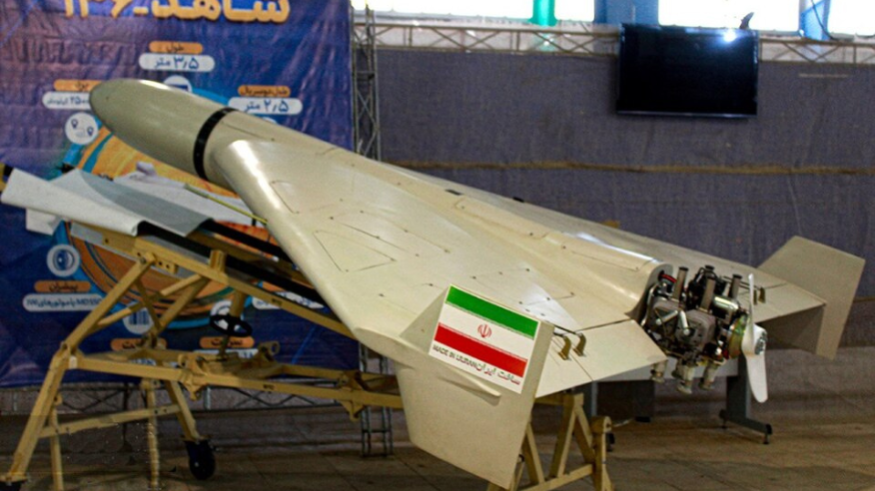
Iran did not need conventional naval superiority to disrupt movement. It needed mines, missiles, drones, small vessels, and threats that demonstrated willingness to raise the perceived cost of transit.
The key question was not whether the US Navy can defeat an opposing fleet. It is whether the US could convince commercial shipping to believe movement is safe enough to resume. Commercial confidence is now part of sea control.
AI Targeting and Legitimacy
That AI is being used increasingly in war is a given. AI-enabled targeting may help commanders process information and act faster. But speed creates its own strategic risk. Warfare depends on legitimacy, targeting decisions must be lawful and politically defensible
On 28 February a Girls' Elementary School in Minab was destroyed by missile strikes on the first day of the conflict. The attack killed at least 175 people, including 120 schoolchildren, prompting international outrage and investigations.
President Trump when asked about the investigation at the G7 meeting in France said; “It’s such a strange question to be asked at this date, because you’re talking about a long time ago,” and stated; “But nobody did that on purpose.”
It is not on whether AI can accelerate targeting, but on whether military and political leaders can adequately explain how targets are generated, reviewed, and approved. As AI-enabled systems become more common, the legitimacy of the decision-making process may become as strategically important.
Targeting The Gulf
The pressure on Persian Gulf littoral states was not only about US military bases. It also aimed at shattering an illusion that Gulf states can function as secure, investable, globally connected countries while hosting US bases.
Airfields and ports , desalination facilities, energy infrastructure, cloud services, logistics hubs were all in the crosshairs. These are no longer strategic vulnerabilities and sensitivities but also criticalities.
Host-nation resilience cannot be separated from military operations. It is part of them. The Iranians celebrated these strikes with Lego-style videos on TikTok.
Cloud Is Part of Campaign Geography
The Iran War highlighted a major shift:; Data centers, internet cables , commercial AI providers, logistics platforms, and software infrastructure are now part of the battlespace. They help enable military operations, financial flows, communications, targeting, logistics, and regional economic confidence. They are thus no longer rear-area background systems.
Iran identified US technology firms that maintain offices, data centers, cloud infrastructure, and research facilities. Iranian strikes on AWS linked facilities in the UAE and in Bahrain, illustrate how commercial digital infrastructure increasingly occupies strategic terrain.
The attacks disrupted services and forced operators to reroute workloads across other cloud regions. For the first time, core cloud infrastructure, once seen as abstract and largely as commercial technology, was at the forefront of conflict.
The cloud is not a weightless digital mist. It is a physical system built from land, concrete, transformers, cooling systems, cables, and electricity. This means the cloud is vulnerable to the logic of war.
Conclusion
Operation Epic Fury has taught that modern war runs through various systems that were not part of the traditional battlefield milieu and contests the conditions under which military power remains usable.
The challenge is therefore not only how to strike, defend or deter. It is how to maintain strategic control when adversaries can impose costs through systems that sit outside the traditional battlefield but inside the matrix of war. The side that understands these issues will be in a position to control the strategic outcome.
Maj Gen Jagatbir Singh, VSM (Retired)
Major General Jagatbir Singh is an Armoured Corps Officer who commanded the First Armoured Division. He served in varied terrains and tenanted important command, staff and instructional appointments including a UN Peace Keeping Mission in Iraq and Kuwait. He co-authored ‘Armour 1971’ and edited ‘Valour and Honour’.




Comments