


Will Bangladesh Join the Mecca Agreement?

There are calls in Dhaka for Bangladesh to join the Makkah Joint Defence Agreement with Saudi Arabia, Pakistan and Türkiye. While no official statement has come from the Bangladesh government, senior officials have noted that the pact is being considered.
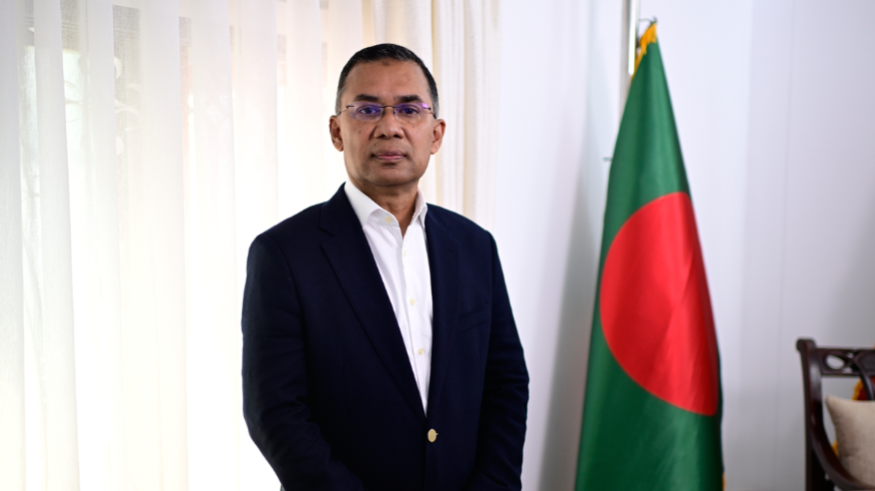
Humayun Kabir, the Foreign Affairs Adviser to Bangladesh Prime Minister Tarique Rehman stated that Dhaka has a “positive approach” towards the possibility of joining an economic or defence framework involving Saudi Arabia, Pakistan and Türkiye. But that decision would be predicated on Bangladesh’s national interests.
Bangladesh's State Minister for Foreign Affairs, Shama Obaed Islam, has also weighed in. Speaking to the media, she noted that while Bangladesh has not formally decided to join the trilateral agreement, any such decision would have to be taken with due consideration of Bangladeshi interests and sovereignty.
An Islamic Nato
On August 7, 2026, Saudi Arabia, Pakistan and Türkiye signed the Makkah Joint Defence Agreement. The agreement which has been dubbed the “Islamic Nato” calls for defence cooperation, collective deterrence and collective defence i.e., an armed attack against any one of the three signatories will be construed as an attack on all three.
The last part brings to mind Article 5 of NATO, and has led to speculation that the pact could evolve into a broader security framework. In statements to the media, Pakistani officials have also noted that the pact is open to other countries, with Egypt being seen as a potential participant.
The prospect of an Islamic Nato with Pakistan as a member, has been of some interest in India. However the response from the government has been measured. Speaking to the media the Spokesperson for the Ministry of External Affairs, Randhir Jaiswal stated that India is “closely following” developments in West Asia.
The caution and concern in India is understandable as the development comes in the wake of the downturn in India-Bangladesh ties since the fall of the Sheikh Hasina led Awami League government in August 2024.
While under Sheikh Hasina, India and Bangladesh enjoyed a period of close cooperation. The interim regime under Chief Advisor Muhamad Yunus and now the Bangladesh Nationalist Party have had strained ties with India and in turn closer cooperation with China and Pakistan.
To Join or Not To Join?
Even as calls arise for joining the Mecca Agreement, Bangladesh has been cautious and unwilling to be seen as choosing sides.
The south asian nation shares deep economic and spiritual ties with Saudi Arabia which is home to a large number of Bangladeshi immigrants sending remittance back home. Türkiye too has an oversized role in the Islamic world with soft power and a growing defence industry. And Islamabad and Dhaka are bound by a troubled relationship that both nations are now attempting to mend.
However, Bangladesh is still wary of being drawn into unnecessary far-away conflicts. It is also cognizant of the inherent contradictions that mar the Mecca Agreement. Saudi Arabia is deeply invested in the Indian economy and will not put boots on the ground in the event of an India-pakistan war. Pakistan for its part will be unwilling to act against Iran which is the key threat to the Saudis. Türkiye, maybe a NATO member, but the Neo-Ottomans in Istanbul are wading into the West Asian quagmire where neither Pakistan nor Saudi Arabia will be of much assistance.
Dhaka will seek economic, diplomatic and defence engagement but at the same time it will be wary of misadventures. And it will have to do that without jeopardising its relationship with India. The door to the Mecca Agreement may remain open but getting in will require Dhaka to walk a very fine line indeed.
Deepak Bhadana
Over the past decade, Deepak Bhadana has built expertise in multimedia storytelling, with a focus on military conflicts, insurgencies, international relations, the defence industry, and occasionally, wildlife and environmental issues.




Comments