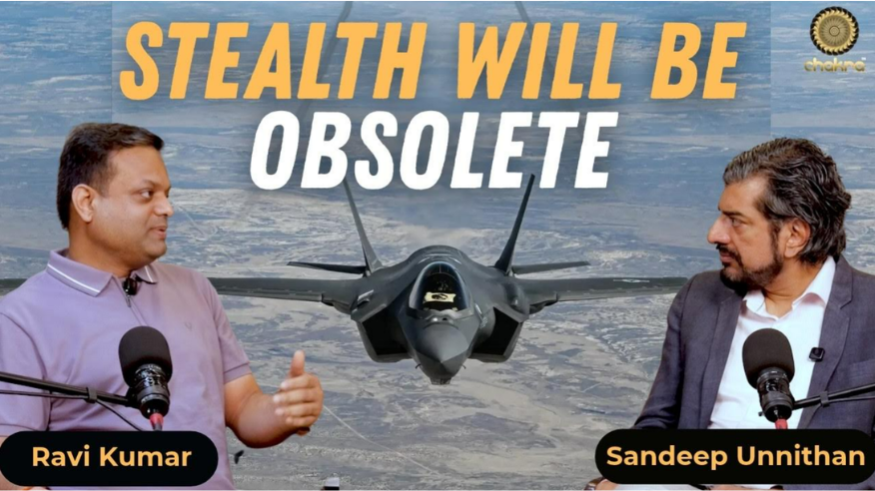









Bhargavastra Trials: “India needs an Integrated Counter-drone Network”, says Group Captain Rajiv Narang (R)

The Bhargavastra counter-drone system recently completed its in-house trials at the Pokhran Field Firing Ranges in Rajasthan this week, between November 20 and 24. The system is developed by Solar Defence and Aerospace Limited (SDAL). The trials tested the system's ability to detect and neutralise hostile drones.
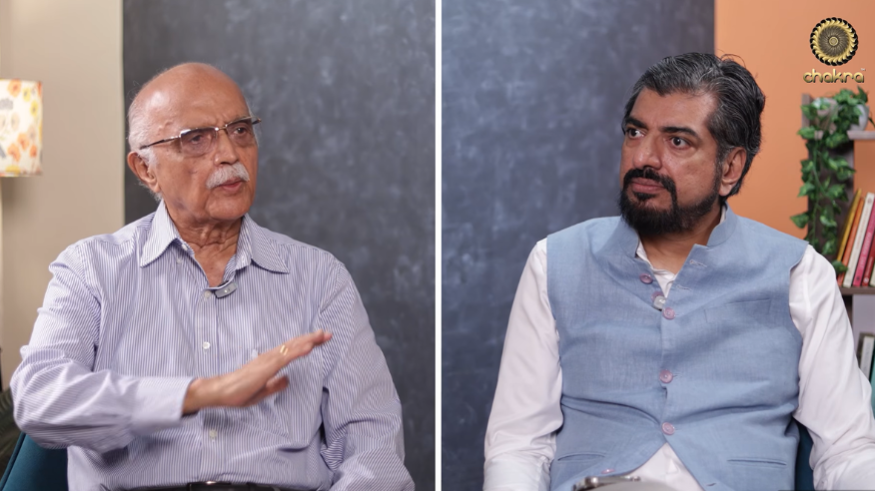
Speaking on the development with Chakra News, Group Captain (Dr) Rajiv Kumar Narang (R), a former Indian Air Force helicopter pilot and Senior Fellow at the Manohar Parrikar Institute for Defence Studies and Analyses (MP-IDSA), said India needs to move beyond individual counter-drone systems and build an integrated network involving the military, Central Armed Police Forces (CAPFs) and civilian agencies.
"India needs a counter drone swarm network, which has three key entities involved," Narang said. He argued that all three agencies must be involved in the design and development of these systems from the beginning, rather than being brought in only as facilitators or observers.
Bhargavastra is developed by Solar Defence and Aerospace Limited (SDAL) and is designed to counter incoming drones using two types of weapons — Its first version uses unguided micro-rockets, while the second uses guided micro-missiles. The system also uses radar and other sensors to detect and track incoming drones. The unguided rockets have a reported engagement range of around 2.5 km and the radar-based detection range is around 6 to 10 km.
However, Narang cautioned against calling a system an “anti-swarm solution” without examining its actual capabilities. He said the number of weapons a launcher can fire and its ability to engage several targets simultaneously are important factors. He also questioned how multiple launchers would coordinate their attacks against incoming drones. "I think we are using big words without understanding the nuances," he said. He added that the actual capabilities of the system should be assessed before drawing conclusions about its ability to counter large drone swarms.
Narang said India's counter-drone requirements should be viewed in the context of Operation Sindoor. He identified the two hostile fronts — Northern and Western, as potential directions of drone threats. He also raised concerns about the involvement of border guarding forces in India's counter-drone preparedness. The Border Security Force (BSF) guards the western border during peacetime and the Indo-Tibetan Border Police (ITBP) is responsible for the northern border. He questioned whether these forces are adequately involved in developing counter-drone capabilities, highlighting the need to do so.
He identified four broad categories of potential targets for enemy drone attacks — military establishments, CAPF installations, vital areas and points such as dams, and civilian infrastructure such as airports. Referring to the drone attacks in Iran and the Gulf region, Narang said an adversary would not restrict its targets to military installations. "The drones did not ask whether you are military standing or wherever the adversary wanted to strike. They stuck," he said. He argued that civilian and strategic infrastructure must also be included in India's core counter-drone planning.
Narang called for an integrated counter-drone network involving three major entities — the military, CAPFs and civilian agencies. Each should have systems for drone detection, identification, tracking and neutralisation. He said, “These networks must be interoperable and share information with one another”. He also stressed that the three entities must participate in the development of these systems from the beginning. "They should be involved in the design and development of these from the word go as development partners, not as a facilitator or observers," he said. He warned that separate efforts by different agencies would leave India working in silos.
He also called for the modernisation of existing air defence guns using artificial intelligence. Narang specifically referred to indigenous variants of the L-70 and ZU-series anti-aircraft guns, proposing connecting multiple guns through a common command and control system. This would allow several guns to engage different drone targets simultaneously during both day and night. AI could help identify and allocate targets. It could also direct a gun towards another target once the earlier one is destroyed. However, Narang said the final decision to fire could remain with a human operator. He said, "We need to really upgrade our existing air defence system with AI."
On the civilian side, Narang called for the operationalisation of the Unmanned Traffic Management (UTM) system under the Ministry of Civil Aviation. He said the ministry needs to resolve whether the Airports Authority of India (AAI) or the Directorate General of Civil Aviation (DGCA) will handle its operationalisation. He also called for faster implementation of the UTM policy through the Digital Sky platform. The military and CAPFs should receive information about authorised civilian drones through this system. This would help them distinguish friendly drones from hostile ones.
Narang said India needs to combine new counter-drone weapons with modernised air defence guns and an integrated command and control network. Bhargavastra is just one part of this requirement. The wider challenge is to ensure that military, security and civilian agencies can detect and respond to drone threats together.
Savio Rodrigues
Savio Rodrigues is a Research Analyst at Escape Velocity MediaWorks Pvt Ltd and writes for Chakra News on Defence, Geopolitics, National Security. He holds a Master’s degree in International Relations from the University of Mumbai.


Comments