







"India needs a Space Force," says General Raj Shukla
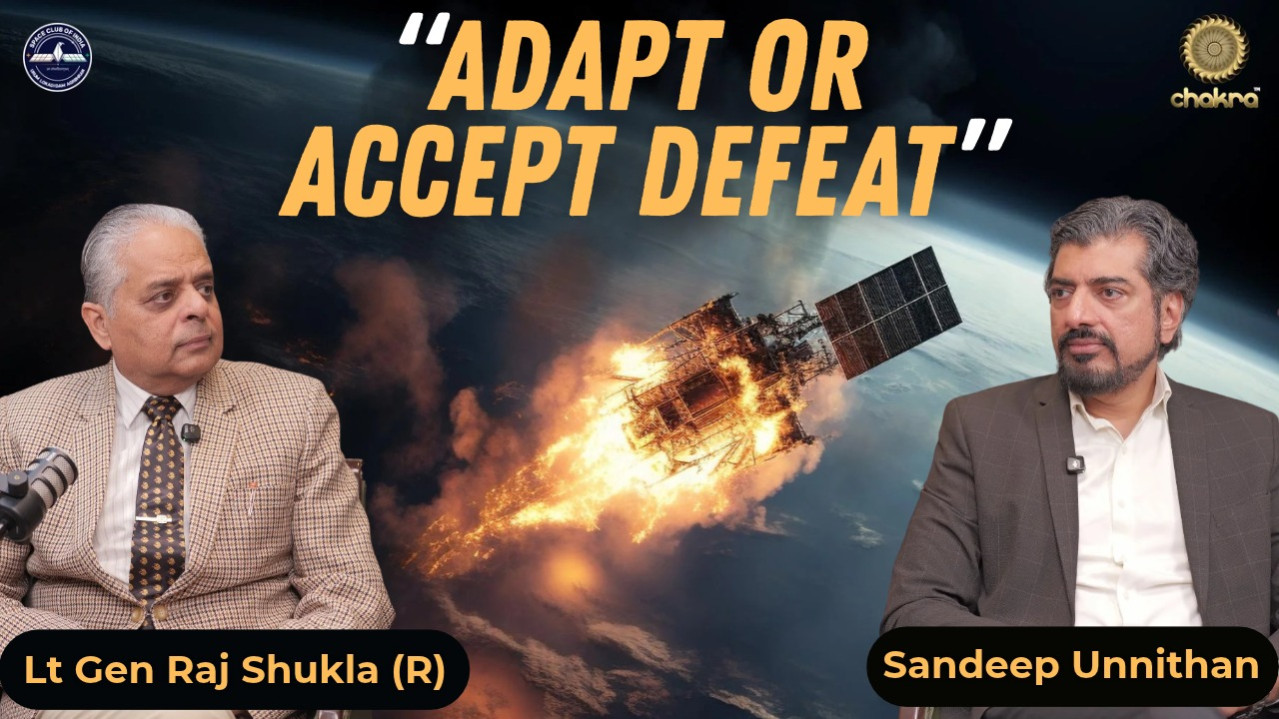
India needs a separate Space Force and a combat-ready Cyber Command to prepare for future wars, Lt Gen Raj General Shukla (Retd) said, calling for space and cyber capabilities to be treated as independent warfighting domains rather than support systems for conventional military operations. "Today, if there are two commands, which must be combatized, it is space and cyber," he said. He added, "Now I'm saying create a separate service."
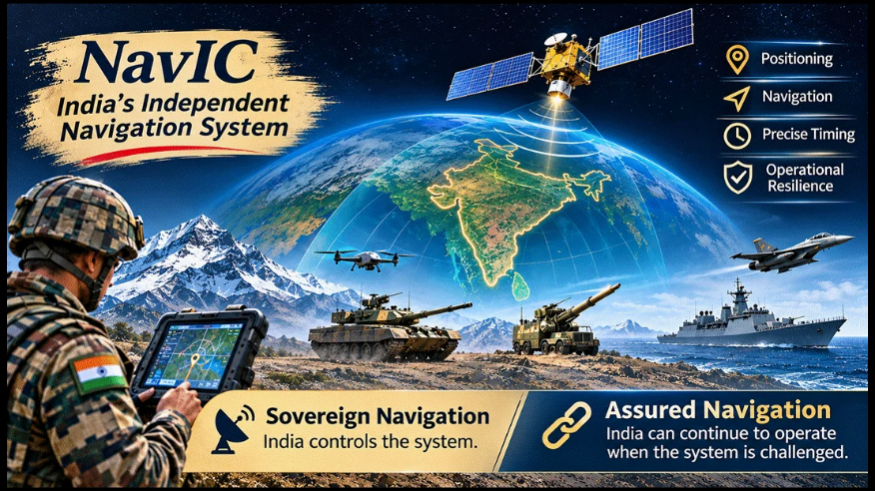
Speaking with Sandeep Unnithan on the Space Club of India's podcast, General Shukla said space and satellite capabilities have become central to military operations — surveillance, navigation, targeting and precision strikes.
He said the absence of a military presence in space would also weaken India's land, air and maritime capabilities. "Space is a domain of war fighting, war winning lethality," General Shukla said.
He said that India must move beyond treating space as an auxiliary capability and establish a dedicated service with trained personnel, researchers and domain specialists. He cited the US Space Force as an example and said India should use the Army's planned manpower reductions to build new military entities.
A major part of his argument focused on India's limited satellite capabilities. General Shukla said the military must generate greater demand for commercial space services and work with private companies such as Skyroot and Galaxy to build a large Low Earth Orbit (LEO) satellite constellation. He called for persistent surveillance over India's three proposed theatre commands, instead of satellite revisit intervals of several hours or days.
He also criticised India's low launch frequency, as compared with the United States and China. According to General Shukla, the US conducts around 160 launches annually, while China conducts about 70. India remains in single digits. He said the military must push for higher launch capacity and support private companies through long-term funding commitments. He also argued that a substantial share of India's defence modernisation spending must go towards emerging technologies.
Shukla also warned about China's growing space cooperation with Pakistan. "China is launching a lot of satellites for Pakistan, giving them assistance in ISR, space-based ISR," he said. He added that Pakistan was getting access to China's BeiDou-3 navigation system and warned that its capabilities could also be used against India. "The Chinese have these capacities, they are giving it to the Pakis in bits and pieces, but when they want to turn things around, they can do it," he said.
He also spoke about its impact on the Ukraine war and the ongoing US-Iran conflict. General Shukla pointed towards Starlink's role in enabling Ukrainian drone operations and satellite communications. He said the disruption of Starlink access had affected Ukraine's ability to conduct deep strikes and intercept incoming drones and missiles and also discussed Russian satellite activity over Bahrain and its possible role in improving Iran's targeting capabilities.
Commercial satellite networks are now military assets, he said. Space-based intelligence now directly affects targeting, air defence and the speed of military decision-making. He therefore called for India to link its missile defence systems with space-based early warning capabilities to counter China's growing missile strength.
On military restructuring, General Shukla called for closer integration between the Army and Air Force. "The way forward in the Indian context is to integrate the terrestrial imaginatively and if required ruthlessly, which means land and air must be integrated to grow combat prowess," he said. He called for joint capabilities in emerging domains, adding, "Space and cyber should be combatized, preferably a separate service."
General Shukla said India's biggest national security challenge was its ability to adapt to the changing character of warfare. "The biggest challenge before the Indian military is not merely the threat calculus, it is the adaptation challenge," he said.
Savio Rodrigues
Savio Rodrigues is a Research Analyst at Escape Velocity MediaWorks Pvt Ltd and writes for Chakra News on Defence, Geopolitics, National Security. He holds a Master’s degree in International Relations from the University of Mumbai.


Comments