








Shifting Goalposts: Why Iran isn't giving in to Trump

When Pressure Becomes the Negotiation
There is something uncomfortable about the present US-Iran confrontation. The United States has imposed enormous pressure on Iran. Sanctions have tightened, Iranian oil exports have been driven virtually to zero and the pressure on Tehran's economy has intensified. Yet the harder Iran is squeezed, the more difficult it may become for Tehran to make the first major concession. That appears contradictory. However, it is not as it appears to be.
Iran is not looking only at the immediate cost of sanctions imposed or any kind of military pressure. It is also asking what happens after it concedes.
If Washington concludes that pressure produced the concession, why would the next demand be the last one? This is where the expression “shifting goalposts” becomes relevant. The issue is not necessarily that Washington is deliberately changing its demands. The more interesting question is whether the negotiating agenda has expanded to the point where Tehran no longer knows where the negotiation will end.
Washington's present position is clear on one important point. Vice President JD Vance has said that Iran must make a meaningful reduction in its uranium-enrichment capacity if the war is to end. The administration is looking for tangible action, not just promises. This is significant. Washington is now speaking of a “meaningful reduction” in enrichment capacity rather than simply repeating an absolute demand for the abandonment of enrichment. From Washington's perspective, this is hardly unreasonable.
Iran has enriched its uranium to high levels. The United States wants verifiable assurance that Iran cannot move towards a nuclear weapon. It therefore wants the capability itself constrained rather than relying on declarations of intent. Tehran sees the matter differently. Iran has repeatedly maintained that enrichment is a sovereign right. More importantly, an Iranian official has said that Tehran would make no nuclear concessions even if Washington accepted its proposal concerning the Strait of Hormuz.
Why is there such a resistance? The argument is no longer only about enrichment. It is more about leverage. If Iran concedes because sanctions and military pressure have become unbearable, it establishes something that Tehran would find deeply uncomfortable: that American coercion ultimately works. That could encourage Washington to ask for more in future.
The First Concession
This is the paradox of coercive diplomacy. Pressure is applied to force a concession. Once the concession appears possible, the side applying pressure has an incentive to maintain the pressure until it obtains the best possible outcome. Either side under pressure knows this so it hesitates to make the first move.
Iran's calculation may therefore be quite simple. It can accept economic pain today, however severe, rather than establish a precedent that future pressure can extract strategic concessions. This does not mean that Iran is unconcerned about its economy. It clearly is. The Rial has weakened sharply and inflation has risen. Iranian oil exports have been severely constrained by the US blockade and sanctions, although Tehran has continued to move oil through its shadow fleet. Governments do not always make strategic decisions by economic arithmetic alone. There comes a point when the political and security cost of surrender may appear greater than the economic cost of resistance. That is one calculation Washington has to overcome.
Are The Goalposts Really Moving?
It would be too easy to say that the United States keeps changing its demands. Washington can make a perfectly reasonable counterargument: perhaps the goalposts have not moved at all. Perhaps the objective has always been a settlement that prevents Iran from acquiring a nuclear weapon. If Iran's capabilities have changed, the measures required to achieve that objective must also change.
There is a difference between changing the goalposts and changing the route to the goal. That distinction is relevant. The difficulty is that the negotiation now involves much more than the nuclear programme.
There are sanctions, oil exports, the naval blockade, the Strait of Hormuz, nuclear inspections and enrichment. There is also the wider question of the future US-Iran relationship. Each issue affects the others. A concession on one therefore becomes bargaining power on another. And that is when negotiations become complicated.
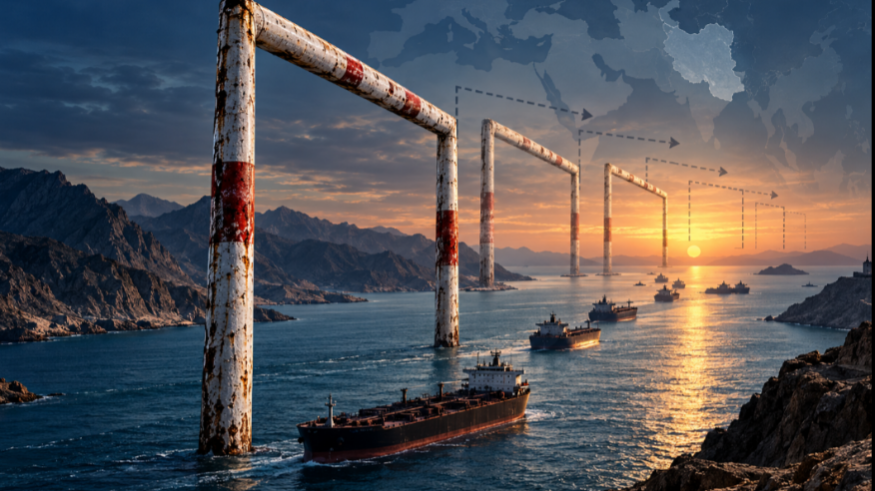
The Strait of Hormuz has certainly given Iran another card to play. For Tehran, the Strait is not simply a geographical feature. It is one of the few areas where Iran can impose costs well beyond its own borders. For Washington, keeping the waterway open is equally important. Iran has proposed a sequence in which the US blockade and sanctions would be eased and the Strait reopened, followed by negotiations on the nuclear issue. In mid-October, Tehran reiterated a seven-day proposal under which the United States would lift the blockade and ease oil sanctions, Iran would reopen the Strait within six days and nuclear negotiations would begin on the seventh. Washington has not accepted the proposal in its present form. There lies the impasse.
Iran does not want to surrender its leverage before receiving something in return. The United States does not want to surrender its leverage before Iran demonstrates that it is prepared to make a meaningful nuclear concession. That sequencing dispute remains unresolved. Even as mediators have presented new ideas to Tehran, Iran continues to press its seven-day Hormuz proposal, while Washington insists that the nuclear issue must be addressed. The disagreement is therefore not simply over concessions. It is over which concession comes first. Who moves first? The dispute may not be about where the goalposts are. It may be about which goalpost has to be crossed first.
There is a larger lesson here. Sanctions can hurt. Blockades can hurt even more. Military power can raise the cost of resistance dramatically. But none of these automatically produces political capitulation.
Iran's economy is under severe pressure. Yet Tehran has not accepted the nuclear terms being sought by Washington. On the contrary, Iranian officials continue to describe nuclear concessions as unacceptable. This is the coercion trap. If pressure produces a concession, the success of pressure encourages more pressure.
The target therefore has an incentive to resist the first concession for as long as it believes it can survive the pressure. That does not make Iran's position necessarily correct. Nor does it make American pressure illegitimate. It simply explains why coercion has limits. The objective of coercive diplomacy is to make the other side change its calculation. The danger is that excessive pressure can instead make the other side calculate that conceding is more dangerous than continuing to resist.
There is another problem that receives less attention. Suppose Iran does reduce its enrichment capability. What happens thereafter? Are sanctions lifted immediately? Which sanctions? What happens to frozen Iranian assets? How long does relief last? What happens if the United States later believes that Iran has violated the agreement? What happens to Iran's civilian nuclear programme? And, perhaps most importantly, does the nuclear concession end the negotiation? This last question matters considerably.
If Tehran believes that nuclear concessions will merely lead to demands concerning missiles, regional alliances or other matters, there is little incentive to concede. Washington may argue that these are separate issues. Tehran may not see them that way. This is why a successful agreement needs more than a list of concessions. It needs a reasonably clear end-state. Without that, negotiation becomes a process rather than a destination.
For India, this is not an academic argument. Indian seafarers are already directly exposed to the risks created by the confrontation. On 21 October, a Kuwait-flagged tanker carrying 21 Indian seafarers was struck by an unidentified projectile while transiting the Strait of Hormuz. All 21 Indian crew members were reported safe, but the incident underlined India's direct human and economic exposure to instability in the waterway. Any prolonged disruption around Hormuz affects energy prices, shipping, insurance and the economies of the Gulf. India has deep economic and human links with the region and remains heavily dependent on imported energy. India has deep economic and human links with the region and remains heavily dependent on imported energy.
There is also a larger strategic lesson. India has relationships with the United States, Iran, Israel and the Gulf states. A prolonged confrontation between Washington and Tehran puts all of those relationships under pressure. It also reinforces an uncomfortable reality of modern geopolitics: critical economic dependencies can become strategic vulnerabilities when a major power is willing to use them as leverage. India therefore has little interest in deciding who is right in the argument over the goalposts. Its interest is in seeing the confrontation end without any wider regional disruption.
There are reasons for both sides to eventually compromise. Washington has demonstrated that it can impose substantial economic costs on Iran. But prolonged confrontation also carries costs for the United States, its allies and the global energy market.
Oil prices remain elevated, while disruption around Hormuz continues to influence shipping and supply expectations. Iran, for its part, has demonstrated that economic pressure does not automatically translate into immediate political surrender. Neither side has achieved everything it wants. That may eventually become the basis for a settlement. But a settlement will require both sides to answer a difficult question.
The Final Concession?
History offers a useful reminder. During the Cuban Missile Crisis of 1962, the eventual settlement was not achieved simply by demanding that the Soviet Union withdraw its missiles from Cuba. A private understanding also addressed the American Jupiter missiles in Turkey. The lesson was not that one side surrendered to the other. It was that a settlement became possible when both sides could see what they would receive in return and where the confrontation would end.
If Iran believes that every concession will produce another demand, it has little reason to move. If Washington believes that every concession merely postpones the nuclear problem, it has little reason to ease pressure. That is the paradox.
Pressure may bring an adversary to the negotiating table. It may even force a change in its calculations. But pressure cannot by itself tell the other side where the negotiation ends.
That is ultimately what the argument over “shifting goalposts” is about. The goalposts may not actually be moving. The problem is that neither side appears certain where they have finally been placed.
Lt Gen Tarun Chawla
Former Director General Artillery, DG Financial Planning of Indian Army



Comments