


INS Nistar and INS Vikrant to return to Visakhapatnam

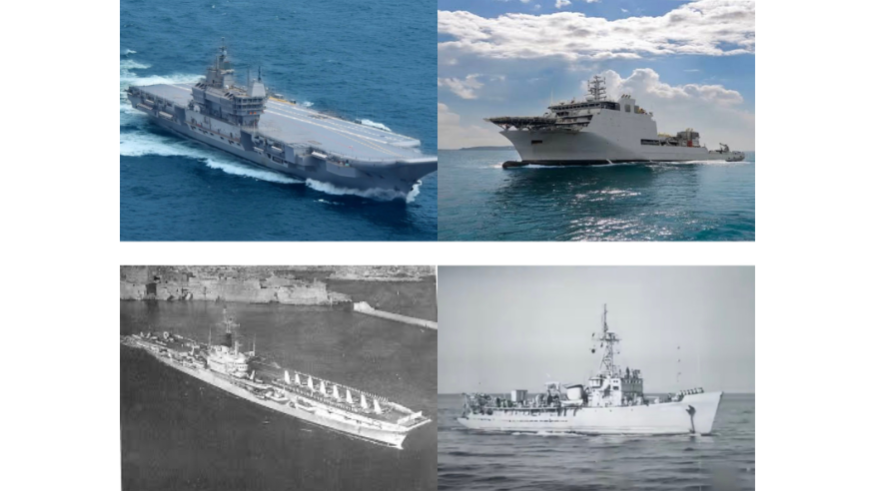
Two Indian Navy warships named for older namesakes that participated in the 1971 Indo-Pakistan war are set to return to Visakhapatnam. Minister of state for Defence Sanjay Seth commissioned the indigenously built diving support vessel the INS Nistar in Visakhapatnam on July 18. The 10,000 tonne Nistar is a formidable addition to the navy’s underwater capabilities. An earlier Soviet-built avatar of the Nistar, was used to locate the wreck of the Pakistani submarine the PNS Ghazi off Visakhapatnam harbour during the 1971 war. Divers from the Nistar brought up valuable documents and artefacts from the PNS Ghazi which conclusively established her doomed mission.
The Ghazi was pursuing the INS Vikrant, a British-built carrier and flagship of the Eastern Naval Fleet in 1971. The Ghazi failed in her mission but the Vikrant carrier battle group succeeded in her mission to cut off the seaward retreat of the Pakistani military garrison as it collapsed under the onslaught of the Indian military air-land thrusts.
A new nation of Bangladesh was created on December 16, 1971 through the force of Indian military arms.
Fifty years later, on 2 September, 2022, Prime Minister Modi commissioned a new INS Vikrant, India’s largest indigenously-built warship.
The INS Vikrant currently based at the INS Kadamba in Karwar will be shifted to Visakhapatnam when basing facilities are completed there. The redeployment is in line with the navy’s plan to base one carrier group on each coast.
THE GLORIOUS EASTERN THEATRE
The Pakistan Navy’s troubles in the Eastern theatre began on the night of December 4, 1971. The Pakistan navy’s pride, a US-navy loaned submarine the PNS Ghazi exploded and sank at the mouth of Visakhapatnam harbour killing all its 93-member crew. The Ghazi had been lured to Vizag by an Indian Navy deception plan which led the Pakistanis to believe the aircraft carrier was in port. The Indian Navy awarded a Vir Chakra to the commanding officer of the INS Rajput for depth charging and sinking the submarine.
The Vikrant, as Pakistan learned to its dismay a few days later, was actually hidden in Port Cornwallis, in the north Andamans island. When war broke out, the Vikrant’s aircraft launched air strikes at shore targets in erstwhile East Pakistan. Naval divers from the INS Nistar, a Soviet-built diving support vessel, identified the sunken Ghazi submarine at the mouth of Visakhapatnam harbour. Two former Pakistan Navy crewmen of the Ghazi were flown down to Vizag from Calcutta to positively identify wreckage from their former vessel. The two naval sailors— Rahmatullah and Abdul Wahid Chowdhury— were now part of Operation X, a top secret cross-border covert op being run by Naval intelligence out of Calcutta.
On December 8, 1971, this covert unit launched the ‘Force Alfa’ naval gunboat raid again the Chalna-Mongla complex deep inside East Pakistan. The task force commander Captain MNR Samant boarded the gunboat INS Panvel and led his task force through the inland waterways to infiltrate into East Pakistan. As the gunboats reached the Pussur river channel, they spotted two merchant ships fleeing under the cover of darkness. The coordinates of these ships were radioed to the INS Vikrant battle group deployed off the coast of East Pakistan. The merchant ships MV Anwar Baksh and MV Baqir were intercepted by one of the Vikrant’s escorts, the INS Brahmaputra. The vessel were carrying hundreds of Pakistani military personnel and their families, fleeing the military garrison. Captain Samant was decorated with a Maha Vir Chakra. The Force Alfa mission was awarded a total of 3 MVCs, 5 Vir Chakras, 2 Nao Sena medals (gallantry) and 2 mention in despatches.
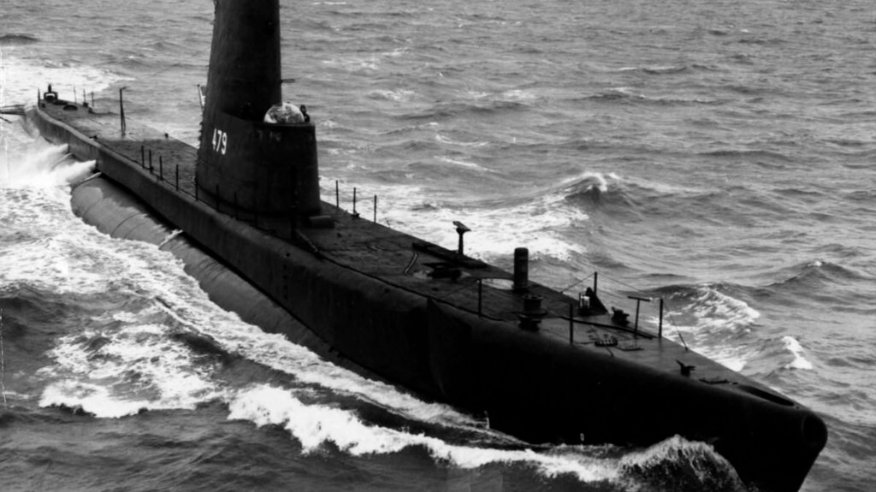
The PNS Ghazi
THE SPIRIT OF 1971
The rise of the PLA Navy, the world’s largest and fastest growing, has re-emphasised the importance of India’s naval base at Visakhapatnam. Warships and survey vessels of the PLA Navy, the world’s largest, have begun frequent deployments into the Indian Ocean.
Vizag is closest to the Malacca, Sunda, Lombok and Ombai Wetar Straits used by the PLA Navy to enter the Indian Ocean. The Indian Navy is beefing up its eastern command with newly built warships and submarines. Three Shivalik class missile frigates are based here. This June, the navy transferred its newest frigate the Project 17A class frigate INS Nilgiri to Vizag. Two more P17A units are to be commissioned and based in Vizag this year.
Vizag is also an interim housing for India’s strategic submarine fleet before they are move to a new base further down the east coast.
Memorial and mementos from the navy’s finest hour in 1971 dot the naval base are a timely reminder of the Indian Navy’s finest hour when it comprehensively defeated the Pakistan Navy in both eastern and western theatres. The wreck of the Ghazi sits on the seabed around 60 metres just two kilometres off the coastline and astride the shipping channel used by all the ENC’s assets as they enter and leave port.
The largest piece of the submarine — a four-bladed manganese bronze propeller weighing around 1.5 tons— is placed near the office of the Commander-in-Chief Eastern Naval Command. The propeller has a disc area of over four square meters. It was one of two which powered the submarine through its long range deployments.
On January 29, 2025 the ENC commissioned the Samant Block named for Captain MNR Samant, MVC. The block is a multi-storeyed accommodation for submariners located inside the submarine base INS Virbahu. A bust of Captain Samant welcomes visitors into the building. A wall-mounted frieze lists his astonishing career— the commissioning CO of India’s third submarine the INS Karanj and later steering the 20th century’s largest maritime guerrilla operations which destroyed and crippled 100,000 of enemy shipping inside East Pakistan.
Clearly, when the Indian Navy needs inspiration to deal with its biggest challenges, it only has to look within.
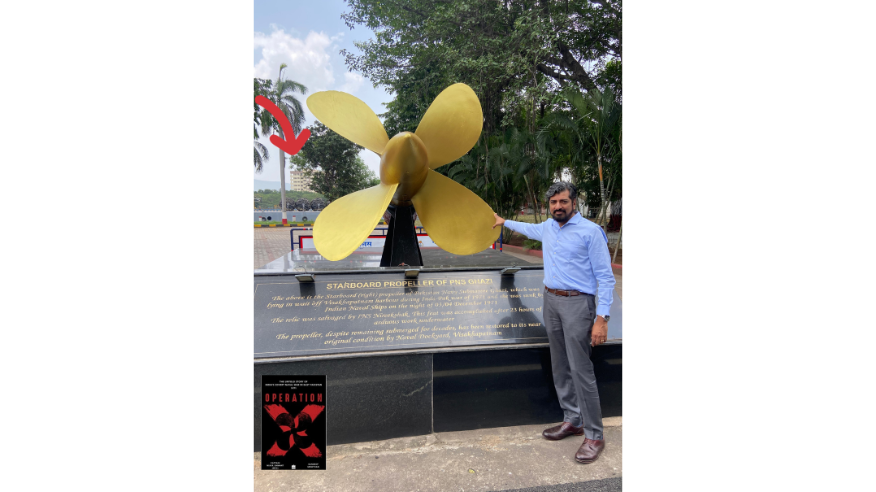
The starboard propeller of the PNS Ghazi in Vizag. The newly-built Samant block behind it.
Sandeep Unnithan
Veteran journalist with 30+ years in media, Sandeep Unnithan is a national security expert and author of two acclaimed books, including Black Tornado, adapted into the web series State of Siege.




Comments