













Copy-Paste Warfare? Why Modern Kamikaze Drones All Look the Same

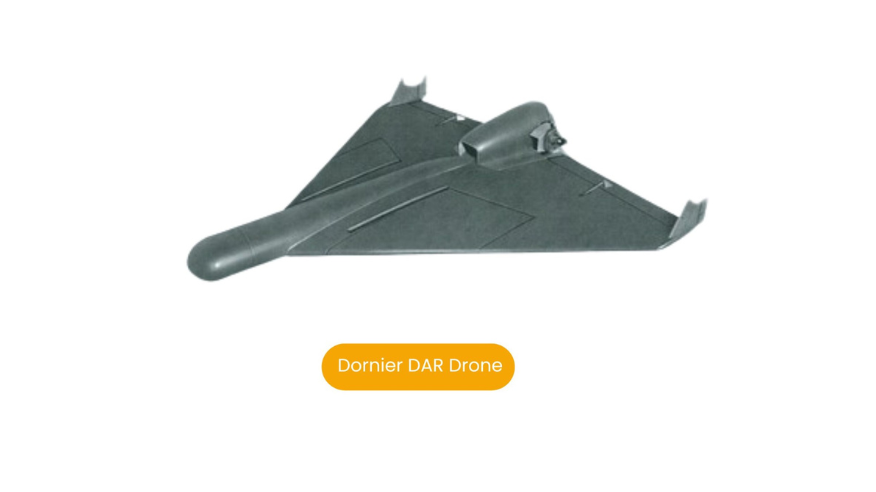
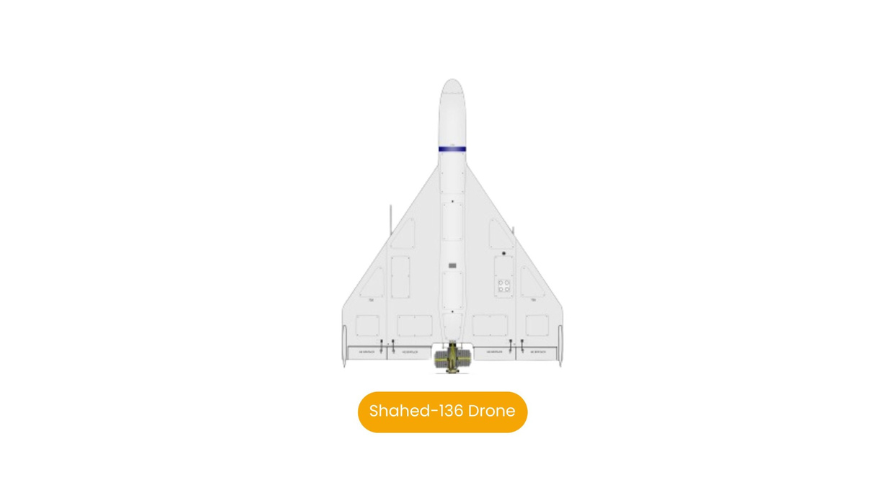
In the 1980s, the world first laid its eyes on the German Drohne Anti-Radar (DAR), a drone developed by Dornier to suppress enemy air defenses. Almost 4 decades later Iran’s premier UAV, the Shahed-136 drone, widely used by Russia in Ukraine, was deployed by Iran against Israel during the Iran-Israel conflict. India meanwhile used the Israeli Aerospace Industries (IAI) Harop and Harpy drones during Operation Sindoor to strike enemy targets. And now the US has unveiled the LUCAS (Low-Cost Uncrewed Combat Attack System), also known as FLM-136.
Now a casual glance at these drones reveals a startling similarity. They look almost identical! One could be forgiven to say that they are copies of a single drone. So how did that happen? Did a German-built drone influence the design of these cutting-edge weapons?
Germany’s Die Drohne Antiradar (DAR):
Introduced in the 1980s, the DAR had a take-off weight of 110 kg and a combat weight of 142.5 kg. Its length was 2.3 m and it had a wingspan of 2.0 m. It featured a single propeller with a diameter of 67 cm. The DAR was powered by a Fichtel and Sachs SF2-360 two-cylinder, two-stroke boxer engine and had a maximum speed of 250 km/h. Its maximum flight altitude was 3,000 m, with a flight duration of up to 3 hours and a range of around 600 km. The drone had a fuel capacity of 18 kg, was equipped with a GPS-Navstar receiver and a passive broadband seeker for guidance, and carried a fragmentation warhead designed to detonate on impact.
Iran’s Shahed 136
In comparison, the Shahed-136 has a maximum weight of 240 kg, a length of 3.5 m, and a wingspan of 2.5 m. It is powered by the Iranian MADO MD-550, likely reverse-engineered from the German Limbach 550E. The Russian Geran-2 drone is based on the Shahed-136 and shares the same specifications. The Shahed-136 has been used as a suicide drone in the Iran-Israel conflict and the ongoing Russia-Ukraine war.
IAI Harpy and Harop
Then comes the Harpy drone, developed by Israeli Aerospace Industries (IAI). The Harpy was derived from the ARD-10 loitering drone design sold by Kentron. The Harpy has a length of 2.7 m, a wingspan of 2.1 m, and is powered by a UEL AR731 single-rotor Wankel engine. It has a range of 200 km, a top speed of 185 km/h, and carries a 32 kg high-explosive warhead. These drones are designed to autonomously target and destroy radar systems. Azerbaijan deployed Harpy drones in the 2020 Nagorno-Karabakh War and India used them during Operation Sindoor for Suppression of Enemy Air Defenses (SEAD) and Destruction of Enemy Air Defenses (DEAD) missions.
The Harop drone, an evolution of the Harpy, incorporates an electro-optical sensor. It has similar performance characteristics, with a wingspan of 3.0 m, endurance of 6 hours, length of 2.5 m, and range of 200 km. Harop drones were used to great effect by India in Operation Sindoor to strike enemy targets deep inside Pakistan.

LUCAS by USA
Last but not the least is the US-made LUCAS or Low-Cost Uncrewed Combat Attack System, also known as FLM-136. LUCAS has a wingspan similar to the Shahed-136 and it falls under Group 3 category drones—heavier UAVs with a payload capacity of 600 kg and operational ceiling of up to 5,500 metres.
So why are these drones so similar and why are they being used more and more in modern combat? The answer lies in both the science and economics of warfare. To understand how that happens, Chakra News reached out to Tanmay Bunker, CEO of Botlab Dynamics—an emerging Indian drone manufacturer.
“You need to look at what these drones are designed to do,” says Tanmay. “All these drones have a delta-wing design. They carry a single warhead and they act as kamikaze drones. Once a target is acquired, the drone goes in for a steep dive and hits the target. When this happens the drones undergo a lot of stress, particularly on the wings which need to be extremely rigid to withstand the drag. Here the Delta Wing comes in to play”
Tanmay continues, “The Delta Wing is easier and cheaper to construct. Furthermore, the delta wing design allows for more lift and provides extra space for fuel that extends the operational range. And larger control surfaces allow for more control and precision.”
And so it happens that when a design is perfected, it is copied and used everywhere in the world. This has happened with the Browning M2 Machine Gun which was designed in the US in 1918, and is still used by armies everywhere
As Tanmay very succinctly puts it ““when science doesn’t explain it, economics does,”
Arjun Dev Singh
Arjun Dev Singh has a deep interest in defence, security, and strategic affairs. With a strong analytical lens and a passion for military and geopolitical developments, Arjun strives to bring clarity and context to complex national and international issues.




Comments