







DISPLAYING THE REGIMENTAL BADGE BINDS SOLDIERS IRRESPECTIVE OF RANK
Introduction
On 13 November vide an internal note the Army restored the traditional dress distinctions associated with different arms, regiments and services for Brigadiers and above. These orders will come into effect from 01 December.
In August 2023 in a move aimed at fostering a common identity and uniformity amongst its senior officers, the Army had introduced a common uniform for Brigadiers and above. This followed a decision taken at the Army Commanders' Conference in April that year under then Army Chief General Manoj Pande.
Under the standardised dress code, officers were required to wear dark green berets, common belts, brass rank insignia and black shoes. Regimental and service-specific accoutrements, including shoulder titles and lanyards, were discontinued.
The move faced criticism, the principle being that senior officers were no longer identifying themselves with the men as the dresses worn by senior officers did not reveal the regimental or service affiliation. Thereafter, based upon feedback received from the environment a comprehensive review of instructions on dresses for Brigadiers & above has was undertaken.
With the rollback, senior officers will once again be able to display their respective regimental and service affiliations through traditional headgear, lanyards, belts, shoulder titles and other authorised uniform accoutrements.
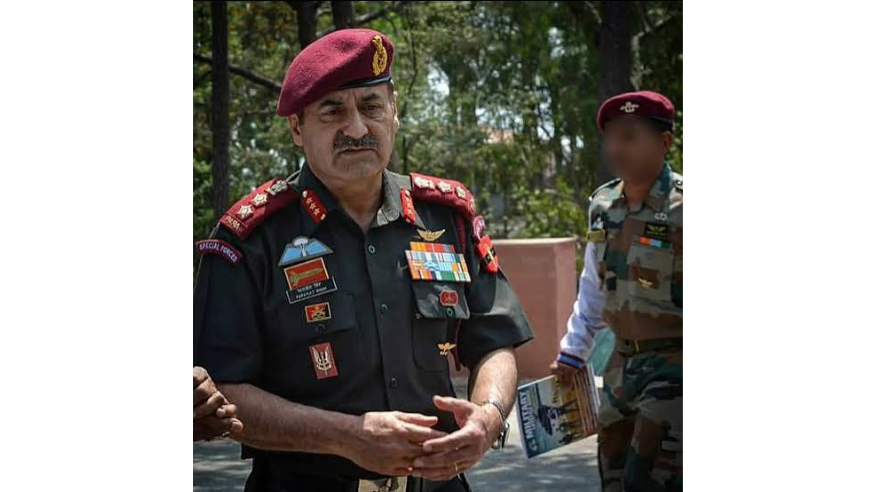
Senior Armoured Corps officers can now wear their traditional black berets while Gorkha officers their signature hats, Special Forces officers their iconic maroon berets and Gunners their blue berets. These all have a particular symbolism and a long history and tradition.
Significance of Uniforms
A uniform is an important aspect of collective identity in the Armed Forces. Uniforms are used not only to distinguish a soldier from the rest of the population but also to indicate a person’s rank, arm or service and awards. Insignia, colour of berets, Regimental badges and lanyards all serve the purpose of identification and belonging. This in turn builds pride in an individual and fosters ethos at a collective level.
While uniforms are used to differentiate both rank and various arms and services, paradoxically they are also used to create unity. There is a deep and powerful symbolism that pervades every uniform, regardless of the rank of the wearer. The cap badge, lanyard and insignia all create a shared sense of identity.
Uniforms have had such a long and proud tradition in the military that one can be inclined to take them for granted. However, it should be recognised that uniforms are central to the armed forces precisely because they serve a very distinct purpose.
The Indian Army has regulations on the types of uniforms to be worn for various occasions. Military regulations also lay down the various insignia and how they are to be properly worn. Discipline is also judged by the manner in which a soldier wears his prescribed uniform.
The maroon beret is an international symbol of elite airborne and special forces troops. Soldiers earn it through rigorous training. Similarly, the black beret is worn by Armoured Corps personnel across the world, while the green beret by infantry and blue by the Gunners and Sappers amongst others. These are all distinctive symbols that form part of a soldier’s identity.
A unique ethos and set of values, customs and traditions and the Regimental spirit underpins the cohesiveness of this vast organisation. These must be preserved and nurtured.
Conclusion
The latest decision effectively restores the earlier distinction between the common institutional identity of the Army and the individual traditions of its arms, regiments and services which is a welcome step.
There are very few institutions carry the weight of tradition like the Army and modernisation does not require abandoning these traditions. Naam namak and nishan (honour, loyalty and identity) are the glue that holds a unit together, this fosters loyalty and camaraderie the values that lie at the very heart of any Army’s culture and ethos. It is therefore important to maintain historic identity, values and traditions especially wearing and displaying the Regimental badge which binds soldiers irrespective of their rank.
There is no doubt that General Dhiraj Seth has taken a considered well thought of course correction to reinstate the regimental uniforms, the very fibre of its traditions, regimental pride and esprit de corps.
Maj Gen Jagatbir Singh, VSM (Retired)
Major General Jagatbir Singh is an Armoured Corps Officer who commanded the First Armoured Division. He served in varied terrains and tenanted important command, staff and instructional appointments including a UN Peace Keeping Mission in Iraq and Kuwait. He co-authored ‘Armour 1971’ and edited ‘Valour and Honour’.


Comments