



Checkmating China's submarine noose with BrahMos ki Bhasha

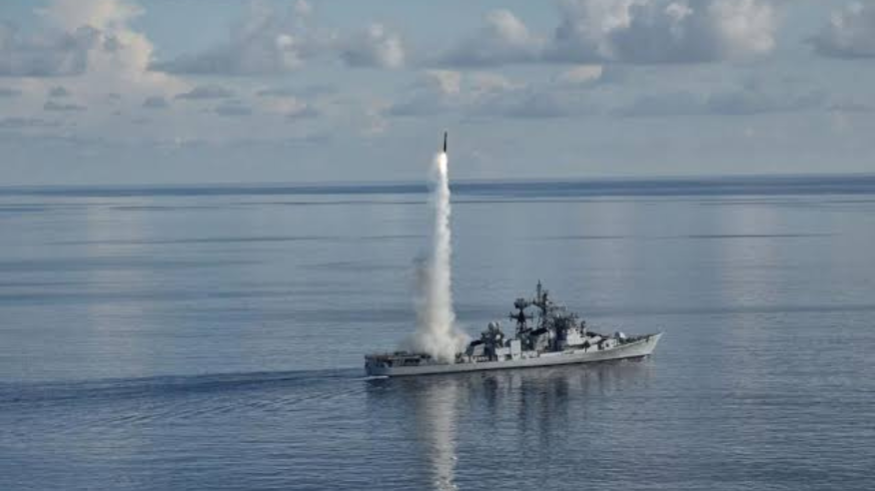
On 7th July 2026, the Indonesian Ministry of Defence announced that it had signed a deal worth over US$200 million with BrahMos Aerospace for the acquisition of the BrahMos supersonic cruise missile system. Announced during Prime Minister Narendra Modi’s ongoing visit to Indonesia, the agreement will bolster Indonesia’s maritime deterrence and coastal defence capabilities amid growing regional security concerns. The package is expected to include missiles, launchers, support equipment, training, maintenance, and the infrastructure required for long-term operation and deployment.
Indonesia will thus become the third country to acquire the BrahMos missile, joining Vietnam and the Philippines. All three nations have maritime interests in or around the South China Sea and face challenges arising from China’s expansive territorial claims in the region.
Chinese Checkers - String of Pearls and Submarine diplomacy
In the late 1990s, when China first started realising the gains from opening up the west, the Chinese Communist Party launched a grand plan. The idea was to buy up or develop ports and commercial facilities along vital sea lanes. Crucially, most of this infrastructure was designed for both civil and military use. This would come to be known as China’s String of Pearls and it consists of Gwadar Port in Pakistan, Hambantota Port in Sri Lanka, Kyaukpyu Port in Myanmar, Chittagong Port in Bangladesh and Military installations in Djibouti.
Furthermore, China signed incredible, almost fantastical deals with the countries here, tying them in bonds of commercial interdependence. Some were so “lucky” to receive Chinese largesse like the Hangor Submarines for Pakistan, refurbished Chinese Type 035G Ming-class diesel-electric submarines for Bangladesh and Myanmar.
To be sure, these initiatives were presented as efforts to promote development, aid, and shared prosperity. Yet many countries viewed them with suspicion, perceiving strategic motives behind Beijing’s outreach. At the center of the resulting “String of Pearls” strategy lay India.
The Rise of India
As a post-liberalisation-India rose and grew close to the same western partners that China had. The Chinese grew nervous. Beijing viewed India’s relationships with the west through a prism of its own fears. Frequent incidents on the India-China border were a symptom of the growing malaise. And the Galwan incident in May 2020 - the breaking point.
India, it appears, realised that there could be no “partnership of equals” with China. China’s weapon transfers to Pakistan: nuclear tech, aircraft and tanks and Chinese advocacy for Pakistan’s use of terror. The CCP’s embargoes on certain businesses and technologies entering India.. And tellingly Chinese aid to Pakistan with advisors and technical intelligence during Operation Sindoor.. All made clear the inscrutable Chinese intentions towards India.
India, it appears, has been making some moves. Its actions on this front are multi-faceted. On the one hand is the diplomatic domain. India joins China in a number of forums and organisations like the SCO and BRICS where it can act as counter weight. Commercially, India has been creating new relationships and supply chains. And militarily India is emerging as a competitor - creating state-of-the-art battle-proven weapon systems and joining organisations that can resist the Middle Kingdom like the QUAD.
And importantly, India is no longer reluctant to act. China has supplied submarines to Pakistan. India, in turn, will arm Indonesia, Philippines and Vietnam with a missile that can sink virtually any Chinese vessel in the South China Sea.
Crouching Tiger - Rattled Dragon
The Wolf Warriors in China’s Foreign Ministry have been uncharacteristically guarded.
In an article in the Global Times, Chinese military spokesperson Senior Colonel Wu Qian urged anyone who listens, that such cooperation should "not harm the interests of third parties," and calls for preserving regional peace and stability. Furthermore, Chinese observers and exports note that Beijing understands the full implication of BrahMos in the South China Sea and that China is ready to protect its interests.
India sent a strong message and the Chinese will now come to understand Brahmos ki Bhasha.
Deepak Bhadana
Over the past decade, Deepak Bhadana has built expertise in multimedia storytelling, with a focus on military conflicts, insurgencies, international relations, the defence industry, and occasionally, wildlife and environmental issues.


Comments