












Top Headlines: 25th March 2026

1. Indian Air Force to acquire helicopter-launched drones under Vayu Baan project
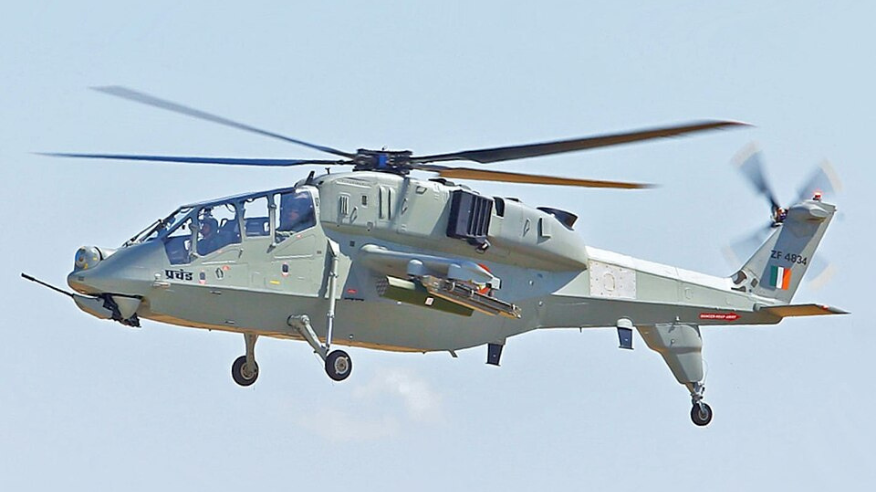
With warfare moving beyond visual range, drones taking centre stage, and helicopter survivability under scrutiny, the Indian Air Force (IAF) has initiated ‘Vayu Baan’, its first helicopter-dropped drone project, according to a report by The Indian Express.
The project is being led by the IAF’s Directorate of Aerospace Design (DAD), which issued a Request for Proposal (RFP) earlier this month, inviting bids from domestic vendors for the system’s design and development. At its core, Vayu Baan will be a small drone deployed from helicopters to navigate autonomously towards its target. Once airborne, it will transmit real-time video to operators and, if required, carry out a precision strike using a small onboard warhead.
2. India to build eight next-generation corvettes
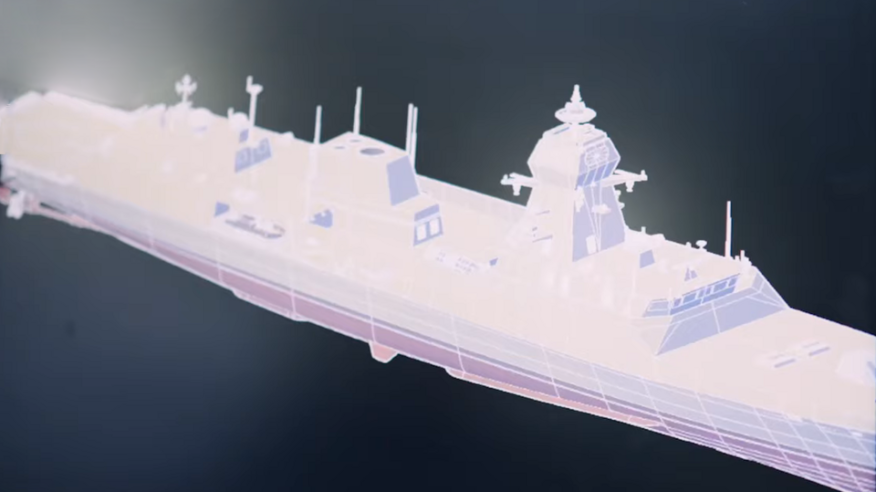
The construction of eight NGCs, or New Generation Corvettes, for the Indian Navy is set to be cleared by the Cabinet Committee on Security (CCS), headed by Prime Minister Narendra Modi, according to a report by Times Now. The ₹40,000 crore project will see the ships built in India by Garden Reach Shipbuilders in Kolkata, West Bengal, and Goa Shipyard.
The shipbuilding process could begin this year, with the first vessel likely to be inducted by 2030, followed by approximately one ship every year.
3. India set to clear major defence deals in financial year 2026–27

To boost the IAF’s strength, India is set to conclude several major contracts in the financial year 2026–27, including deals for 114 Rafale fighter jets, up to 60 Medium Transport Aircraft (MTA), and additional Airborne Early Warning and Control (AEW&C) systems, the defence ministry has told a parliamentary panel.
“There is an increase of 37.03% in the IAF’s capital budget compared to the budget estimates for 2025–26. The allocated funds are planned to be utilised for major new schemes such as multi-role fighter aircraft (referring to the proposed Rafale deal), combat enablers (AEW&C, Tejas Mk1A), Medium Transport Aircraft (MTA), and medium-altitude long-endurance RPAs (remotely piloted aircraft), in addition to ongoing committed liabilities,” the ministry told the Parliamentary Standing Committee on Defence in its latest report submitted to the Lok Sabha last week.
4. India and Kazakhstan co-chair Joint Working Group meeting
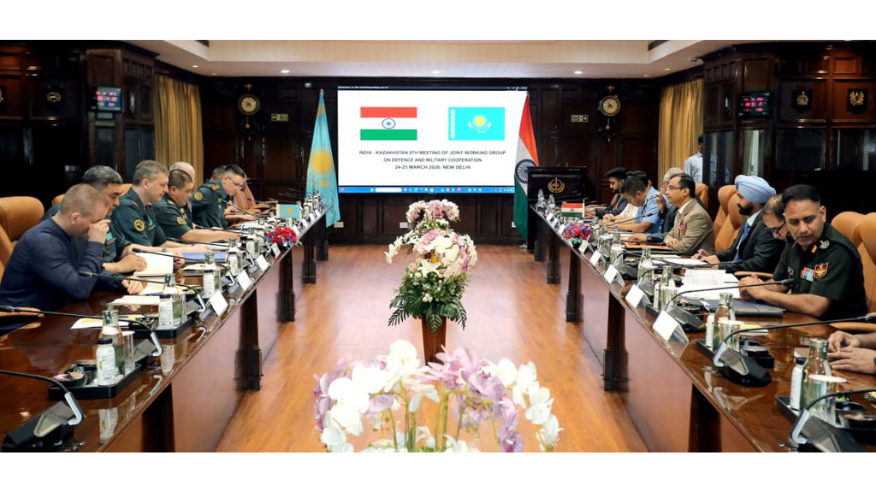
The 8th Joint Working Group meeting between India and Kazakhstan, co-chaired by Joint Secretary (IC) Dr Amit Telang and Deputy Minister of Defence of the Republic of Kazakhstan for Armament and Military Equipment, Major General Shaikh Khassan Satarkululy Zhazykbayev, was held in New Delhi on 24 March.
Both sides reaffirmed their commitment to deepening bilateral defence ties, with discussions focusing on enhancing training, capacity building, and defence industrial cooperation.
5. Indian High Commissioner to Australia meets COAS
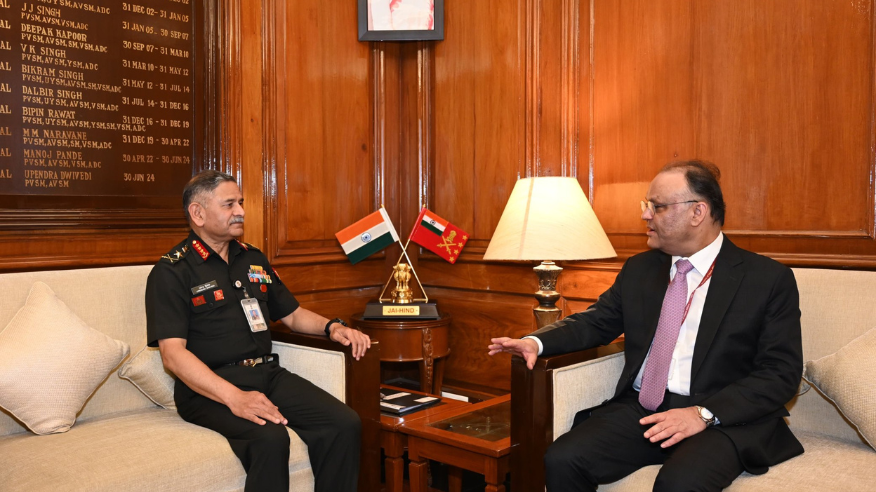
Nagesh Singh, High Commissioner-designate of India to Australia, met General Upendra Dwivedi, Chief of the Army Staff (COAS), on 24 March.
Discussions focused on the evolving geostrategic situation in West Asia, its impact on the Indo-Pacific region, India’s role in fostering peace and stability, and avenues to further strengthen bilateral defence cooperation, including enhanced military-to-military engagement with Australia.
6. L3Harris ramps up production of VAMPIRE C-UxS
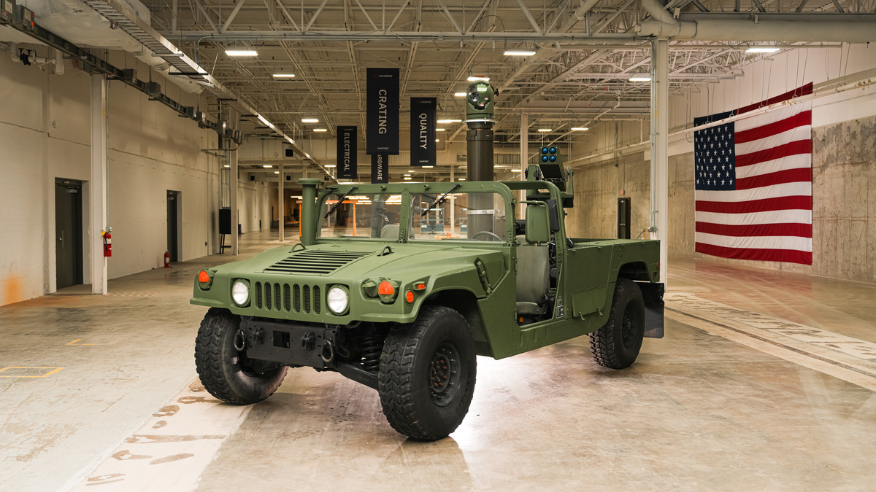
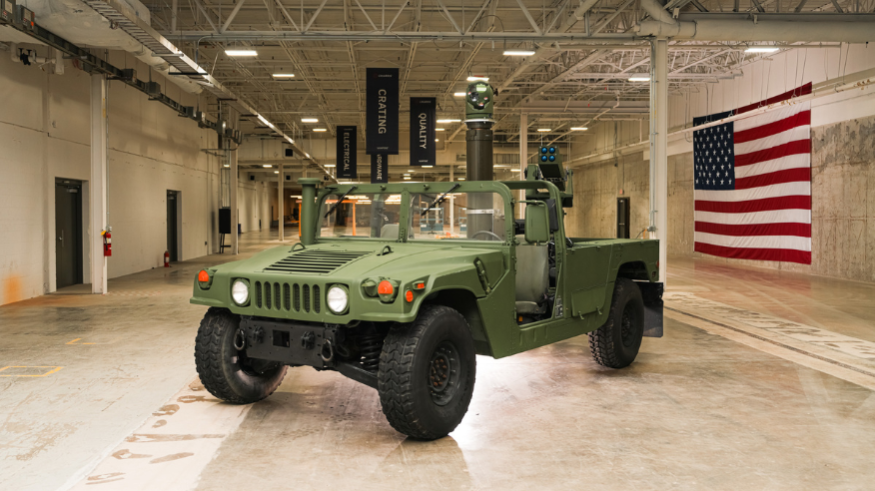
L3Harris has initiated high-volume production of its VAMPIRE counter-unmanned systems (C-UxS) in Huntsville, Alabama. The new production line is a direct response to the growing need among the United States and its allies to counter persistent drone threats to military personnel and infrastructure.
The facility features a flexible assembly, testing, and integration line to deploy VAMPIRE systems on ground vehicles and containerised weapon platforms.
The production line can scale up as demand evolves. VAMPIRE systems have detected, tracked, and neutralised small drones in European combat operations since 2023. In 2025, L3Harris expanded the VAMPIRE family to include specialised variants for land, maritime, air, and electronic warfare operations, along with integration onto new defence ground vehicles.
Chakra Desk
Chakra News is a specialised digital media platform committed to in-depth coverage of India’s defence, national security, geopolitics, and critical technologies.




Comments