











Israel wants ‘Absolute Verification’ of Iran’s Nuclear Programme: Seymour Hersh

Pulitzer Prize-winning American investigative journalist Seymour Hersh, known for his decades of reporting on US national security and intelligence affairs, has reported that secret talks between Washington and Tehran are quietly making progress, with Iran's nuclear programme at the centre of the discussions. While citing American and Israeli sources, Hersh said Iran's worsening economic situation has increased pressure on its leadership to reach a settlement with the United States. However, the talks have also raised concerns in Israel over the possibility of a deal that does not fully prevent Iran from rebuilding its nuclear capabilities.
Writing on Substack, Hersh says, Israeli officials and experts with experience in military and nuclear matters have prepared a position paper titled "What an Air-Tight Nuclear Verification Regime in Iran Should Look Like". The paper has reportedly been circulated among a small group of nuclear verification experts. Its central demand entails a level of inspection inside Iran that would go far beyond normal International Atomic Energy Agency safeguards. The Israeli position is based on the belief that Iran cannot be trusted to disclose all of its nuclear activities.
The proposed system in the paper would give IAEA inspectors access to any nuclear site in Iran, including military and civilian locations, according to Hersh. The inspectors would also need access to information about Iran's nuclear activities and should be able to reach suspected sites within 24 hours. The purpose would be to prevent Iran from removing evidence or altering a site before inspectors arrive. The Israeli position therefore seeks what the paper describes as "absolute verification," rather than relying only on inspections of declared nuclear facilities.
Another major Israeli concern is Iran's stockpile of uranium enriched to 60 percent. Hersh said the Israeli paper calls for this material to either be shipped out of Iran or blended down to a much lower level. Uranium enriched to 60 percent is below weapons grade but is significantly closer to weapons grade than the level normally required for civilian nuclear power. Removing or diluting the stockpile would therefore make it harder for Iran to rapidly move towards weapons grade enrichment.
Hersh said an American expert who reviewed the Israeli paper described it as a strong technical discussion of how Iran's nuclear facilities could be shut down and verified. However, the expert noted that the paper does not address all the political questions involved in preventing Iran from developing a nuclear weapon. The expert's assessment, as reported by Hersh, is that the Israelis have nevertheless put their requirements on the table ahead of any possible nuclear agreement.
Hersh also reported that Iran is facing severe economic difficulties. His American source said the country is experiencing unemployment, financial distress and growing public anger over unpaid wages and retirement benefits. Recent demonstrations by workers and retirees were cited as signs of the pressure. The source also claimed that Iran's oil smuggling networks into Pakistan, Afghanistan, Iraq and Syria are no longer operating as they did previously. These pressures could make Tehran more willing to negotiate with Washington.
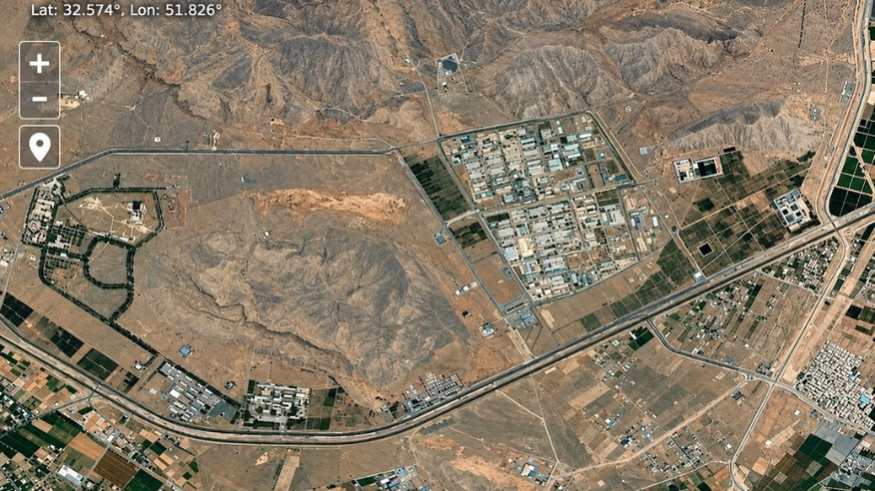
At the same time, Hersh's sources remain doubtful about Iran's intentions. The concern is that Tehran could use negotiations to gain economic breathing space and then strengthen the defences around its major nuclear facilities. Natanz, Isfahan and Fordow have all been targeted in recent US and Israeli military operations. According to the Israeli view cited by Hersh, Iran could use a period of negotiations to improve its economy and prepare to protect these sites more effectively.
This has created a major difference between the Israeli position and the possibility of a US-Iran settlement. Hersh's American source said Israel wants the verification negotiations to fail rather than accept an agreement that leaves Iran with significant parts of its nuclear weapons capability. The Israeli position, according to Hersh, is therefore not simply about securing inspections. It is about ensuring that Iran cannot retain the ability to rebuild its nuclear programme after an agreement.
Hersh said the nuclear negotiations are taking place alongside concerns over the Strait of Hormuz, a vital route for global oil shipments. Any agreement with Tehran would therefore have to address both Iran's nuclear activities and the wider security tensions in the region. Iran has maintained that its nuclear programme is intended for peaceful purposes, including civilian energy needs, while Israel remains concerned that the same capabilities could eventually be used to develop nuclear weapons.
Hersh also pointed to the long-standing nuclear imbalance between Israel and Iran. Israel is widely believed to possess nuclear weapons, although it has never officially acknowledged having them. Israel's Dimona nuclear facility is said to have played a central role in Israel's nuclear programme. Hence, Israel is seeking extensive international verification of Iran's nuclear activities while maintaining its own policy of nuclear ambiguity.
Hersh says the Israeli concern is that Iran may be using negotiations to buy time rather than permanently changing its nuclear ambitions. “The Iranian leadership is ‘buying time to improve’ the economy,” he says. The comparison made by one of his Israeli sources was to former heavyweight boxing champion Muhammad Ali's "rope-a-dope" tactic, in which a fighter absorbs pressure while waiting for an opportunity to strike. The concern is that Iran could similarly absorb the current economic and military pressure while rebuilding its strength to respond later.
The emerging dispute is over what a nuclear agreement with Iran would leave behind. While Washington and Tehran may be discussing a settlement, Israel seeks any agreement to include an exceptionally intrusive verification system and major restrictions on Iran's nuclear material and infrastructure. According to Hersh’s assessment, for Israel, the key question is not simply whether Iran agrees to limits today, but whether it can rebuild its nuclear capability tomorrow.
Savio Rodrigues
Savio Rodrigues is a Research Analyst at Escape Velocity MediaWorks Pvt Ltd and writes for Chakra News on Defence, Geopolitics, National Security. He holds a Master’s degree in International Relations from the University of Mumbai.




Comments