







Op SINDOOR: Strategic Dominance and the Future of Modern Warfare

What really happened during Operation SINDOOR? and what does it reveal about India’s military preparedness, political intent, and technological edge in modern warfare?
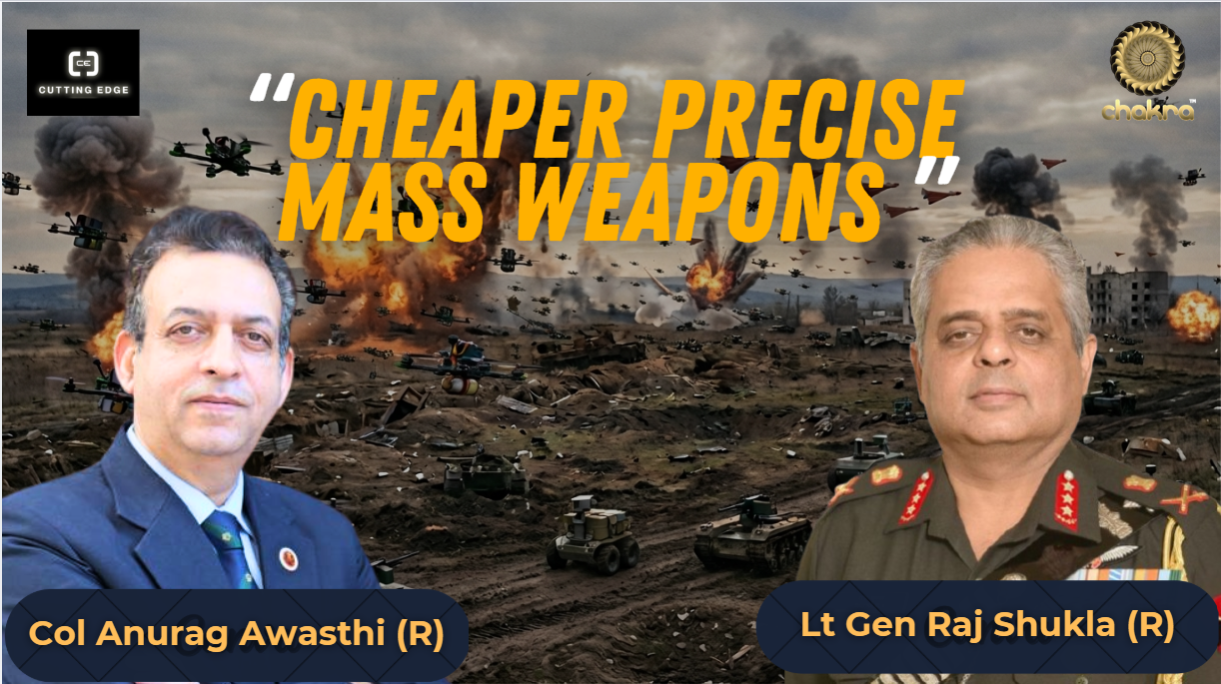
In a world clouded by misinformation and shallow analyses, Cutting Edge made an attempt to cut through the noise as Col John Spencer and Col Anurag Awasthi examined India's strategy, debunked myths like the "5-jet theory," assessing Chinese military capabilities, and explored the role of narrative and diplomacy.
Here are 5 key takeaways from the conversation:
1. India Had Political Clarity and Military Precision
"The decision was not knee-jerk. There was clarity from the political leadership down to the last unit involved. This was not just military professionalism—it was strategic coherence." — Col Anurag Awasthi
Operation SINDOOR showcased a rare alignment of political will and military execution. Unlike ad-hoc responses of the past, this was a carefully calibrated operation where every actor—from top political leaders to field units—understood their role. That coherence was key to India’s operational success and strategic messaging.
2. Chinese Hardware Didn’t Deliver
"There’s this overestimation of Chinese platforms—they may have numbers and flashy specs, but operationally they didn’t hold up." — Col John Spencer
The myth of Chinese military superiority stands debunked. While China possesses vast quantities of modern-looking equipment, in real combat conditions during Op SINDOOR, these systems were found wanting—either in accuracy, survivability, or adaptability to dynamic battle environments.
3. India Blended Old and New Systems Effectively
"We used legacy aircraft, but paired them with modern BVR missiles, smart munitions, and real-time intelligence. It wasn’t about platform superiority—it was about systems integration." — Col Anurag Awasthi
India’s edge thus came not from possessing the latest aircraft but from smart integration—combining legacy fighters like the Mirage 2000 with precision-guided weapons and advanced surveillance. This interoperability allowed for cost-effective but lethal operations, showing that war is won through innovation, not just equipment.
4. Narrative Warfare Is as Important as Firepower
"The so-called 5-jet theory is misinformation. We need to control the narrative just as we control airspace—it’s a domain of warfare now." — Col John Spencer
Pakistan and China went to town with the fake reports of the 5 Indian jets going down. This however brought home to one and all that shaping public and international perception is just as important as firepower. False narratives like the “5-jet theory” are not just annoying—they are strategic tools used to undermine success. India must learn to fight these with the same rigour it applies to battlefield operations.
5. This Was a New Kind of War
"What we saw in Operation SINDOOR was a shift. This was war by other means—information, precision, long-range strikes, and deterrence without escalation." — Col Anurag Awasthi
Op SINDOOR wasn’t a full-scale conflict. Instead it was about signalling strength, deterring escalation, and showcasing capability without crossing red lines. This reflects a new modern form of warfare under the nuclear umbrella where precision strikes, psychological dominance, and calibrated escalation play a larger role than brute force.
Deepak Bhadana
Over the past decade, Deepak Bhadana has built expertise in multimedia storytelling, with a focus on military conflicts, insurgencies, international relations, the defence industry, and occasionally, wildlife and environmental issues.




Comments