







The Shrimp Strategy: Why We Can’t Trust China’s Claim on Arunachal
When I heard the news about Prema Thandok, our sister from Arunachal Pradesh who was illegally detained and harassed at a Hong Kong airport, it felt like history repeating itself. China’s tactic of claiming our state as its territory while simultaneously harassing our citizens is not new. Seeing the headlines, I was instantly reminded of what I went through over a decade ago—a reminder that for a proud Indian from Arunachal, the borders are drawn not just on maps, but on our freedom to travel.
It takes me back to 2012. I was the Chief Operations Officer at Air Force Station, Tezpur. I had been selected as part of a 30-member Armed Forces delegation scheduled to visit Beijing, Nanjing, and Shanghai. We had travelled to Delhi, completed our formalities, and were simply waiting for our visas.
Then came the call from the Defence PRO in Shillong asking if there was a "problem" with my visa. Shortly after, the national news tickers started flashing my name. The next morning, I woke up to see myself on the front pages. The Chinese authorities had refused to issue me a standard visa, claiming that as a resident of Arunachal, I didn't require one to enter "their" country. To resolve the standoff, a meeting was held, and the decision was made: the delegation was truncated. I was dropped, along with 14 others, and the remaining 15 went ahead.
I was a soldier. I had to obey the government's decision and stay silent, unlike Prema, a civilian who can rightly voice her outrage on social media. But I felt slighted. It was a form of discrimination—political, racial, and geographic. The irony was bitter; at the National Defence Academy, I had opted to learn Mandarin. I had even won a book prize for it. I wanted to go beyond "Ni Hao Ma" and "Xie Xie Ni," to see the land whose language I had studied. Yet, I was denied that right simply because of where I was born.
This claim China lays on us—calling Arunachal Pradesh "South Tibet"—is entirely bogus. The roots of this so-called dispute go back to the 1914 Shimla Agreement. History is clear: the maps were discussed for a full year between Sir Henry McMahon, the Tibetan representative Longshan Chatra, and the Chinese representative Ivan Chen. The border was defined.
Furthermore, as an Arunachali, let me be clear: we are linguistically, traditionally, culturally, and racially distinct from the Han Chinese. They cannot simply claim us based on facial resemblance. If that were the logic, what stops anyone from claiming Korea or Japan?
It is time India stops taking China at face value. We need to shed our conservatism. We saw how the leadership called Pakistan’s bluff with the Balakot and Uri strikes; China requires a similar resolve. If they issue stapled visas to us, we should issue stapled visas to citizens from Xinjiang. If they rename towns in Arunachal, we should rename locations in China—perhaps call Beijing "Bharat Nagar" or Kunming "Arun Nagar." We must pay them back in their own coin.
There is a saying in our tribal clan about the shrimp. The shrimp jumps one step forward, then jumps three steps back. This is exactly how the relationship between India and China functions. We see a thaw, a handshake, or a resumed flight—one step forward. Then comes a Galwan, or a visa denial, or the harassment of a civilian like Prema—and we are pushed three steps back.
The contradiction is glaring. If China truly believes Arunachalis are their "brothers" and that this land belongs to them, why do they humiliate us? Why deny our sports persons the chance to win medals? Why harass our diplomats and officers? In their heart of hearts, they know we do not belong to them.
We need more Arunachali voices in the national mainstream media to tell the Chinese to lay off. We are Indians, and it is time we stop letting our neighbour dictate who we are and where we can go.
Watch the full podcast: https://www.youtube.com/watch?v=5T4-Vodnz-w&t=1s
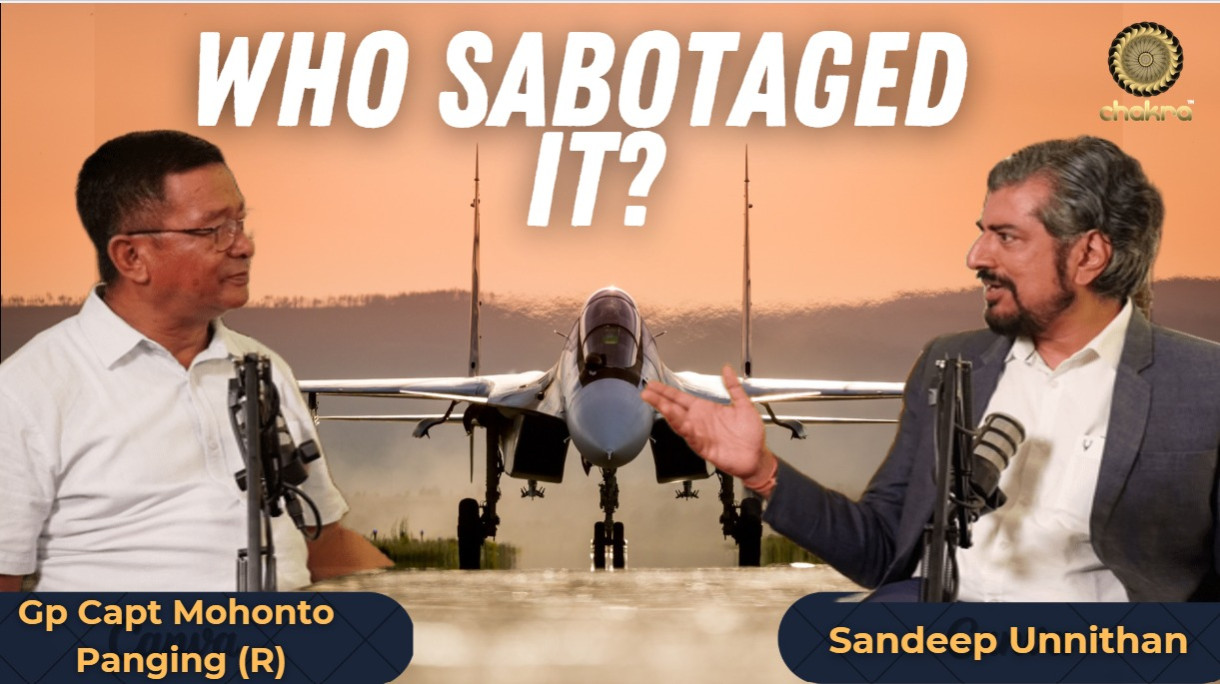
Group Captain Mohonto Panging (Retd)
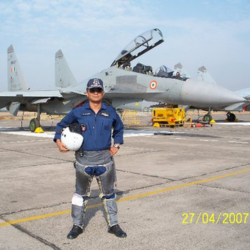
Group Captain Mohonto Panging (Retd) hails from Pasighat in Arunachal Pradesh and is a retired Fighter Pilot who has been decorated with the Presidential Award – the Vayu Sena Medal. He has the distinction of being the only person from North East India to Command a Sukhoi-30MKI Squadron.



Comments