






What the US-Iran Conflict Means for the World?

The Sandeep Unnithan Show
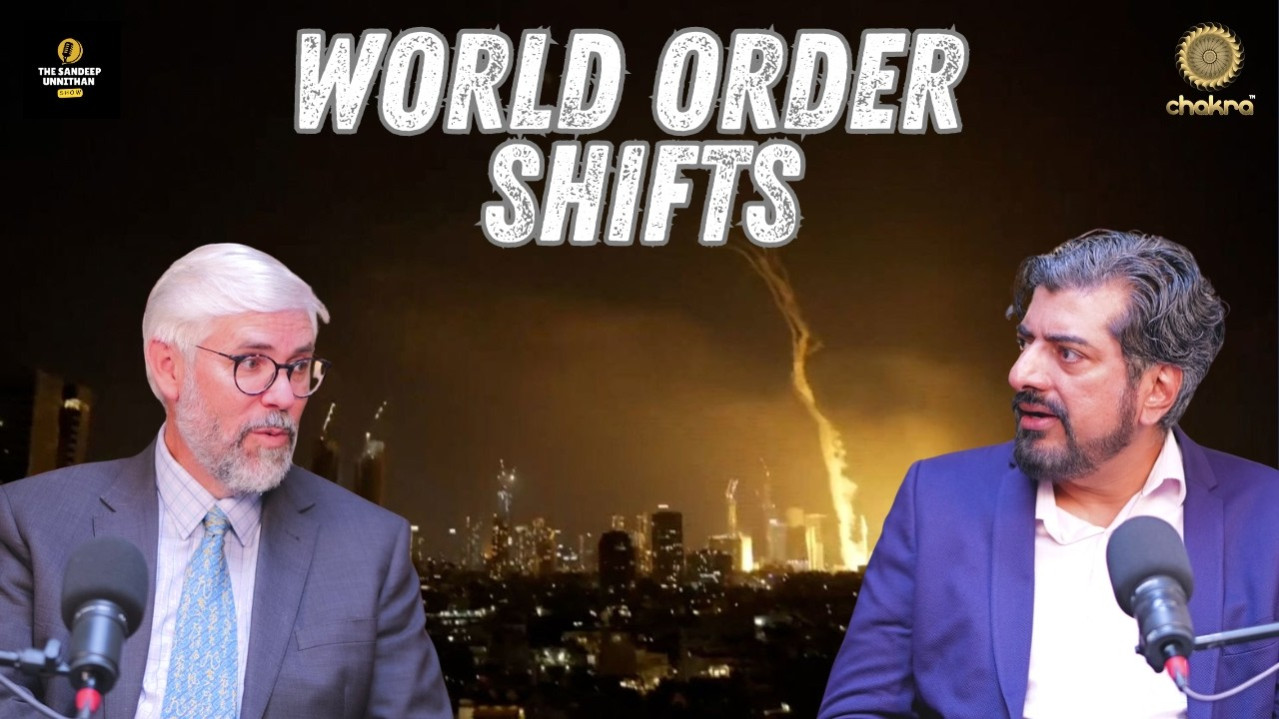
With Professor Gordon Flake, CEO, Perth US-Asia Centre, University of Western Australia
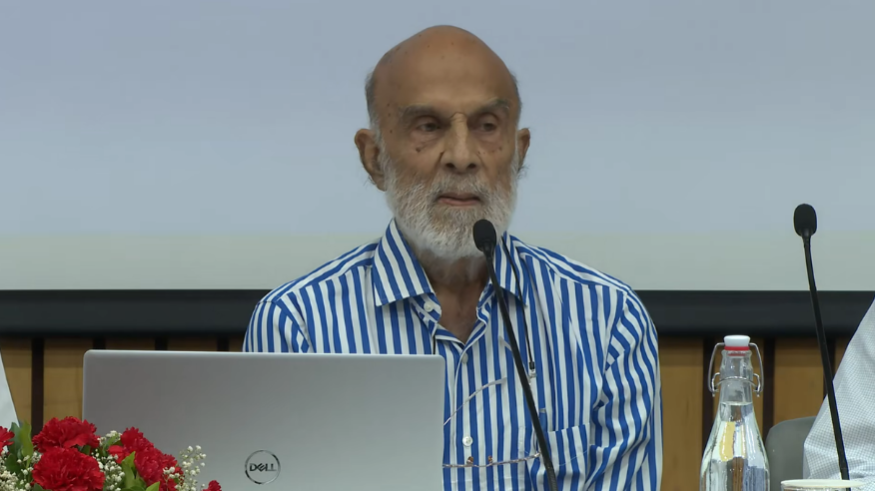
Sandeep Unnithan: Hello and welcome to the Sandeep Unithan Show, your weekly dose of defence, geopolitics and much more. Today I have with me Professor Gordon Flake. Professor Flake leads the Perth US-Asia Centre at the University of Western Australia. He's here in New Delhi, and we're going to be talking about the world as it remains today in a state of flux. Professor Gordon, welcome to my show. Hello and welcome to the Sandeep Unithan Show, your weekly dose of defence, geopolitics and much more. Today I have with me Professor Gordon Flake. Professor Gordon Flake leads the Perth US-Asia Centre at the University of Western Australia. He is the head of that university, the US-Asia Centre that promotes stronger ties between Australia, the US and Asia. Professor Flake, welcome to Chakra News.
Professor Gordon Flake: It is a great honour to be with you, and I look forward to the conversation. Thank you.
Sandeep Unnithan: Professor Flake, what extraordinary times we are in. We're looking at one of the most unusual conflicts of the 21st century that's been raging on for a week now. We don't know where it's headed. US versus Iran, Israel is there in this mix, and it looks like the theatre of conflict is expanding. Where do you see this war headed?
Professor Gordon Flake: I'm afraid that no one knows, and even the main protagonists or antagonists, depending on your point of view, seem to know. Unlike many conflicts in the past, there hasn't been a lot of broad public discussion or discourse about the principles, aims or strategies around this war, and as a result, it's expressly difficult to predict the trajectory. In particular, if you look at the Trump administration in the United States, despite having campaigned for the better part of a decade against American interventionism overseas, this year alone, 2026 alone, you've seen them decapitate the leaders of at least two different countries. Both these things were done unannounced in a very unilateral way, and so there are two questions we should be asking. One, how does this current conflict end? Does it end? And more importantly, then, how does that impact the broader system in which we've been living for the last 30 or 40 years?
Sandeep Unnithan: Right. You know, when I was in college, Professor Flake, there was one of the big magazines, was it Time or Newsweek, that did a cover on the United States, which said global cop, global cop. What has the United States become in 2026 in your mind?
Professor Gordon Flake: Well, certainly not the world's policeman because the fundamental responsibility of a cop or a policeman is to enforce the law. And the only law that the U.S. right now seems to adhere to is what we call the law of the jungle. Might makes right. To go all the way back to Thucydides, the notion that the strong do what they will and the weak suffer what they must. And the sad thing is that after the horrors of the previous century, after World War II, it was the United States together with Europe and the international community that decided to build what we would call the liberal international order, what Aussies call the rules-based order, which was designed specifically to make sure that we had a system of international laws, standards, norms, institutions, organisations that were designed to make sure that we didn't live in a world where it might makes right. But if you listen to the Trump administration officials or even domestic officials like Stephen Miller, they say they are bound primarily by strength, by force, and again, it is the law of the jungle. And that really means that this conflict is different from any that we've seen in the last 25-30 years.
Sandeep Unnithan: Why was there no consensus? Why was there no UN meeting, UN Security Council meeting? Is it the United States which got into Venezuela, which did a quick in and out and mission accomplished in Venezuela? Do you think it was the success of Venezuela that propelled them to try the same template in Iran?
Professor Gordon Flake: Again, it is difficult to be in the mind of President Trump himself, and clearly, he is the decider on this process. He himself has been quite explicit since the initial strikes on Iran that they were in some ways following the Venezuela template. As for why they didn't go to the UN and why they did not build a broader international coalition as previous American governments have done, that is a much longer-held off position. They came in originally back in their first term, back in 2016- 2017, but expressly in the second term, disdainful of international norms or what they would call niceties. They really are about power. Again, if you've followed Donald Trump over the past decade, even before he was president, he's pretty clear that he is very zero-sum. There are winners and losers. He's not a win-win, collective kind of person. There is among him and among his supporters a hostility, not just to multilateralism, the UN, those things, but to alliances. Almost an innate inability to understand the notion of doing something for others, and that is being manifest. I don't know that that represents America more broadly yet, but it certainly is a characterisation of this administration at this point in history in 2026. That's the context in which we have to evaluate what's happening.
Sandeep Unnithan: Speaking of alliances, Professor Flake, you have two very important alliances and one grouping of nations. One is the Quad and the other is AUKUS. AUKUS is more or less an alliance. Quad is an informal grouping led by the United States. What does this so-called abdication of responsibility by the United States mean for the future of these groupings?
Professor Gordon Flake: Obviously, it's concerning to both. The fact that, as we're taping this, this morning, the Canadian Prime Minister is just speaking in Canberra, addressing our parliament after having spoken at Davos, having just had a very successful visit, particularly for a Canadian Prime Minister here in India, and he's heading off to Japan. He's trying to marshal what he's calling middle powers, countries that still believe in the international order, who believe in multilateralism, who believe in laws, organisation standards, and norms to kind of work together on that front. The pretty clear thing is that when it comes to something like AUKUS, where you have treaty allies of the United States, Australia and the United Kingdom, AUKUS is itself not an alliance. It is a defence agreement built on the backbones of other alliances. So, because the US has a treaty alliance with the United Kingdom through NATO, and it has a treaty alliance with Australia through ANZUS, that enables that. And there's something else that most people don't quite understand. There is between the US, the UK, New Zealand, Australia and Canada a five eyes agreement, which is an intelligence sharing legal framework, which means that the degree of collaboration and mutual understanding is deep, very, very deep. That mercifully, despite all the chaos we're seeing in the world, is not shaken. So you've seen that whereas the leader of Spain today came out quite critical of US actions, Canada, UK, Australia, they have all been relatively supportive of the president's actions, the US president's actions, despite expressing their concern over the way it was done. And that's because all of these countries are well aware of the role that Iran has played in their own countries, fomenting activities in Australia as well as Canada. And so that means there's a proximity. So I don't think there's an immediate impact on AUKUS. As for the Quad, yeah, it certainly complicates things for India. I don't know that it is more of an impact than, say, the rather capricious tariffs that Donald Trump has been leveraging without cause, candidly, on India. That seems to be more damaging in the short run. The fact that the United States Navy sank an Iranian destroyer, an Iranian warship, which had just participated in multilateral exercises with India outside of the immediate neighbourhood, in the last two days, is a concern. So, I do anticipate that at least a leader's level meeting of the Quad is difficult in the days to come. And we've seen that already, just because of the difficulties in relations between India and the United States. And that, to be honest, is one of the hardest things to understand. Because from any strategic framing, if you look at the world, that India-US relationship is really, really important. The other members of the Quad, Japan, Australia, and the US, are all treaty allies. So, the weak link, but also the essential link of the Quad. What makes the Quad the Quad is India. And India-Australia relations are tremendous. India-Japan relations are tremendous. Australia-Japan relations are tremendous. The weak link really is what's happening between the US and that. And unfortunately, again, the fact that there is such unpredictability and capriciousness on the part of the Trump administration, surprisingly, right? You might say, I'm sorry, I'm going long on this, that if you look at the US over the last five years, one area where there has been unquestioned bipartisan consensus is on the importance of contesting China in its role in the region. And in that context, the importance of the relationship with India. So, there is no business, political, economic, or security consensus in Washington that says that India should be contested. Everybody agrees that India is an essential partner of the United States. And so, the President's leveraging of, again, a capricious terrorist in India was a shock. It was a shock to see, because there isn't a constituency that wants that in the US. And I'm afraid that gets more complex with what's happening in Iran.
Sandeep Unnithan: So, you know, several follow-up questions to what you just said, Professor Flake. Very interesting take on this situation. But where do you see the middle powers now in the Trump administration, in the tenure of President Trump? Do you see them kind of riding out the storm, kind of working out their bilateral while the storm passes? And of course, what's going to be China's how's Xi Jinping looking at this emerging situation?
Professor Gordon Flake: Look, I am not a fan of the term middle power. You know, because these days they're grouping Japan, India and Canada, you know, Japan, India, and G7. They're by no means middle powers. Even Australia, you know, 12th or 13th largest economy in the world. We're not a middling power by any stretch of the world. But somehow, this is a term that is stuck. And so, I'll go with it because I'm losing my battle to convince people not to talk about it. But the framework I would probably use is, you know, and again, we heard this just over the last week from Prime Minister Carney in Canada, that there are, you know, flexible coalitions. And in many respects, they're like-minded based on shared values. But in all instances, they're based on shared interests. And countries like India and Japan, Korea, Canada, the UK, Australia, we have a shared interest in a rules-based order. We have a shared interest in international law. We have a shared interest in not allowing might to make right, not unfettered power, you know, and we have an interest in stability. And so, I think that's what you're really seeing. So, what's happening? We're seeing an environment where, over the last decade, all of us have been concerned, not about the rise of China, which all of us have aided and abetted and benefited from, but about the way under Xi Jinping, China exercises their power. And then, at the same time, for the last decade, we have been concerned about the unpredictability of the United States. And I would say that in 2026, right now, the US is probably inched ahead of China in terms of the capricious way America is exercising its power has meant that that uncertainty means that countries like India and Australia, India and Japan, Canada, UK, the EU, more broadly, we've got to work together, you know, because to fail to do so means we're not holding together vestiges of the rules-based order, but we're not thinking creatively about what we're building for the future. Because I don't think any of us want to live in a kind of world where the law of the jungle is the primary law.
Sandeep Unnithan: Does the law of the jungle suit Xi Jinping? You know, given the fact that the only way the United States thought it could contain the rise of China was through alliances, through partnerships, India was certainly supposed to be a very key part of that. But this loss of trust between countries, India, Japan, South Korea, doesn't that kind of aid and abet Xi Jinping's grand designs for Asia?
Professor Gordon Flake: In some ways, but in other ways, no. And I appreciate you framing the question that way and talking about a lack of trust, loss of trust. In June of 2018, David Broder, who's a reporter for the New York Times and a columnist, wrote a column that nobody paid attention to. It was right before the Cornwall Summit of the G7, and the title was, typically for the New York Times, a bad title. It says, Trump is not playing the game you think he is. But his underlying argument was really interesting. He said the fundamental divide of our era is not US versus China, capitalist, communist, North, South, rich, poor. The fundamental divide of our era is high-trust societies versus low-trust societies. And again, this was 2018 when he wrote this. And he argued that there were certain leaders in the globe who could not thrive in a high-trust society. And he listed them: Putin, Erdogan, Orban, Trump, and Duterte at the time in the Philippines. He says these individuals want to do everything they can to tear down trust. So, they rail against fake news and lamestream media and active judges and corruption and government writ large, because what they want is a world where they can say, I am a strong man. I alone can fix it. Strong man policy, simplistic ideas, blame other people, blame people of colour, blame immigrants, blame other countries for your problems, because it's simple. And they have been remarkably successful in the last decade. So, for me, the way you frame that question is, these are people who do not want institutions of trust. They want uncertainty and doubt. That's how they're thriving. That's how they're winning. So, for me, that becomes really interesting. Are we, as countries and individual policies, are we building trust? Because these institutions, standards, norms, organisations, and laws require expertise and trust to maintain and build. They're hard, right? It's easy to tear things down. So, the really interesting thing is, in 2018, David Broder did not list Xi Jinping as a wolf, as one of those who tore down trust. If you fast forward to eight years later, and you look at 2026, does China benefit from this? I actually don't think so, right? Because in the end, China relies on a rules-based order for its own economy, for its own role in the world. They have a vested interest in peace and stability, stability, stability, stability, right? So, they're not a classic defender of the rules-based order. They have areas where they're pushing against it. But at the same time, they also don't want chaos. However, on the flip side, there is no more egregious violation of a rules-based order than one country, a strong one, taking over a smaller one, right? And so, China's role in Ukraine is troubling, right? Because they are much more like a wolf in that context, right? Because they are not supporting the rules-based order. At the same time, does China want what's happening where their patron states, Venezuela, Iran, are suffering and their proven powers to end it? Probably not. So, big picture, I don't think China benefits from this. But clearly, neither does the United States. In fact, nobody benefits from this.
Sandeep Unnithan: So, there's a friend of mine, General Shankar, with whom I do podcasts, who came up with this very interesting theory around the time when the pressure was building up on Venezuela in December. He said Trump is going after China's energy lifelines. Venezuela, Iran, and, first, of course, Russia as well. Pressure on these cheap sources of oil on China. You think that's actually the strategy that we are seeing at play?
Professor Gordon Flake: I'm always hesitant to apply a single logical line of thought. That certainly is one of those. There are people today who say that what has happened with Venezuela, what's happening with Iran, demonstrates to the world the impotence of China and Russia's patrons, and so they're failing. I'm not so sure that China would ever think of itself as an ally of Venezuela or Iran and ever contemplate intervention. Military intervention. So, I'm not so sure that I share that same interpretation. But China has militarily intervened in the past, on its borders, of course, with North Korea. It's been very careful in Ukraine. It's been very, very careful in countries like Venezuela. But you're very right to put your finger on energy and energy security. These days, we live in a globalised world where the global energy supply is energy supply regionally as well. And so, the prices depend on where you're getting it. One of the major pushes that we've seen in China over the last decade for renewables and solar and wind isn't just because they want to meet their Kyoto Protocol, the Paris obligations, it's because they want energy security. They want less of that. There is no question that for countries like India, Japan, Korea or China that remain dependent on foreign sources of energy, this is not good. It's a bad thing. Is that the primary driver behind the Trump administration's policies? That's where I'm sceptical. There are so many other factors. In fact, if you look at the role of Marco Rubio and his own particular priorities and origins, it is probably Venezuela's energy supplies to Cuba, where they provided some 60 per cent of the oil that Cuba had. That is probably more of a driver than the longer-range thing in China, but they're not mutually exclusive.
Sandeep Unnithan: You think Cuba is going to fall next?
Professor Gordon Flake: Well, it's interesting. Had it not been for the war with Iran right now, I think there would be a lot more attention paid this week and the next with Cuba, just because not only has the U.S., through its intervention in Venezuela, cut off Venezuelan energy supplies to Cuba, but they've managed to convince Mexico to do the same. So, Cuba right now is in free fall. There is chaos in there, right? And this is one of these things where, look, as someone who believes in democratic values and human rights and openness and freedom, I will shed no tears for Maduro in Venezuela, who was a malign actor in many respects. I will shed no tears for the Ayatollah Khomeini in Iran, nor would I shed tears for the collapse of the Castro regime in Cuba. Having said that, I'm an internationalist, and so I think about the way you do something matters because there are long tales of consequences of how you do that. And I'm deeply concerned by the illegality of American strikes on fishermen and other Venezuelan boats in the Gulf. And I'm deeply concerned, because of what that implies for what China and Russia might do in the future and what they might claim. I'm deeply concerned about the unilateral intervention and decapitation of the leadership in Venezuela. And I'm deeply concerned about the attacks on Iran just for those same reasons, because the way you do something matters.
Sandeep Unnithan: Right, so you're a student of history, you're a professor of history, Professor Flake, but you know, zoom out and tell us where we are in terms of events of the past. Is this 1918 that we're looking at? Is this 1991? Is it 1979? What does 2026 remind you of? History, as they say, rhymes.
Professor Gordon Flake: Yeah, I had an opportunity to do a speaking tour of five different countries in Europe late last year, and I ended up in Germany. And it struck me that I felt like I was in 1989 again. And by that, I mean, I'm still relatively young, but I'm also a child of the Cold War. So, I went to high school and university during the Cold War, and I could not imagine or conceptualise the end of the Cold War. It framed everything in my entire life. And so even though I had seen Perestroika and Glasnost and I'd seen the fall of the Berlin Wall, and I'm sitting there in Berlin telling the Germans about this, at that time, 89, despite seeing the fall of the Berlin Wall, I did not know what came next. I couldn't foresee my entire professional career and your entire professional career, which is the post-Cold War era, which has been great. I love the post-Cold War era. Globalisation, increasing internationalisation, where we all had a tremendous defence dividend. And yet it's pretty clear to me in late 2025, now in early 2026, that that post-Cold War era is over, that the wonderful defence dividend is gone. And we're in an era of because I feel like I'm in, I don't know what the next era is. I can't foresee it. And some people say, oh, it's an era of multi-polarity. To me, multi-polarity doesn't mean anything, because multi-polarity in what? In economics, in trade more broadly, in energy security, in hard security, in every sector, the poles are different. All multi-polarity really means is that there is no structure, that it is coalitions of the willing, and it's constantly shifting. It means that it is unpredictable. We thought for the last decade that this was going to be an era of great power competition. But as discussed, both China and the US seem to be doing everything they can to undermine their own influence. And I don't see this as being a bipolar era anymore.
Sandeep Unnithan: So, we're in uncharted waters.
Professor Gordon Flake: We're very much in uncharted waters. Yes, no question.
Sandeep Unnithan: And there could be an attack submarine with its torpedoes loaded and ready to go. What could that be? By that, I mean a metaphorical one, a black swan event.
Professor Gordon Flake: So again, this is one of the fears I have about what's going on in Iran. So, for like most people, I hope for a peaceful resolution that leads to increased freedom for the people of Iran and Iran being less of a malign sponsor of instability globally. I'd like to see that. But there's also a scenario that this leads to a further deterioration of what little of the rules-based order that we have, and things become more unpredictable, more unstable, and that it further then further deteriorate America's role and influence on the globe, which then impacts. And so, I would tell you in our region, in the Pacific, people always ask me, what are you afraid of in Australia? What could upset us? So, I live in Western Australia, where if the economy is bad, people need to goose the economy; they need more iron ore, which helps us. If the economy is good, they're building, they need more iron ore and more energy, which helps us. If they're building more defensive equipment, our defence industry is booming, which helps us. So, what is the thing that I'm afraid of? A Taiwan contingency, really? Am I afraid of? I think we live in an era where we've forgotten how to talk about deterrence or to exercise it in a serious way. And I worry that given everything we've seen in the last 12 months, the risk of a Chinese action on Taiwan has gone up, not down, because we failed in deterrence. And rather than being fearful of America dragging the region into a war with China over Taiwan, my greatest fear is what happens if the U.S. abandons Taiwan or tries to defend Taiwan and does so unsuccessfully, because the long-term implications for treaty allies like Japan, Korea, the Philippines, and Australia are catastrophic. It really is. It completely upends the system. That's what I'm really worried about. And again, I'm worried that the lack of clarity over what's happened in the last year will actually lead to an increased likelihood of a mistake or a miscalculation, maybe even not a mistake or miscalculation, but action by China that could further destabilise the region. So, to me, even more than Iran, that at least for us in our region is more concerning to me.
Sandeep Unnithan: You know, when I look at China, its rise, the statements that are coming out from their territorial ambitions, it reminds me of the empire of Japan and what they call the Greater Asia Peace and Co-Prosperity Sphere. Do you think China is trying to do what Japan tried to unsuccessfully almost a century ago?
Professor Gordon Flake: Well, the Chinese sense of themselves and their sense of history goes far back before the Japanese Greater East Asia Co-Prosperity Sphere, right? They want to see, they want a world that is safe for China, where they are once again Zhonghua, the central kingdom, the central kingdom, right, where everything comes to them. I personally, and this probably stems from my 25 years in Washington and not my 13 years in Western Australia, am far more concerned about Chinese weakness than I am Chinese strength. If you look at the host of problems that the communist party is facing in China from demography to environment to, you know, the international environment, which is not, where the international environment for the last 70 years built on the US foundation provided security and the remarkable peace we've had for 70 years, that is an environment which enabled the rise of China. The rules-based order. The rules-based order did, right? So that being shaken is not necessarily good for China. So, in that context, my view is, and it sounds controversial, but I am far more worried about Chinese weakness than I am Chinese strength. And the one person I know who agrees with me is Xi Jinping. Because if you look at the last 10 years, everything that I see that he has done has not been based on confidence in the Chinese role in the world, but concern about perceived threats internally, regionally, and internationally to the Chinese experience.
Sandeep Unnithan: So, explain for us what you mean by that. Is it that perceived Chinese weakness that could force him to lash out and say that we are not weak, and then, you know, grab Taiwan or do something?
Professor Gordon Flake: So, you look at, I mean, look at Xi Jinping's crackdown on democracy in Hong Kong. Was that a full-throated expression of confidence? You look at their great firewall of China when it comes to information, in the freedom of information, right? They are not a democratic society, and they know that full well, right? And so, their policies and their social credit scores are all designed, you know, to combat what they are afraid of, in many respects, their own people. They are deeply afraid of being encircled by allies of the United States or other partners of the United States in the region, and they're deeply afraid of what India might do on the border, right? They're all afraid. They're fear-based. They're not confidence-based. There's no growing society. And then you add on to that demography, demography, demography, where India in 2023 officially surpassed China as the world's most populous country. The truth is, unofficially, they probably did it a decade earlier, right? So China is facing a demographic cliff, where not only will they be the first country in the world to grow old before they grow rich, but that number, I think, is going to drop off far more precipitously than people recognise, and that means that if you're the Communist Party, and you've got kind of a set agenda for, you know, ending the 100 years of humiliation, and the last remaining piece of that is Taiwan, the legitimacy of the party, the governance of China depends on that, and that drives actions in Hong Kong, as it has in other areas in the periphery, which are not necessarily helpful for China and their relations, say, with Japan, or Korea, or the Philippines. You know, so as a result, you're kind of looking around the world and say, in 2026, who are China's close friends? Who are their allies? Who are the ones who are building an alternate, going back to my analogy, where are they building institutions of trust? You know, maybe the Shanghai Cooperation Organisation, but again, I have some ambiguity about that too, particularly, or BRICS, you know, now one member of BRICS is in, you know, where's BRICS, right? So, I'm a bit sceptical of that front.
Sandeep Unnithan: Well, you know, coming back closer home, Professor Flake, we've been literally around the world, it's a fascinating overview that you've given us of the current state of geopolitics, the flux. Now, the Perth US Asia Centre emphasises trade, technology, and critical minerals. Are these going to be more important than cricket, the Commonwealth, and curry?
Professor Gordon Flake: You know, I have been struck over the last decade by the meteoric improvement in relations between Australia and India. And it does have an amazing foundation with cricket, curry, and the Commonwealth, which I wouldn't underestimate. But beyond that, I think the real driver of change in that relationship has been India's own sense of itself, its role in our region in the Indian Ocean, and in this uncertain environment where we're dealing with, you know, relations between India and other partners. And so, at the same time that India's relations with Australia have improved dramatically, they've also improved dramatically with Japan, Korea, Vietnam, the Philippines, selling BrahMos missiles, with Indonesia, with Europe, with the UK, this week, you know, some reparation taking place with Canada. So, this really has much more to say about India than it does that. Now, having said that, you know, there is a massive demographic shift taking place within Australia, where the fact that India is a democratic, English-speaking, highly technological, capable country, that is the most populous country in the world, and we're very small, means that I'm very confident that the India-Australia relationship will continue to boom. And then when you add on top of that, our technology, when it comes to the defence industry, and the tremendous resources we've got, in Western Australia, in particular, it is the world's largest natural resource province. The road to future energy runs through Western Australia, and the road to critical minerals and rare earth elements, in particular, runs through Western Australia. So, the fact that you've had, you know, multiple Indian ministers come over and visit us regularly, just tells you that that relationship will only deepen going forward.
Sandeep Unnithan: Right, absolutely. And I must tell you here that the last minister I spoke to from Western Australia gave me a very fascinating overview of where he saw India in the world. And that was 15 years ago, Stephen Smith, who was a defence minister.
Professor Gordon Flake: I know Stephen very well; he was on my board of directors. He just returned after a very distinguished tenure in London as Australia's High Commissioner there. And one of the things that he did while there, because he's always been very clear, you know, we live in Perth, Australia's Indian Ocean capital. He has always been clear about the importance of India. So, he worked together with your High Commissioner in India, Vikram Doroswamy. That's right. And for the last three years has convened an Indo-Pacific, you know, forum with King's College, and the two High Commissions, the primary purpose of which is to make the Brits feel a sense of FOMO, you know, feeling of missing out because Australia and India, over the last decade have become so close, we finish each other's sentences, and the Brits are playing catch up.
Sandeep Unnithan: They are indeed. And in fact, I must tell you what he told me when he was Defence Minister, 15 years back, he was here in Delhi. And so, I said, Mr Smith, what brings you here to Delhi? And he says that, going into the 21st century, I only see three important relationships: India, the US and China, and the relations between these three countries. So, he kind of saw the future in a way that we didn't anticipate at that time. Of course, you've given me a much more zoomed-in picture of where you're headed.
Professor Gordon Flake: I think you will find that the very term Indo-Pacific, success has many fathers. And so certain Indian admirals want to claim credit for it. The Japanese talk about Abe's articulation of the confluence of two great oceans, but he actually didn't use the term Indo-Pacific. The first official in the modern era, not going back to the Brits in the 1840s, who used the term Indo-Pacific in a government document was Stephen Smith in 2013, when he was Defence Minister in the 2013 Defence White Paper. Was it Stephen Smith who said that? It was the first one. And obviously, Peter Varghese, who was our commissioner there, went on and forth. He used it, Stephen used it, but it was he from Western Australia who began to push that. And it followed on his successor, David Johnson, a defence minister, also from Western Australia, who used it in the 2016 Defence White Paper. Julie Bishop, our Foreign Minister, also from Western Australia, used it for the foreign policy White Paper in 2017. Then later on, you had Linda Reynolds, another defence minister, also from Western Australia, who used it for the 2020 Defence Strategic Update, when Stephen led our Defence Strategic Review. You know, again, all of these use the Indo-Pacific as a framing construct, because we in Western Australia live on the Indian Ocean. And many people still perceive of Australia as part of Oceania. And it is. But living where I do in Perth, Australia's Indian Ocean capital, we're never part of Oceania. We're closer to Jakarta than Canberra, closer to Singapore than Sydney. You know, we're a long way away from Vanuatu in Fiji. Closer to the Andaman Islands. And so, I've been to the Cocos Keeling Islands. So again, we're Australia's Indian Ocean capital. And we are a living embodiment of why Indo-Pacific is for Australia, an organising framework, which is a whole-of-nation construct. So, you can understand why, not just for Japan and India, but for Australia, the Indo-Pacific is a framing construct that helps understand who we are. Hence, our focus is on Western Australia as well.
Sandeep Unnithan: Absolutely. And that kind of gives me an idea of why you're looking at this with such clarity. And I want to thank you for your thoughts and for your time.
Professor Gordon Flake: What a fascinating conversation this has been. It is my great honour to be here. Thank you.
Sandeep Unnithan: Thank you very much. Appreciate it. Fascinating overview, Professor Gordon Flake. What a conversation this has been. We've gone literally all around the world. And one big takeaway for me was that the world isn't flat anymore. Once again, it's gone back to being a round world. It's a world where that rules-based order, as you mentioned, seems to be thinning. But this is a world that we're heading to, which is heading into uncharted territory.
Watch the full podcast: https://www.youtube.com/watch?v=k2XtAQfuzlI&t=1583s
Chakra Desk
Chakra News is a specialised digital media platform committed to in-depth coverage of India’s defence, national security, geopolitics, and critical technologies.


Comments