









The Week at Chakra July 31

The conflict in West Asia is widening. Meanwhile, Pakistan-occupied Jammu & Kashmir remains gripped by unrest, with over 30 civilians killed. And India bid farewell to a decorated war veteran Brig B K Ponwar. The week also marked the passing of Brigadier Basant Kumar Ponwar, a decorated 1971 war veteran and a pioneer of counter-insurgency and jungle warfare training.
US-Iran War Expands
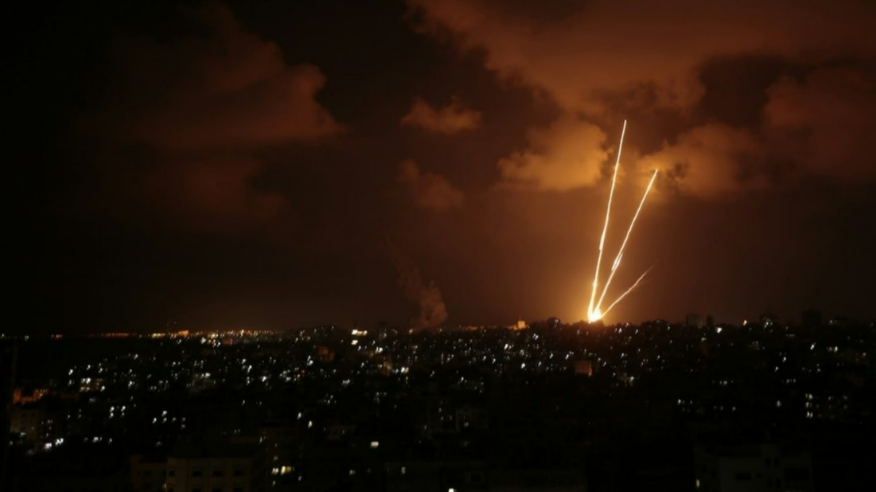
The conflict in West Asia has been escalating to dangerous levels, with Iran increasingly demonstrating the capability to influence multiple maritime chokepoints surrounding the Arabian Peninsula, thereby shaping regional security and global trade.
As Chakra News Editor Sandeep Unnithan observed, "the conflict is widening", with what was once a regional confrontation now intersecting with other global theatres. In an unprecedented move, Ukraine recently attacked an Iranian vessel in the Caspian Sea, linking the West Asian conflict with the Russia-Ukraine war. "What we're looking at is the two conflicts... merging," Unnithan said, warning that such a development creates "a very dangerous situation indeed."
At the same time, Houthi attacks on Saudi energy infrastructure and threats to shipping through the Bab-el-Mandeb have heightened concerns over the security of global energy supplies and international trade.
According to Unnithan, Iran has demonstrated the ability to directly influence three of the world's most critical maritime chokepoints: the Strait of Hormuz, the Bab-el-Mandeb and the approaches to the Suez Canal. Describing it as the "Persian Engulf Strategy," he said Iran has "literally engulfed the region in a barrage of missile and drone strikes," fundamentally altering the strategic balance.
The changing nature of warfare employed by Iran has also complicated US military strategy. It signals a shift in modern warfare, where ground forces are increasingly supplemented by long-range precision strikes, proxy actors and maritime disruption. "The Iranians have now used this drone missile strategy to literally rewrite the rules of warfare as we know it," Unnithan remarked.
Over 30 Protesters Killed in PoJK. Is Pakistan's Kashmir Narrative Failing?
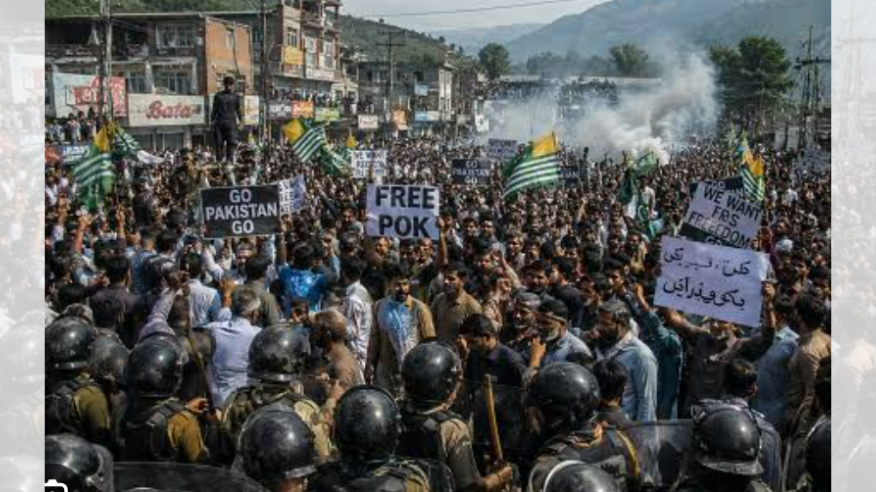
Pakistan's internal security challenges continue to mount as protests in Pakistan-occupied Jammu and Kashmir (PoJK) intensify. Security forces have been accused of brutally cracking down on demonstrators, leading to the deaths of at least 30 protesters, while hundreds have reportedly been injured. What began as protests over electricity shortages, inflation and other basic necessities has now evolved into a broader movement demanding political representation.
The timing of these protests is highly significant, as Pakistan already faces simultaneous challenges in Balochistan and Khyber Pakhtunkhwa, alongside persistent economic difficulties. "Literally, all of the Pakistani provinces seem to have a problem," Unnithan observed, arguing that this reflects growing pressure on Pakistan's security establishment.
He noted that the movement "started with electricity and food and very basic needs and necessity and finally has gone over to representation," underscoring its evolution from an economic agitation into a political movement.
It is also important to note the influence of the Pakistani diaspora, particularly sections that remain politically active overseas. Given the current trajectory, the unrest is likely to attract greater international attention, posing an increasingly complex governance challenge for both Islamabad and Rawalpindi. "It's a recipe for disaster," Unnithan said, referring to Pakistan's simultaneous internal, economic and external pressures.
The Passing of Brigadier B.K. Ponwar: Indian Army's 'Rumpelstiltskin'
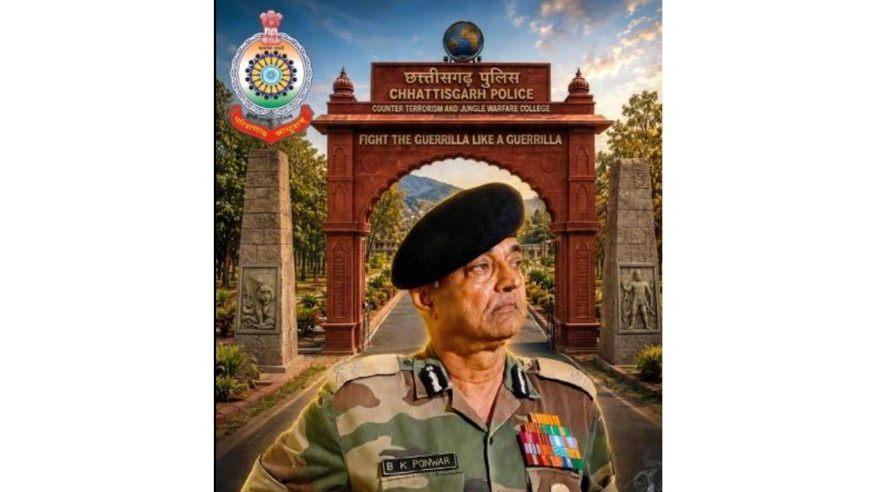
In an unfortunate turn of events, Brigadier Basant Kumar Ponwar (Retd.), a decorated veteran of the 1971 Indo-Pak War, passed away in the early hours of July 29, 2026. Born on March 3, 1949, in Indore, Ponwar was commissioned into the 1st Battalion of the Maratha Light Infantry (1 MLI) in December 1969. During his distinguished 36-year military career, he was awarded the Ati Vishisht Seva Medal (AVSM) and the Vishisht Seva Medal (VSM).
He played a significant role in the 1971 war, training and operating alongside the Mukti Bahini before participating in the advance towards Dhaka. Later, at the height of the Maoist insurgency, he emerged as one of India's foremost experts in jungle warfare and counter-insurgency. After retirement, he established the Counter Terrorism and Jungle Warfare College in Kanker, where he trained thousands of police and paramilitary personnel.
Reflecting on his legacy, Unnithan described Brigadier Ponwar as "an institution builder" who "literally built that place with his own hands." He added that Ponwar trained nearly 37,000 commandos and championed the philosophy that "to fight a guerrilla, you need to become a guerrilla."
India mourns the loss of a soldier-scholar, military innovator and institution builder whose contributions over five decades significantly strengthened the country's counter-insurgency capabilities and left an enduring legacy in India's internal security architecture.
Watch the full podcast:https://youtu.be/CD4RDiqVBUU?si=OMIreBZRQA_ZaFov
Chakra Desk
Chakra News is a specialised digital media platform committed to in-depth coverage of India’s defence, national security, geopolitics, and critical technologies.




Comments