







Challenges to India's North East
When we look at India’s NE region through more than a cursory cartographic lens we see a living tapestry. It is a repository of cultural richness, a storehouse of natural resources and the civilisational frontier that opens onto the dynamic economies of Southeast Asia. This region is a rare strategic blessing for us yet it also bears the weight of persistent and entangled challenges. If these prevailing challenges are left unaddressed any longer, then these threats will undermine our national security sooner than later.
The Deepening Maze of Demography and Identity
One of the most worrisome prevailing threats today is the demographic transformation fuelled by illegal immigration. Nothing illustrates its emerging flashpoints more starkly than in Assam today. In the Barak Valley there is a shifting demographic landscape as migrants from Bangladesh settle more intensively and shape the contours of political aspiration. The clamour for a separate Bengali speaking state takes form amid unrest in the demography. Concurrently ethnic tea-estate communities press for Scheduled Tribe status and disputes in Karbi Anglong and Dima Hasao smoulder dangerously close to reignition. Zo nationalism, advocating a unified Chin–Kuki–Mizo–Zomi identity carries potent secessionist undertones that could spill far beyond the borders of Manipur and Mizoram. In Nagaland too, an accelerating influx of illegal Bangladeshi migrants and Rohingyas may not only alter the cultural demography but will also compromise the identity and rich cultural heritage of the Nagas in the next two decades.
These demographic changes do not unfold in isolation. They fracture the social fabric, breed competition and create fertile ground for political and cultural fragmentation. If our response remains passive then the contestations will become combustible.
The Elusive Naga Peace
Consider the long and winding path of the Naga peace process. The framework agreement of 2015 and the agreed position of 2017 with the NNPGs signalled a positive movement. The 1997 ceasefire with NSCN-IM acknowledged the constitutional basis of India. Yet questions about a separate flag and constitution continue to stall resolution. Armed militias linger outside the democratic mainstream. A finish line continues to remain elusive. To close this chapter, we have to adopt a calibrated strategy where one that combines incentives with enforcement and offers insurgent groups a clearly time bounded trajectory toward integration. Preferably the strategy must anchor in transparent economic benefits and sustainable security measures while preserving the democratic character of the union.
The Underbelly of Transnational Crime
The NE is not just India’s bridge to Southeast Asia. It is also the conduit through which the Golden Triangle’s narcotics, weapons, counterfeit currency and human trafficking enter the country. These are not law and order nuisances. They are the financial veins that sustain insurgency and separatist movements. Denying the financial flow of these active networks will be akin to starving the shadow economy that fuels fragmentation. Only then can the rule of law regain traction.
Geopolitical Pressure and Narrative Warfare
Adding to the internal complexities is a shadow of persistent external pressure. China’s cartographic claims over Arunachal Pradesh and its manoeuvres to influence developments in Myanmar and Bangladesh are part of a broader strategy intended to unsettle India’s periphery. At the same time, incidents of communal tension such as church burnings by Meitei extremist groups have been weaponised. They were painted as State oppression against the Christian Kuki-Zo community. The narrative is corrosive and dangerous. It attacks the trust between people and state and when that trust erodes, no democracy stands unmoved.
An impactful observation by a seasoned diplomat summarises this peril: “Narrative warfare when seeded persistently can be as lethal as armed conflict.”
A Multi-Pronged Response
What should be our response then? It has to be multi-layered. Strengthening border management ought to go well beyond fences and patrolling. It must also include state of the art surveillance, integrated intelligence systems and rapid deployment forces stationed strategically. Counter-insurgency must evolve into counter-subversion. That means targeting not only armed combatants but also destabilising recruitment and ideological indoctrination systems including online networks. Surveillance of cyber spaces that incubate extremist narratives is as critical as radar watches.
Development must serve both as sword and shield. Roads, railways, electricity and digital connectivity must reach the remotest valley. The youth of the NE must see that their prospects are equal to those in the rest of India. Thus, developing infrastructure alone will not suffice unless private capital follows. Businesses will invest only when prevailing informal taxation and multiple levies is effectively contained. Delayed reform risks disengagement among educated youth. Devoid of opportunity they might become vulnerable to radical and separatist narratives. Restoring business confidence by eliminating overlapping taxation will bring investors creating jobs, hope and integration.
Diplomacy always completes the triangle. We must foster coordination with Myanmar, Bangladesh, Bhutan and Nepal. Regional frameworks like BIMSTEC are ideal forums to seal transborder leaks. Moreover, tourism once freed from tax burdens and enabled by better connectivity, has great potential to unlock unprecedented opportunities including cultural exchange and economic revitalisation.
Beyond physical infrastructure and diplomacy what also matters most is emotional integration. The NE is not a territory to be managed. It is a community to be cherished. Respect for tribal customs, languages and local leadership is not just goodwill. It is strategic necessity. Consider the case of the Mizo Lusai language. Recognising it by including it in the Eighth Schedule could affirm identity before competition with overlapping language claims takes root.
When citizens feel legitimate ownership in the Indian project no internal or external actor can drive a wedge between them and the nation.
Conclusion
The NE embodies both our future and our fault lines. It is India’s bridge to Southeast Asia but also perilously close to unravelling if the threats it faces are left unaddressed. Insurgency, demographic shifts, cross-border crime, hostile external influence and narrative warfare hang like a sword. We can blunt it only if we act with clarity, coordination and conviction.
Economic integration must go hand in hand with security enforcement. Development must respect identity and catalyse opportunity. Diplomacy must plug leaks and enable growth. Above all, the people of the NE must feel emotionally anchored to the nation. The region is not a problem to be fixed. It is the crucible through which India can realize its future. Let us act accordingly.
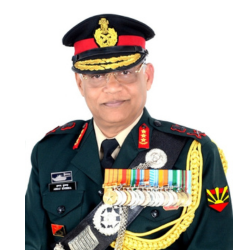
Lt. Gen. Abhay Krishna
Lt Gen Abhay Krishna (retd), PVSM, UYSM, AVSM, SM(G), VSM, – is a former Army Commander of South Western, Eastern and Central Army Commands



This is a timely article for those politicians who are building a narrative that ‘let Bangladeshi and Rohingyas come because they are also human beings’. These kinds are the narrative builders against India per se. This can not be understood by those who concentrate on vote banks at India’s peril. It is strange that our law and order machinery is not pro actively stalling the evil forces at covertly at work. Unless the masses are educated including the grass root level leaders about, the insights the Author has made us fortunate to read to get an eye view of the unfolding future, fissures are going to rip open the fabric of North East. A must read for those interested to know as to what is unveiling with- we being blindfolded by, certain powers conniving with anti social elements working against the nation.
I have seen the north east region twice Once when it was dominated by Christianity And then even met the tribals had food with them and helped them have schools So whatever is mentioned is the stark reality The unauthorised migrants have created nuisance even in Mumbai The earlier they r tackled the better it is fr the citizens Completely agree with Lt gen Abhay