








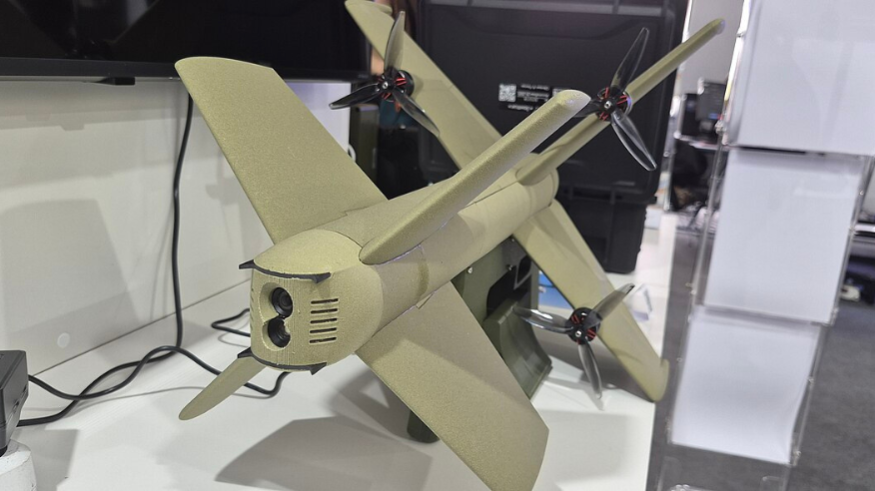
The counter-drone race has begun

Drones have ushered in a modern Revolution in Military Affairs (RMA). Multiple conflicts from Nagorno Karabakh to the Russia-Ukraine War to the Iran-US war have seen drone swarms unleashing ‘precision mass’ on adversaries and saturating their air defence systems with low-cost, cheaply produced drones. The counter to Iranian Shahed-136 drones were kinetic interceptors from the 1991 Desert Storm RMA— Patriot missiles. But Patriot interceptors are expensive— each missile costs over $3 million and several months to make. Each Shahed costs around $30,000 to make. Iran can produce drones faster than the US and allies can field interceptor missiles.
The solution to this economic asymmetry came from Ukraine. Since 2025, Ukraine has deployed interceptor drones, small, fast-moving drones the size of a large household vacuum cleaner, to shoot down Russia’s Geran-2 drones. This year, Ukraine deployed more than 200 anti-drone and air defence experts to the Middle East to fight Iranian Shaheds.
Ukraine began developing the LITAVR multipurpose interceptor drone designed in 2024. Deliveries began in 2025. The LITAVR can be remotely controlled from hundreds of kilometres away from the interception point. If no target is detected, the pilot switches to safe mode and returns the LITAVR to base. The interceptor has a maximum speed of up to 350 km/h and a maximum altitude of 9 km, sufficient for intercepting Gerans, which have a top speed of 180 km/h.
The rest of the world is also pursuing counter-drone technology—Russia, Ukraine, and the US are among those using it. In India, a private sector startup, Indrajaal, has developed an interceptor drone. The company calls it Zombie. It is a 2.8 kg AI-powered interceptor drone. Another private sector startup company, Sharang Shakti, has developed its vajR, a hard kill aerial interceptor designed for counter-drone operations. As part of an integrated drone threat detection and interception system, vajR receives approximate target coordinates from the ground station and autonomously navigates toward the target. There is one more Indian solution. The AgniStrike interceptor drone developed by private sector startup Stravex Technologies. Weighing under 2.5 kg, it fits effortlessly into a backpack and can be operated by any trained personnel. Using AI-driven optical detection, AgniStrike analyses an incoming drone’s speed, trajectory, intent, and vulnerabilities, locking onto the target with precision accuracy. With a single press, it launches a high-speed interceptor that rockets at 200–250 km/h to neutralise the threat mid-air through kinetic impact or advanced countermeasures — and can be swiftly reloaded for subsequent engagements.
Drones were credited with more than 70% of Shahed downings in February, Ukraine’s Commander-in-Chief Oleksandr Syrskyi said on March 3. Finnish Company Sensofusion has developed a fully self-contained drone manufacturing facility built inside a standard shipping container. It is equipped with industrial 3D printers, an electronics assembly station, and a complete parts inventory. A single Drone Factory can produce approximately 50 interceptor drones per day. Germany's HX-2 loitering ammunition weighs only 12 kilos. It does not need GPS at all - navigates with AI and machine vision instead. Ukraine’s Unmanned Systems Forces have already logged flights of over 80 km, nearly twice the designed range. Early this year, Ukraine began fielding faster, more lethal Sting interceptor drones with a top speed of 280 km/h, a 37 km range and a 500-gram explosive payload. Its Hornet Vision system and 360° antenna ground station enable operations in dense electronic warfare conditions. The Sting destroys enemy drones by detonating a proximity fuse. At $2100 each, the interceptor is cheap, can be mass-produced, and the Ukrainian defence ministry was producing around 1000 Hornets each day.
Ukraine pioneered a Sky Map command and control software which fuses data from radars and sensors to visualise incoming threats on maps and video feeds. The US has started using it at the Prince Sultan military base in Saudi Arabia.
Russia has followed Ukraine’s lead. Russia’s Yolka fire-and-forget interceptor drone costs just $500 and has a 3-km operational range. The Yolka interceptor has a 1.3 kg weight and can reach speeds up to 230 km/h. It is launched from a handheld pistol launcher. It uses a bi-spectral seeker, which combines thermal and optical tracking with an AI module. Uniquely, the drone uses kinetic kill to crash into and destroy the incoming enemy drone. The Yolka was put into mass production in March 2026.
The contest between drones and counter-drones is set to continue. Russia has begun fielding jet-powered drones to outpace Ukrainian interceptors. The first AI-powered drones began entering the Russia-Ukraine theatre this year. Drones relying on radio frequencies can be jammed by EW systems. Once the signal is lost, the drone crashes to the ground. AI-powered drones that operate in dense EW environments are less prone to jamming. They are the dangerous future of modern robotised war.
Arjun Dev Singh
Arjun Dev Singh has a deep interest in defence, security, and strategic affairs. With a strong analytical lens and a passion for military and geopolitical developments, Arjun strives to bring clarity and context to complex national and international issues.



Comments