



Drone Challenges that India needs to consider

Drone detection, monitoring, and neutralisation, becomes critical in today’s conflict situations because a Drone is the single most effective weapon system employed in recent conflicts by both nation states and non-state actors. The ability of a drone to intrude undetected into an adversarial territory, and either carry out surveillance or cause destruction with unmatched precision, is a capability very few weapon systems possess today. And that too at a minimum cost and without any loss to human lives.
How do we counter such drones, when their detection is near impossible, their electronic and acoustic signatures being extremely small? While one can interfere with the drones’ electronics or navigation systems to neutralise its intended role, the challenge lies in its detection, especially at night and under poor visibility conditions. Not that it can be picked up during day light conditions, but there could be unintended reflections causing a shine which one can see, especially in mountains. I have come across many reported Unidentified Flying objects (UFOs) along the Indian borders, where reflection of light specially during twilight hours, pointed towards drone movements.
How does one detect a drone under normal conditions? This is a serious challenge which needs dedicated efforts for finding solutions.
The current Drone Rules 2021 of the DGCA, makes it mandatory for users of Drones to get clearances on their intended usage and flight paths besides many other aspects. But how do you monitor adherence to these mandatory requirements and enforce them? Should each of the drones cleared for operations, carry an Automated Identification System (AIS), like the ships and boats operating on our seas? And how do you share the flight paths of drones with the other commercial aircrafts or helicopters operating in the area? What happens in remote areas where there are no terrestrial communication networks? Do Drones need to carry satellite-based AIS systems? And so how does one counter drones operated by adversaries or by criminals in our nation’s air space if they cannot be detected?
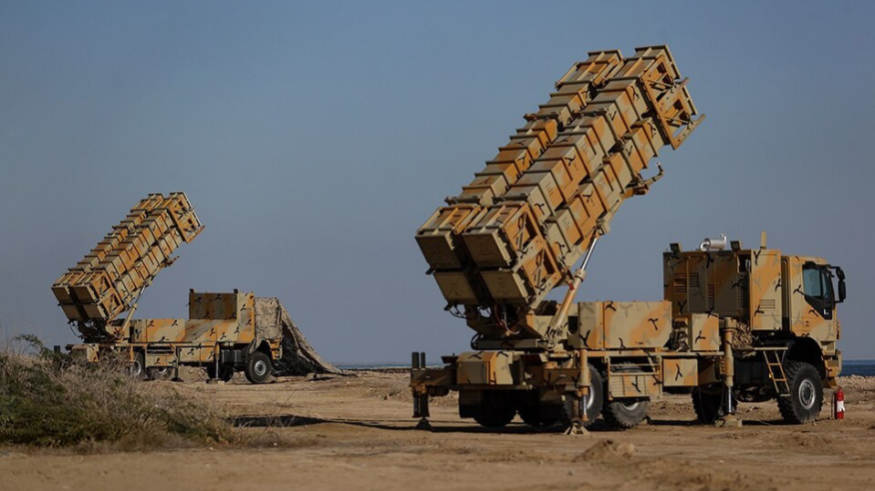
Some solutions based on Electronic Counter Measures (ECM) are already in use. They are intended to neutralise the control and navigation systems of drones and these have, by and large, been effective, though they have their limitations. So, in case of a large drone intrusion (in terms of numbers, say a drone swarm), one of the most effective means is to employ a ground to air weapon system with a large volume of fire like in the case of the L70 or the Schilka platforms, which can neutralise the drones through a kinetic option of a hard kill. Their success rate would depend upon identifying the right avenues from where the drone swarms are operating. Can we also look at an Electronic Wall along our IB or the LC/LAC areas where any aerial intrusions up to a certain height, are prevented through continuous Electronic Counter Measures attempting to interfere with the intruding drone’s control and navigation systems? Such initiatives, however, should not impact on the flight safety of commercial aircrafts operating in the vicinity. Such technology would be cost prohibitive but we need to look at such solutions till the time we are able to detect and monitor the activities of each of the drones flying over the Indian air space.
While Armed Forces look at methods to neutralise rogue drones, we also need to strengthen the regulatory mechanism for detecting, identifying, monitoring, and ensuring that the drone cleared for flying is operating on the intended path and is carrying out the designated activity. This is essential for ensuring the sovereignty of our air space.
The drone ecosystem in the country is growing rapidly, and we need to find solutions to many of the challenges that I have discussed earlier.
Lt Gen M Unnikrishnan Nair PVSM,AVSM, SM (retd)
Lt Gen M Unnikrishnan Nair (retd) is India’s former National Cyber Security Coordinator and ex-Signal Officer in Chief. A decorated veteran with 40 years of service, he played a key role in defence cyber, telecom security, and global cyber diplomacy, and served in top operational, intelligence, and technological roles.




Comments