









Munir May Have Power Till 2035, But No Exit Strategy: Tilak Devasher

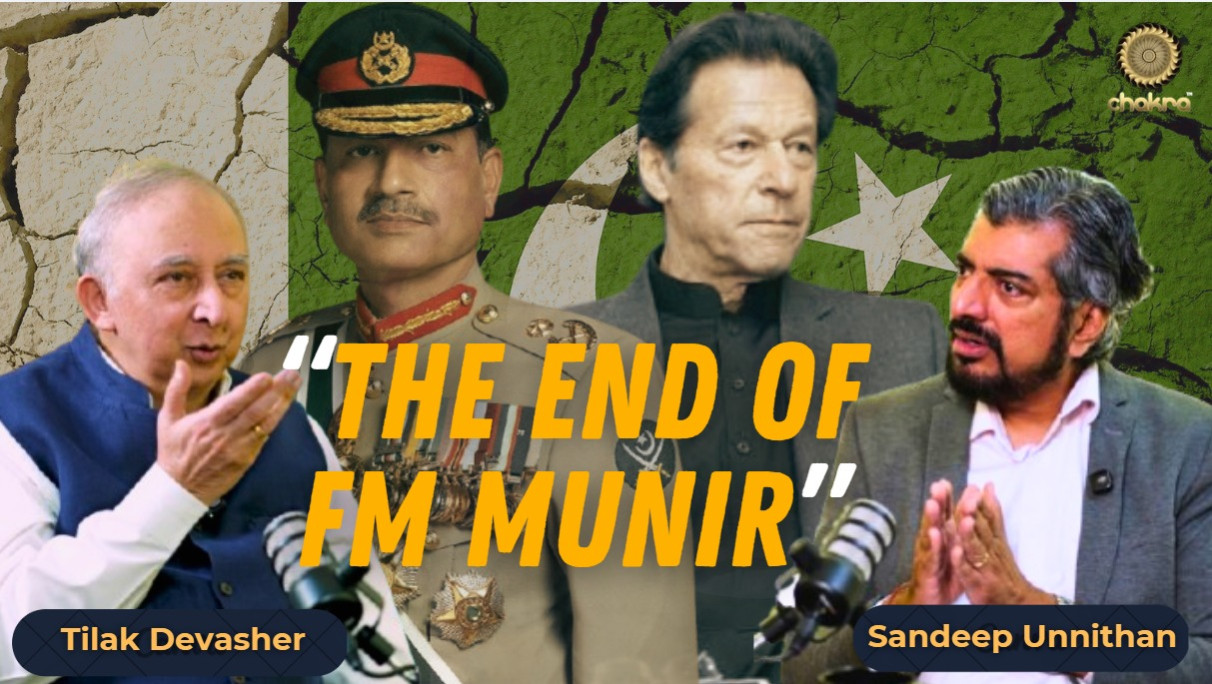
Pakistan's Field Marshal Asim Munir has built a model of military dominance that is different from that of the country's previous dictators, according to Pakistan expert Tilak Devasher. He said Munir has studied the mistakes of Pakistan's earlier military rulers and has moved carefully to avoid repeating them.
Mr Devasher said Asim Munir has accumulated unprecedented power through constitutional changes. Unlike previous dictators, he has not needed to suspend the Constitution or seize power through a conventional coup. Devasher said the political leadership has itself legitimised Munir's dominance as Chief of Defence Forces and granted him immunity from prosecution.
This makes all his moves within the realm of the constitution. "He has done it constitutionally. He has used democracy to demolish democracy," Devasher said. He argued that this has made Munir fundamentally different from Ayub Khan, Yahya Khan, Zia-ul-Haq and Pervez Musharraf, all of Pakistan’s previous dictators who had to take extra-constitutional measures to establish their authority.
Devasher said Munir currently has little reason to stage a conventional coup. He said the three services are under him and the civilian leadership is also operating within a system dominated by his authority. He added that Munir could remain within this constitutional framework until 2035. According to him, Munir may already have planned for such a long tenure. He referred to remarks Munir made while addressing the Pakistani diaspora after his meeting with US President Donald Trump. Devasher said Munir had spoken about resolving Pakistan's political, economic and diplomatic problems before leaving office, which could be around 2035.
Devasher said this showed that Munir had already envisaged remaining in power until 2035. He added that if Munir believes those problems have not been resolved by then, he could seek more time. "There is no upper limit to a dictator's term," Devasher said.
This, according to Devasher, creates Munir's biggest problem. He described the Pakistani military chief as "riding a tiger" because there is no clear exit strategy for him. Unlike an elected politician, a military ruler cannot simply lose an election and return to a normal political life.
Devasher said this problem has affected Pakistan's previous military rulers as well. Ayub Khan left office disgraced. Yahya Khan ended his rule after the breakup of Pakistan. Musharraf eventually died in exile. Devasher argued that Munir faces the same basic problem because he has accumulated too much power to simply walk away from it.
The other major challenge, according to Devasher, is Imran Khan. He said Munir cannot easily release the former prime minister because Imran Khan has refused deals, exile or other compromises. Devasher described Imran Khan as particularly difficult for Munir because he has shown no willingness to compromise over his imprisonment and called him a person of “more steel and character”.
Devasher also linked Asim Munir’s rise to the May 2023 violence in Pakistan. He said attacks on military installations and symbols damaged the Pakistan Army's institutional image. For Munir and other senior officers, the events represented a direct challenge to the army's authority. This has made the question of Imran Khan's release especially difficult for Munir. He argued that the military leadership may see Imran Khan's continued political influence as a threat to the authority it has built.
There was a bigger question of what happens if Munir eventually fails. Devasher did not predict a specific successor. Instead, he said the outcome would depend on how Munir leaves power and whether Pakistan's civilian politicians have the courage to take control of the military.
He pointed to three earlier moments when civilian leaders had an opportunity to reduce the army's political influence. These came after the 1971 war, after the Kargil conflict and after the 2011 Abbottabad raid that exposed the presence of Osama bin Laden in Pakistan. In each case, Devasher said, the opportunity was not fully used.
Thus, for Munir, the challenge may not be how to acquire more power. Devasher's assessment is that he has already acquired it. The larger question is how he eventually leaves a system that has given him so much authority. That could be the defining problem of Munir's rule. He has built a system that gives him extraordinary power, but the same system may leave him with very few safe ways to step away from it.
Watch the full podcast: https://youtu.be/3U9y3qSnr04?si=0sbvxpZSXwZ4brz4
Savio Rodrigues
Savio Rodrigues is a Research Analyst at Escape Velocity MediaWorks Pvt Ltd and writes for Chakra News on Defence, Geopolitics, National Security. He holds a Master’s degree in International Relations from the University of Mumbai.




Comments