







Flydubai Attack: FAA-ICAO Needs to Act or Risk Catastrophe

On September 30, 2026, the Flydubai Flight FZ1073 witnessed an incident that could have turned into a major catastrophe. About two and half hours after the aircraft had taken off from Dubai for Tel Aviv, the Omani co-pilot Hamam al-Hammami stabbed Captain Smit Machchhar and sent the aircraft into a 14,000-foot plunge. It was only the extraordinary bravery and presence of mind displayed by Captain Machchhar and the passengers onboard that saved the day.
But what exactly was al-Hammami planning? What were his motivations? How did he manage to bring a sharp weapon onboard? Was he acting alone?
And what could have prevented a major aviation disaster in West Asia that is already witnessing conflict and turmoil?
To better understand what happened, Chakra reached out to an airline pilot who flies much the same route in West Asia. He spoke to us on condition of anonymity and for the sake of convenience we shall refer to him as TSP. The interview has been edited for clarity.
1.The Flydubai incident shocked the aviation world. But looking at what happened, should it really have come as a surprise? What does this incident tell us about the gaps in aviation safety and security?
TSP: Should it really have come as a surprise? No, not at all. Let’s go through the logical sequence of events.
The entire region, from North Africa all the way to Pakistan, is extremely turbulent. There are wars, internal conflicts and widespread hardship. People from across this region are coming to Dubai in search of employment, and that includes people in the aviation sector: pilots, engineers, ground staff, everyone.
Many of them come from deeply troubled regions, and some may carry anger, resentment, trauma and distress, including post-traumatic stress disorder (PTSD). Operators therefore have to be proactive in developing mechanisms that identify individuals showing signs of radicalisation, hostility or mental instability, and screen them before they can even approach an aircraft.
The very fact that this incident happened shows that these systems are not in place. It is all lip service; nothing real or concrete is being done on the ground. There is no other way to put it. This was a bomb waiting to go off.
2.How effectively are pilots assessed for their psychological and mental fitness, not just when they join an airline, but throughout their careers?
TSP: In practice, pilots are assessed only once, before joining the organisation, when they are made to take an online psychological evaluation.
We all know these tests can be gamed, and there is no guarantee that they are taken honestly. After that, the assessment is never repeated. In fact, the psychological report is never shared or examined, and if there were any anomalies, they were never reviewed. So no, ongoing assessment simply does not happen.
All the airlines have to go on is informal feedback from a pilot’s peers, associates, friends and colleagues, and even that is rarely given, because everyone is an expatriate, everyone fears for their job and nobody wants to lose their visa. Even for the people who are supposed to review complaints and feedback, the question is: are they competent to evaluate those observations and recommendations? The answer is no.
Last but not least, these are businesses; they are there to make money. Grounding a pilot on the basis of someone else’s observations means a loss to the organisation.
Frankly, there are no trained psychiatrists or psychologists in the system continuously evaluating and assessing people. Having line pilots and management staff do it creates a conflict of interest, and we are simply not qualified to do it. We cannot detect mental instability unless it is very obvious.Another point worth considering is the first officer on this flight. His batchmates are now, months later, coming forward to say that he had been radicalised, held extreme views and refused to shake hands with his female colleagues, among other things. That was a red flag for the last eight months, and yet nobody had the courage to report it.
Nobody in management had the courage to act on it either. So, again, the answer is no: there are no robust systems. Apart from the initial psychological evaluation, which, as I mentioned, can be gamed, the assessment is never repeated. It is not done at regular intervals, and it is not done the way it should be.
3.The co-pilot Hamam al-Hammami, allegedly managed to get a sharp weapon into the cockpit. What does this tell us about airport security, and how serious is the risk of complacency when security personnel become familiar with airline crews?
TSP: As for getting a sharp weapon into the cockpit: all crew flying for the local carriers, such as Air Arabia, Etihad, Emirates and Flydubai, use a separate access gate. We do not go through the same screening as regular passengers.
The small room that handles crew entry and exit is a very relaxed area. Even the security personnel there rely almost entirely on technology to raise an alarm if a prohibited item is being carried.
That technology is designed to catch things like explosives. Smuggling a blade through is another matter. Many of the police officers there are very lax; they are often friendly with the crew and know them personally, so there is complacency and more chatting than checking.
Any crew member who has been through those gates will confirm that the officers who are supposed to check diligently are very often extremely relaxed.
It is also evident that the crash axe, which is carried in every airliner’s cockpit, was used. The crash axe is mandatory emergency equipment.
Its primary purpose, in the event of an accident, is to break away panels to reach and put out a fire, and, in extreme cases, to cut your way out if you are trapped in the cockpit.
In this case it was used as a weapon, and frankly, nothing can be done about that. To be fair, it is probably the only item of its kind that is always present in the cockpit.
4.Captain Smit Machchhar was attacked inside the cockpit but continued to fight to control the aircraft. What does his response tell us about pilot training and procedures for dealing with an attack or incapacitation of a crew member?
TSP: It is true that Captain Smit was attacked inside the cockpit, and full marks to him, because in those few minutes he showed tremendous grit and fought against extreme odds.These are odds that are difficult to imagine. To sum it up: he was recovering an aircraft that was certain to crash, while fighting off an attacker who was trying to strike, incapacitate and kill him, and he still had the presence of mind to open the cockpit door so that people outside could come in and help him.
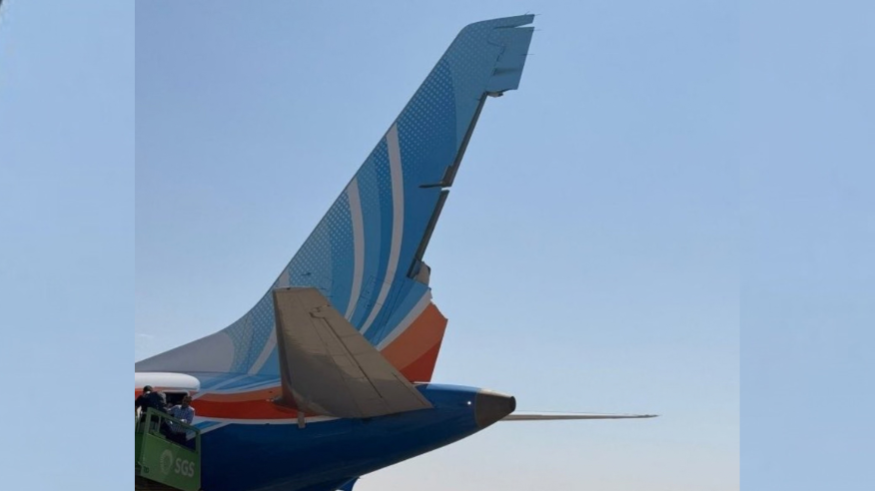
And don’t forget, the aircraft was in a very violent descent. The G-forces were so high that they caused structural failure; the aircraft landed with its rudder missing.
That kind of damage cannot happen unless the aircraft is subjected to extreme load factors, which is clearly what happened in this case.
So the captain was not fighting one problem; he was fighting several at once. Full marks to him for recovering the aircraft from a near-certain fatal dive and holding on long enough for others to come and help him.
5.When something like this happens, where does accountability ultimately lie: with the airline, the national regulator, or international bodies such as ICAO? And who audits the regulators themselves?
TSP: Accountability is a very grey area. ICAO, through its aviation security (AVSEC) programmes and related activities, is merely fulfilling a formality.
I call it a formality because these courses are badly outdated and unrealistic. They are extremely superficial. AVSEC is a course that every aviation employee, from pilots to ground staff, is required to complete.
But does it leave people truly informed, educated and knowledgeable? The answer is no. With new and emerging threats and new geopolitical instability, ICAO has to wake up, rise to the occasion and enforce extremely stringent compliance measures, so that these threats are studied, understood and dealt with. At present, there are none.
It is easy to blame the regulator, but the regulator will simply pass the ball. They will blame ICAO and say, “ICAO gave us these standards, and we have just implemented them.”
The regulator, in turn, may blame the airline, which will say, “We are just following what we were told.”
So the real onus lies with ICAO and the major authorities, such as the FAA, which have to come down like a tonne of bricks on the national regulators and, through them, on the airlines, with absolutely non-negotiable, no-nonsense measures to deal with such threats.
6. Looking specifically at India, what needs to change in our aviation system to ensure that warning signs, security vulnerabilities or an unfit individual are identified before they become a threat to an aircraft?
TSP: Unfortunately, India is plagued by the same problems. We have under-qualified people manning desks, and they are not the brightest minds in the business.
Our civil aviation administration is led by a bureaucrat with no hands-on aviation experience. We have long been asking for an autonomous Civil Aviation Authority (CAA) in India to handle all matters relating to aviation, an organisation led by aviation professionals.
Unfortunately, apart from the Flight Operations (Flight Standards) Directorate, the DGCA has almost no pilots in the system: one doctor runs the medical cell and one engineer runs the engineering cell.
People rise to senior posts in the regulator’s office by virtue of their years of service, not through professional selection. It is sad, but true. We don’t need paper-pushers; we need competent decision-makers.
So what can we expect? Some of these people can’t tell the difference between a guerrilla and a gorilla. Honestly, take an official from the DGCA, the AAI or the Ministry of Civil Aviation, sit them in front of a competent management pilot, and let’s talk aviation. Let’s see how many questions they get right.
Because they sit as the regulator, they can wield power and bulldoze their way through. But are they truly competent? The answer is no.
This is a real problem in India. We lack effective oversight and effective methods. We are very hesitant to change on our own, and we do not act unless we receive a directive from above.
The problem is that the people above also don’t know what directive to give. They can only issue the right directives if they understand what needs to be done.
So we are purely reactive, in every sense of the word. We react after the bomb goes off; we do not act before it goes off, if you know what I mean.
Every department of the civil aviation set-up needs a complete overhaul. A CAA is the need of the hour. We had better wake up, because our own house is not in order either. We cannot escape reality: it is a disaster waiting to happen in India if we don’t wake up and act now.
As a closing thought, let me assure you that India has no shortage of highly trained aviation specialists across every field: retired and serving military personnel, and retired and serving civilian professionals, all extremely competent people.
All we have to do is take the bold step of hiring the best talent available. Within months, India could have one of the best-regulated aviation systems in the world.We don’t need to hire expatriates or so-called foreign experts. There are plenty of experts here. It is only the will that is lacking.
Deepak Bhadana
Over the past decade, Deepak Bhadana has built expertise in multimedia storytelling, with a focus on military conflicts, insurgencies, international relations, the defence industry, and occasionally, wildlife and environmental issues.



Comments