










HAL, Safran Sign Deal to Jointly Develop High Power Helicopter Engine

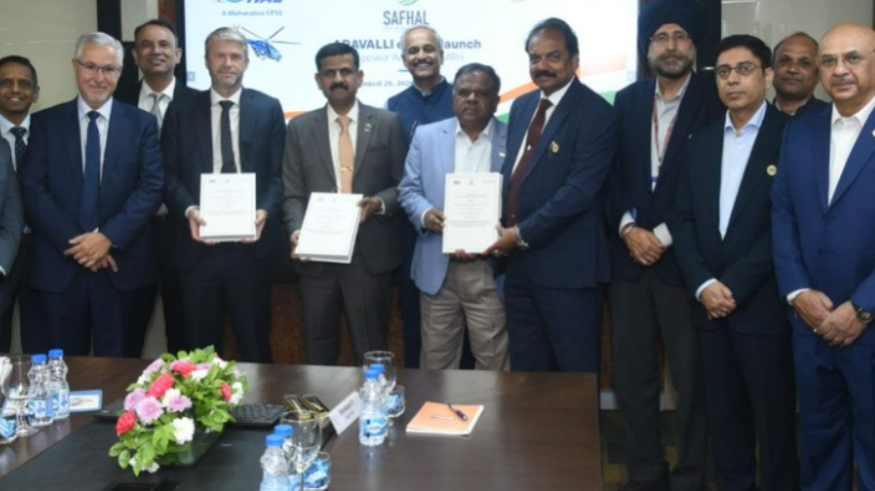
Hindustan Aeronautics Limited (HAL) and Safran Helicopter Engines have signed a contract to jointly develop a new 3,500-4,000 shaft horsepower helicopter engine, thus marking India's first programme to design and develop a high-power helicopter engine domestically.
The engine, named ‘Aravalli’, will be developed through the 50:50 joint venture ‘SAFHAL’ Helicopter Engines Pvt. Ltd. and is intended to power HAL's upcoming 13-tonne Indian Multi Role Helicopter (IMRH) and its naval variant, the ‘Deck Based Multi Role Helicopter’ (DBMRH).
The programme marks a shift for HAL from licensed production towards joint development of critical helicopter propulsion technology. Under the agreement, HAL will gain access to technologies related to the high-pressure compressor, power turbine, fuel and oil systems, accessory gearbox and other engine systems.
The engine will be manufactured at SAFHAL's facility in Tumakuru, Karnataka, with Indian engineers working alongside Safran teams throughout the development programme. The collaboration is also expected to provide Indian engineers exposure to international engine design, testing and certification practices.
The programme could have significance beyond the IMRH and DBMRH. The two helicopters have potential applications in offshore transportation, utility operations and VVIP transport, potentially opening a pathway for future civil aerospace applications.
The Aravalli programme is also expected to expand India's wider aerospace manufacturing ecosystem by creating opportunities in precision machining, castings, advanced materials and indigenous maintenance, repair and overhaul capabilities. Development of the engine is expected to be completed by 2032 to 2033, subject to the required approvals for the IMRH and DBMRH programmes.
The larger significance of the programme lies in its potential to build India's domestic expertise in high power aero engine design and development, an area that has remained one of the country's major technological gaps in military aviation.
Savio Rodrigues
Savio Rodrigues is a Research Analyst at Escape Velocity MediaWorks Pvt Ltd and writes for Chakra News on Defence, Geopolitics, National Security. He holds a Master’s degree in International Relations from the University of Mumbai.



Comments