








Why 'Azad Kashmir' Wants Azadi From Pakistan

Pakistan’s Kashmir story is unravelling and Islamabad Is Running Out of Ideas.
What do you do when those whom you claim to have liberated, want to be liberated from you? That's the question Pakistan is struggling to answer today. Because in what Islamabad calls "Azad Kashmir" thousands are on the streets demanding Azadi, not from India, but from Pakistan itself.
The unrest comes at a particularly sensitive time. On July 27, Pakistan-occupied Kashmir will elect a new Legislative Assembly. But instead of an election campaign, the region is witnessing strikes, road blockades and some of the worst protests in years.
And Pakistan's response has followed a familiar script.
The Jammu Kashmir Joint Awami Action Committee (JAAC), one of the region's largest civil society organisations, was banned under anti-terror laws just weeks before the polls. Security forces launched a sweeping crackdown, communications were disrupted, hundreds of activists were arrested and protesters were fired upon. More than 30 people have been killed, hundreds more injured and an unknown number disappeared since the latest wave of protests in June 2026. And Yet the movement has only gathered momentum.
So why are people risking their lives?
For the unversed, Pakistan occupied Jammu and Kashmir consists of two sub-regions. The first is the so calledl ‘Azad Jammu and Kashmir” which spans the districts of Muzaffarabad, Mirpur, and Poonch. Covering about 13,297 sq km, the territory is just a little larger than the state of Tripura. The second is Gilgit-Baltistan, formerly known as the Northern Areas. This region is located in the north and covers 72,496 square kilometres, roughly the size of the state of Assam.
The immediate trigger is the electoral system. Twelve seats in the 53-member Assembly are reserved for refugees living elsewhere in Pakistan rather than for residents of Pakistan-occupied Kashmir. Protesters say these seats allow Islamabad to influence election results and install governments that answer to Rawalpindi instead of Muzaffarabad.
But the anger runs much deeper.
locals say Islamabad exploits their natural resources while they remain impoverished. POJK produces about 5000 MW of electricity and yet is allotted just 500 MW, leading to 12 hr powercuts. With militants running amok and an economy in shambles, there is virtually no unemployment. There’s a raging food crisis with people needing to line up for rations that cost almost 50% of their income. Then there’s poor healthcare, inflation and a political system that offers little real representation.
So, why is this such a headache for Pakistan?
Pakistan-occupied Jammu and Kashmir serves as the principal staging ground for cross-border terrorism against India. Militant groups including Lashkar-e-Taiba and Jaish-e-Mohammed have operated training camps and forward launchpads here.
It was these launchpads that India targeted during the 2016 surgical strikes, when Para Special Forces hit terrorist staging areas in Kel, Leepa Valley, Chakothi, Bhimber and Samahni. Op Sindoor in 2025, saw India use long-range precision weapons to strike terrorist infrastructure in Muzaffarabad and Kotli, along with deeper training camps linked to Jaish-e-Mohammed and Lashkar-e-Taiba.
So what exactly is at stake?
Pakistan has frequently accused India of suppressing voices in Jammu and Kashmir at international forums. Yet in PoK, one of the region's largest civil society organisations has been banned ahead of elections, and protesters demanding political representation and better governance are killed or disappeared.
Pakistan occupied Jammu and Kashmir, the centrepiece of Pakistan’s Kashmir narrative is exposing Islamabad's duplicity.
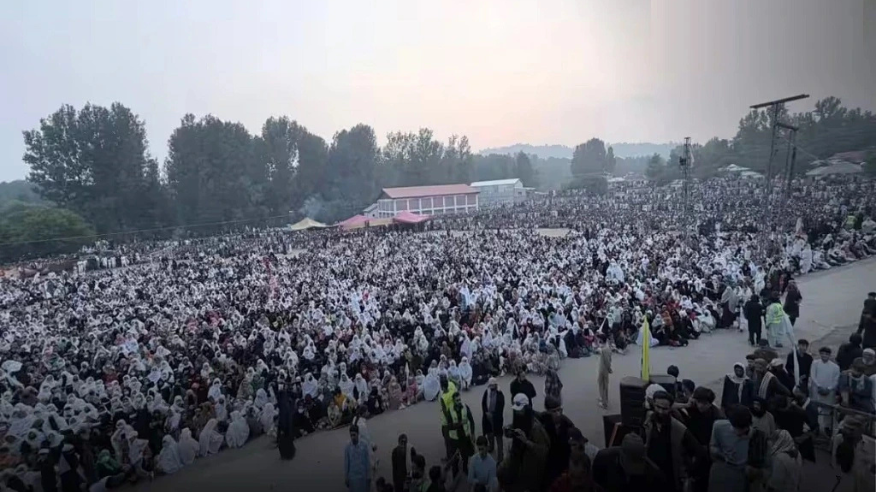 Despite crackdown protesters remain undeterred.
Deepak Bhadana
Over the past decade, Deepak Bhadana has built expertise in multimedia storytelling, with a focus on military conflicts, insurgencies, international relations, the defence industry, and occasionally, wildlife and environmental issues.



Comments