












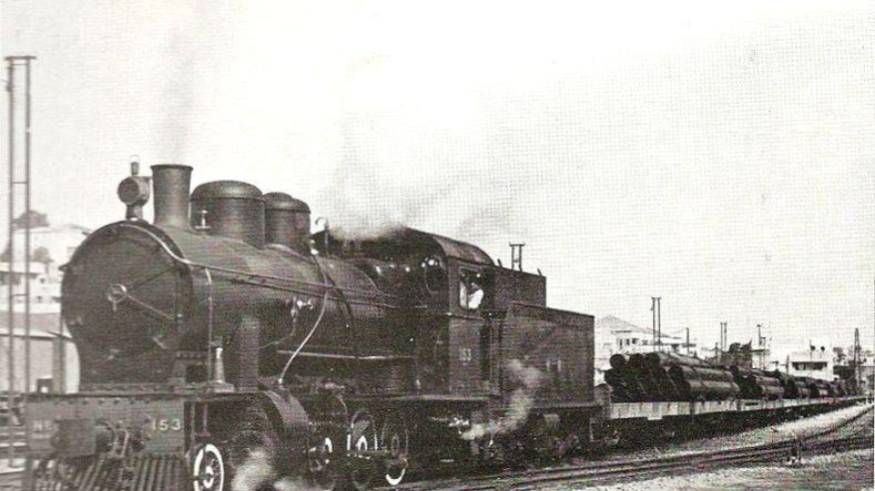
Riyadh and Istanbul Plan to Revive Historic Hejaz Railway

More than a century ago, trains ran from Damascus deep into the Arabian Peninsula. Built by the Ottoman Empire, the Hejaz Railway was intended to connect distant provinces and ease the journey of pilgrims travelling to Islam's holiest cities. Wars, revolts and the collapse of empires eventually brought that vision to an end.
Now, there are signs that parts of that historic network could be making a return.
Saudi Arabia and Turkey have signed two transport and logistics agreements that could pave the way for a new overland trade corridor linking the Gulf to Europe. The agreements were signed by Saudi Minister of Transport and Logistic Services Saleh Al Jasser and Turkish Minister of Transport and Infrastructure Abdulkadir Uraloglu.
The memorandums of understanding cover a broad range of areas, including railway cooperation, logistics services, infrastructure development, technology transfer and workforce training. While the agreements themselves are technical in nature, they form part of a much larger regional effort to reconnect transport networks across the Middle East.
At the centre of these plans lies Syria. Years of conflict left much of the country's transport infrastructure damaged or abandoned, severing routes that once linked Turkey, Jordan and the Gulf states. Rebuilding those links has become a priority for governments seeking to increase trade and improve regional connectivity.
Earlier this year, transport officials from Turkey, Syria and Jordan agreed on a roadmap to restore cross-border transport infrastructure over the next four to five years. The goal is to create an integrated corridor stretching from Turkey to the Gulf.
Turkish authorities have already begun restoring railway lines near the Syrian border that have remained out of service for nearly 15 years. If completed, the corridor would connect Turkey's rail network with southern Europe before running through Aleppo and Damascus, continuing south to Amman and Jordan's Red Sea port of Aqaba. From there, goods could move onward to markets across the Gulf.
According to Uraloglu, recent trial shipments travelling from Turkey through Iraq to Saudi Arabia have already demonstrated the feasibility of such a route.
The agreements have also renewed attention on the Hejaz Railway itself. Originally inaugurated in the early twentieth century, the railway connected Damascus with Medina and became one of the most ambitious infrastructure projects of the Ottoman era. Although much of the network fell into disuse, sections of its route continue to hold strategic importance today.
Earlier this month, Uraloglu spoke of plans to restore and expand parts of the railway system as part of a broader regional transport network. If those ambitions are realised, rail connectivity could eventually extend beyond the Levant and the Gulf, reaching as far as Oman.
Whether such plans materialise remains to be seen. But for the first time in decades, governments across the region appear to be working towards a common objective: reconnecting the transport corridors that once linked the Middle East from the Mediterranean to the Arabian Sea.
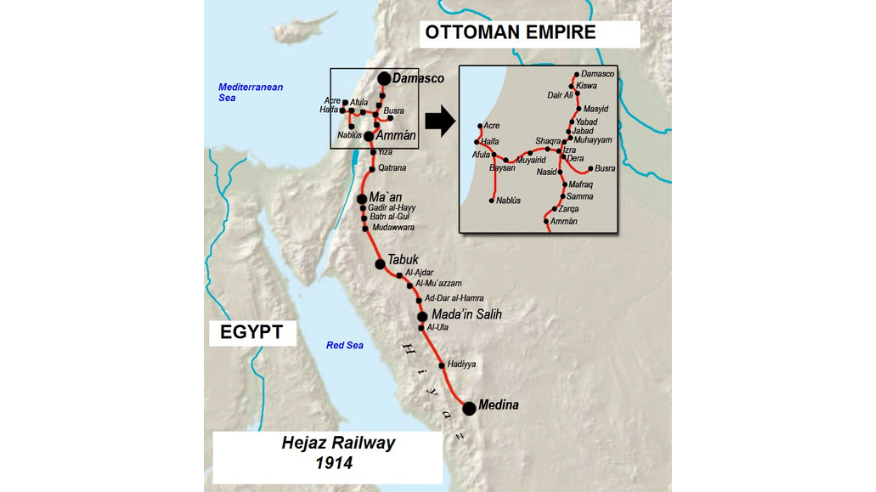
The Hejaz Rail Network in 1914
Deepak Bhadana
Over the past decade, Deepak Bhadana has built expertise in multimedia storytelling, with a focus on military conflicts, insurgencies, international relations, the defence industry, and occasionally, wildlife and environmental issues.




Comments