









Why Is Pakistan Claiming India's Civilisational Heritage?
Consider the Saree, or the classical dance form of Odissi or even the Pashupati Seal from the Indus Valley Civilisation. Only one thing comes to your mind: India. Yet, now a 79 -year-old state, that draws its origin from 7th Century west asia is claiming ownership of a 5,000-year-old civilisation?
Your social media timelines are filled with Pakistanis arguing that the saree is Pakistani, that Odissi may have originated in Pakistan, or that the Indus Valley Civilisation belongs primarily to modern Pakistan? Something strange is happening in Pakistan and its happening right now The irony is hard to miss. For decades, Pakistan's international image has been shaped not by civilisational achievements but by headlines about religious persecution, sectarian violence, orthodoxy and terrorism. Former US President Joe Biden called Pakistan, “the most dangerous place in the world.” This was the place where Osama Bin Laden found refuge.
Yet today, one increasingly encounters claims that Pakistan is an ancient, plural and culturally layered civilisation whose roots stretch back thousands of years. At first glance, these may appear to be random debates on social media. But are they really?
For decades, Pakistan's official narrative looked in only one direction. History, as far as the state was concerned, effectively began with the arrival of Muhammad bin Qasim in 711 AD. Ancient Hindu, Buddhist and pre-Islamic heritage was rejected as somebody else's history. Yet today, there is a growing effort to rediscover Mohenjo-daro, Taxila, Gandhara and even aspects of pre-Partition cultural identity.
Once you begin looking at recent developments through that lens, a number of seemingly disconnected events start appearing less random.
After years of suppression, in 2026 the spring festival of Basant has quietly returned to public discussion. Christmas celebrations have received unusual official visibility. Political and military leaders have been photographed engaging minority communities. News reports speak of restoring historical place names and highlighting Pakistan's pre-Islamic roots. There is growing emphasis on the Indus Valley Civilisation and Pakistan's ancient heritage. On social media, claims about cultural ownership of everything from ancient traditions to classical arts have become increasingly common.
The obvious question is: why?
It appears that the Lumber 1 army has recognised that its international reputation has become a strategic liability. In an era where global legitimacy matters almost as much as military power, Pakistan's image as a hub of extremism, intolerance and instability carries significant costs. It complicates efforts to attract foreign investment, secure Western support, reassure Gulf partners and position itself as a responsible regional actor.
In this interpretation, what is underway is not necessarily reform but narrative restructuring.
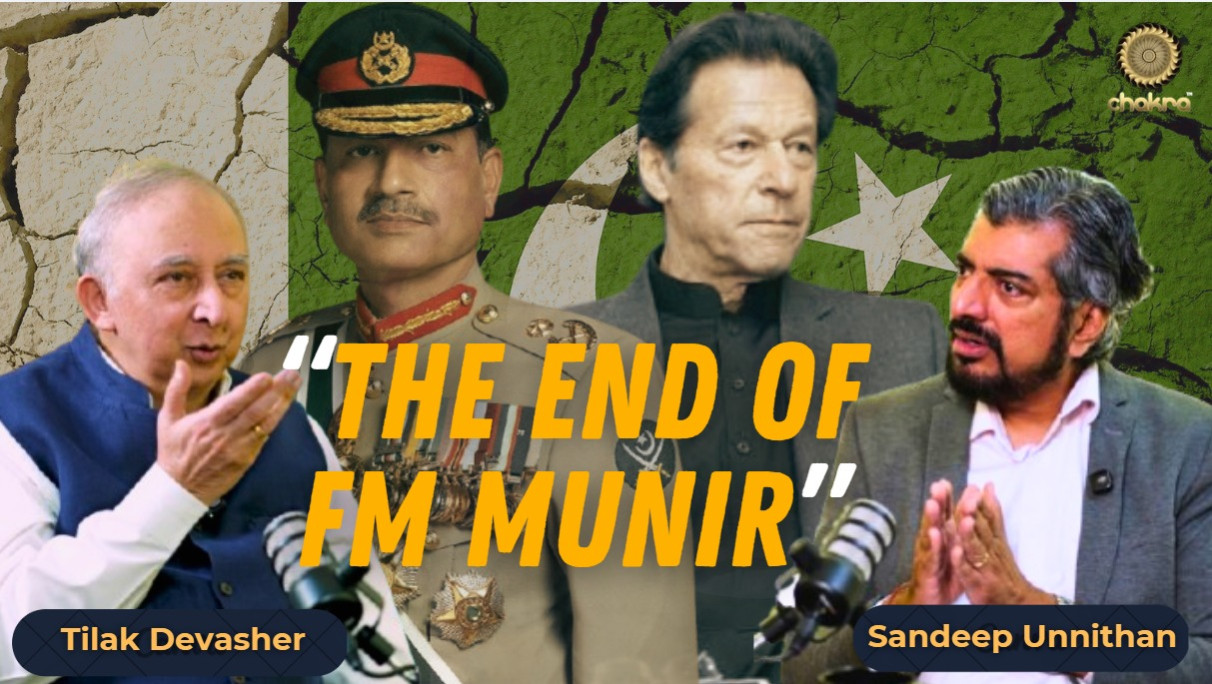
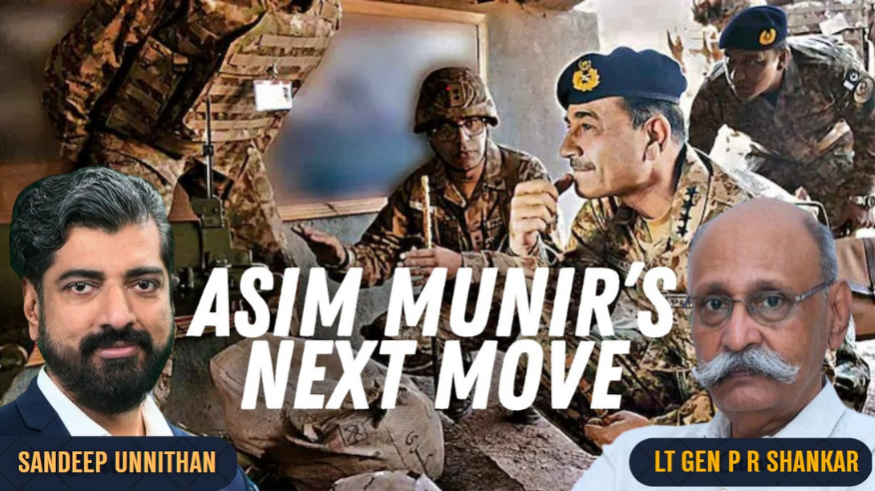
The effort appears to extend beyond personalities and into civilisational branding itself. Alongside attempts to project Pakistan as more moderate and inclusive, there are suggestions that powerful institutions also want key figures such as Field Marshal Asim Munir to be seen differently internationally not as symbols of ideological rigidity, but as pragmatic, stable and internationally acceptable power centres.
Viewed from this perspective, the revival of Basant, the emphasis on minority outreach, the rediscovery of pre-Partition heritage and the growing focus on ancient civilisations begin to look less like isolated developments and more like parts of a broader image-management exercise.
But how does this square with reality?
Can a state project secularism and coexistence while religious persecution, forced conversions, blasphemy-related violence and sectarian intolerance continue unabated? Can it celebrate ancient heritage while the people linked to that heritage are abused and marginalised?
The contradictions become even sharper when viewed through a regional lens. The same establishment seeking to project moderation continues to face accusations of distinguishing between extremists who threaten Pakistan internally and those seen as strategically useful. While some groups like the Tehreek e Labbaik Pakistan have faced pressure because they damage Pakistan's image or domestic stability, organisations accused of targeting neighbouring countries continue to cast a long shadow over Pakistan's reputation. India, Afghanistan and even Iran have all accused Pakistan of harbouring or supporting militant networks that operate beyond its borders.
According to the South Asia terrorism portal, since 1988, Pakistan sponsored terrorists have killed tens of thousands in India alone. The U.S. Commission on International Religious Freedom notes how Pakistan’s blasphemy laws target minorities and warns attacks on religious minorities, forced conversions of Hindu and Christian girls
It should be obvious. Reviving Basant, celebrating Christmas, promoting Mohenjo-daro or rediscovering pre-Partition heritage may improve optics. Hiring lobbyists abroad may help shape narratives. But reputations are ultimately built not on actions not branding campaigns.
And that is perhaps the central question.
Is Pakistan genuinely redefining itself as a more open, plural and responsible state? Or has its establishment simply concluded that in today's world, changing perceptions may be easier than changing realities?
Deepak Bhadana
Over the past decade, Deepak Bhadana has built expertise in multimedia storytelling, with a focus on military conflicts, insurgencies, international relations, the defence industry, and occasionally, wildlife and environmental issues.



Comments